


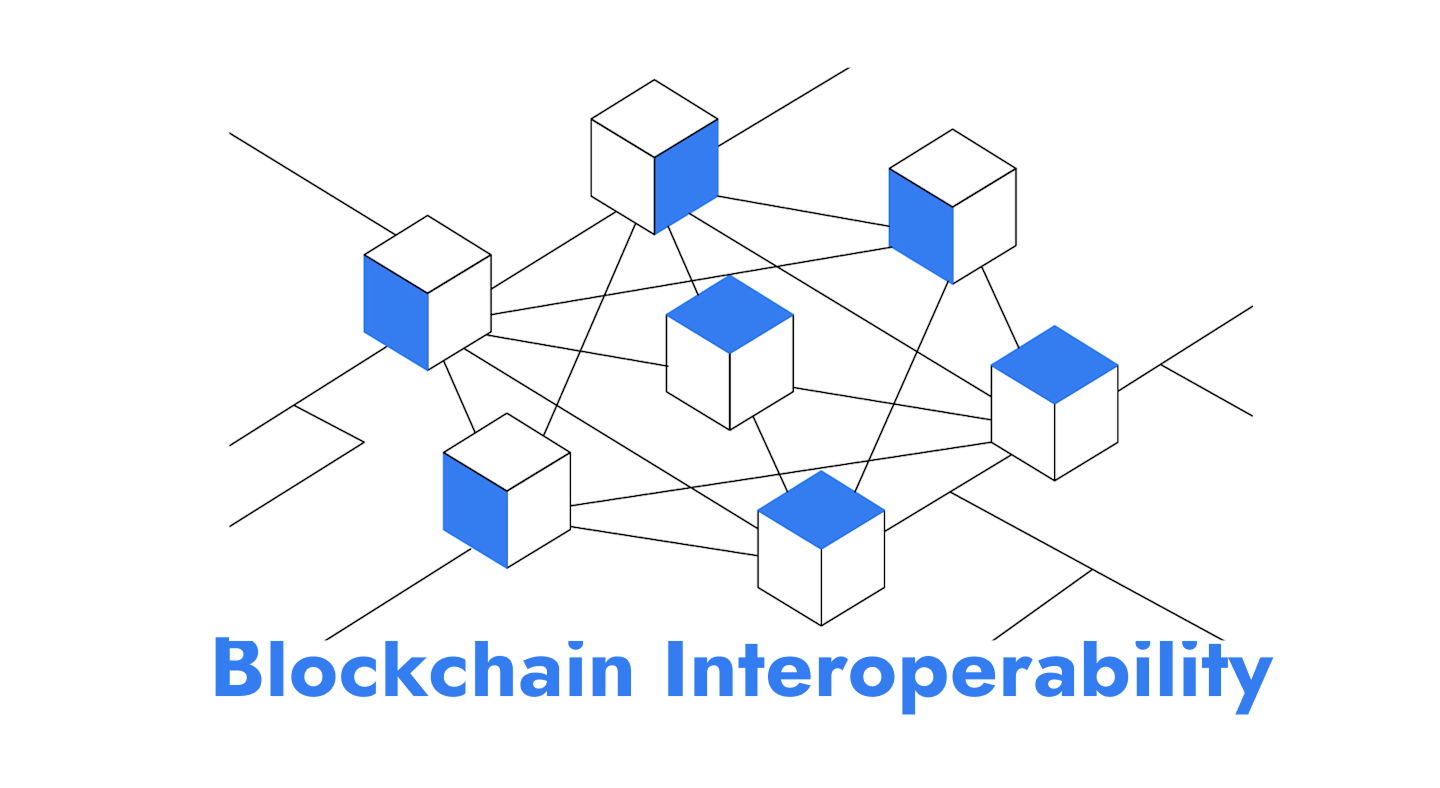
In the sprawling digital agora where credentials are as fluid as the data they represent, a quiet revolution is unfolding. Blockchain badges—those cryptographic seals of achievement—are no longer confined to the walled gardens of their native networks. They are breaking free, traversing the chasm between platforms with a grace that belies their technical complexity. Yet, this interoperability is not merely a convenience; it is a testament to the evolving architecture of trust in the digital age. The fusion of 1EdTech’s interoperability standards and the W3C Verifiable Credentials (VC) framework is not just enabling this mobility—it is redefining what it means for knowledge and skill to be portable, verifiable, and universally recognized.
The allure of blockchain badges lies in their promise: a world where a learner’s achievements in one corner of the internet are as valid in another as a handshake across continents. But this promise is only as strong as the standards that underpin it. Without a shared language, these badges risk becoming digital relics—beautiful, perhaps, but ultimately useless outside their original context. This is where the synergy between 1EdTech and W3C VC steps in, acting as the Rosetta Stone for the credentialing ecosystem. It transforms isolated pockets of achievement into a cohesive tapestry of lifelong learning.
The Fragmentation Problem: Why Badges Need a Common Tongue
Imagine a student earning a blockchain badge in a decentralized learning platform, only to discover it cannot be displayed on their university’s digital portfolio. Or a professional whose micro-credentials are trapped in a proprietary system, unable to be shared with a potential employer. This fragmentation is not just an inconvenience—it is a systemic flaw that undermines the very purpose of digital credentials. Blockchain badges, by their nature, are designed to be tamper-proof and self-sovereign, but without interoperability standards, they are akin to a currency that only works in one country.
The issue stems from a lack of consensus on how credentials should be structured, verified, and exchanged. Different platforms use varying schemas, cryptographic methods, and metadata standards, creating a labyrinth where even the most diligent learner can get lost. This is where 1EdTech’s interoperability standards enter the fray. By providing a unified framework for digital credentials, they ensure that badges can be read, validated, and trusted across systems. It’s the difference between a jigsaw puzzle where every piece fits seamlessly and one where half the pieces are from a different game entirely.
Yet, standards alone are not enough. They need a robust mechanism to carry the weight of trust. Enter the W3C Verifiable Credentials (VC) framework, a technological marvel that turns raw data into verifiable claims. Unlike traditional credentials, which rely on centralized authorities, VCs are cryptographically signed, allowing anyone to verify their authenticity without needing to contact the issuer. When combined with 1EdTech’s standards, VCs become the lingua franca of digital badges, enabling them to traverse ecosystems with ease.
1EdTech’s Role: The Architect of Seamless Integration
1EdTech, formerly known as the IMS Global Learning Consortium, has long been a pioneer in educational technology standards. Its work on Open Badges and CLR (Comprehensive Learner Record) standards has laid the groundwork for a future where credentials are not just digital but interoperable by design. The organization’s approach is rooted in pragmatism—it doesn’t just theorize about interoperability; it builds the scaffolding that makes it possible.
At the heart of 1EdTech’s contribution is the OneRoster standard, which simplifies the exchange of student data between institutions and learning platforms. When applied to blockchain badges, this standard ensures that credentials can be ingested, processed, and displayed without manual intervention. It’s the difference between a system that requires a translator for every interaction and one where communication flows effortlessly.
But 1EdTech’s influence extends beyond mere compatibility. Its standards are designed to be extensible, allowing institutions to customize credentials while maintaining a baseline of interoperability. This flexibility is crucial in an era where education is increasingly personalized. Whether a badge represents a course completion, a skill mastery, or a competency-based achievement, 1EdTech’s framework ensures it can be recognized universally.
W3C VC: The Cryptographic Seal of Trust
If 1EdTech provides the language, the W3C VC framework provides the digital notary that stamps it with authenticity. Verifiable Credentials are not just data—they are cryptographically signed assertions that can be verified independently. This is a game-changer for blockchain badges, which often struggle with trust in decentralized environments. With VCs, the issuer’s signature is embedded in the credential itself, eliminating the need for a central authority to vouch for its validity.
The magic of VCs lies in their triple-layered architecture: the credential itself, the cryptographic proof, and the data model. This structure ensures that badges can be verified offline, shared peer-to-peer, and even revoked if necessary—all without compromising their integrity. When paired with 1EdTech’s standards, VCs become the gold standard of digital credentials, capable of bridging the gap between traditional education and the decentralized web.
Consider the implications: a student earns a blockchain badge in a MOOC platform, and the credential is automatically synced to their digital wallet. From there, it can be shared with a university admissions system, a job application portal, or even a social media profile—all without the need for intermediaries. The W3C VC framework makes this possible by ensuring that the badge’s authenticity can be cryptographically proven in seconds, not days.
The Synergy: How 1EdTech and W3C VC Create a Unified Ecosystem
The true power of this collaboration lies in its ability to harmonize disparate systems. 1EdTech’s standards provide the structure, while W3C’s VCs provide the trust. Together, they form a decentralized credentialing ecosystem where badges are not just portable but interoperable by design.
For institutions, this means reduced administrative overhead. No longer do they need to manually verify credentials or build custom integrations for every platform. For learners, it means ownership of their achievements, with the ability to curate and share their credentials as they see fit. And for employers, it means access to a verifiable, tamper-proof record of a candidate’s skills—no more chasing down transcripts or worrying about fraudulent claims.
But the synergy doesn’t stop at technical compatibility. It also addresses a deeper philosophical shift in education: the move from institutional authority to learner sovereignty. In a world where knowledge is democratized, credentials should follow suit. Blockchain badges, when standardized through 1EdTech and W3C VC, empower individuals to take control of their learning narratives. They are no longer passive recipients of education but active architects of their own credentials.
The Challenges Ahead: Navigating the Interoperability Maze
Of course, no revolution is without its hurdles. The path to full interoperability is fraught with technical, political, and cultural obstacles. One of the biggest challenges is the adoption inertia—many institutions and platforms are reluctant to migrate from legacy systems to new standards. The fear of disruption often outweighs the promise of innovation.
Another hurdle is the fragmentation within the blockchain space itself. Different networks (Ethereum, Hyperledger, etc.) have varying approaches to credentialing, and not all are compatible with 1EdTech or W3C standards. Bridging these gaps will require collaboration between standard-setting bodies, blockchain developers, and educational institutions—a Herculean task, but not an insurmountable one.
Then there’s the issue of metadata richness. For badges to be truly meaningful, they need to carry more than just a title and a date. They need to include detailed descriptions, competency frameworks, and evidence of achievement. 1EdTech’s standards address this, but implementation remains inconsistent. Without a concerted effort to standardize metadata, badges risk becoming hollow shells—pretty to look at but lacking substance.

The Future: A World Where Credentials Know No Borders
Despite these challenges, the future of blockchain badges is undeniably bright. The fusion of 1EdTech and W3C VC standards is not just a technical achievement—it’s a cultural shift. It signals a world where education is no longer confined by geography, institutions, or proprietary systems. It’s a world where a badge earned in Tokyo can be as valuable in Toronto as it is in Tunis.
This future is already taking shape. Platforms like Badgr, Accredible, and Learning Machine are integrating 1EdTech and W3C VC standards, allowing users to issue, share, and verify badges with ease. Governments and corporations are beginning to recognize the potential of digital credentials, with initiatives like the European Blockchain Partnership and IBM’s Digital Credentials leading the charge.
But the real magic will happen when these standards become as ubiquitous as email. When a learner can earn a badge in a decentralized app and have it instantly recognized by a university halfway across the world. When employers can verify a candidate’s skills with a single click. When the illusion of interoperability gives way to a reality where credentials flow as freely as data.
This is not just about technology. It’s about reimagining trust in the digital age. It’s about dismantling the silos that have long defined education and credentialing. And it’s about empowering individuals to take control of their learning journeys, unshackled by the constraints of outdated systems.
The journey is far from over, but the destination is within sight. With 1EdTech and W3C VC as our guides, we are building the infrastructure for a future where badges are not just tokens of achievement—they are the building blocks of a global learning ecosystem.
So the next time you see a blockchain badge, remember: it’s not just a digital sticker. It’s a revolution in progress—one that promises to redefine what it means to learn, to teach, and to be recognized in the digital age.
Leave a comment