


In the grand chessboard of modern workplaces, where innovation sprints ahead of tradition and collaboration outpaces isolation, a quiet revolution is unfolding. It’s not about the latest software or the flashiest gadget—it’s about a skill so fundamental, so transformative, that it reshapes not just how teams work, but how they think. We’re talking about collaborative problem-solving, the unsung hero of measurable power skills. This isn’t just another corporate buzzword; it’s the linchpin that turns disjointed groups into high-performing ensembles, where every voice isn’t just heard but leveraged.
Imagine a team where silos crumble like ancient walls under siege. Where diverse perspectives aren’t just tolerated but celebrated, and where the collective intelligence of the group far outstrips the sum of its parts. That’s the promise of collaborative problem-solving—a skill that doesn’t just promise results but delivers them in ways that are visible, quantifiable, and sustainable. It’s the difference between a meeting that drags on for hours and one that sparks epiphanies in minutes. It’s the force that turns “we can’t” into “we haven’t yet.”
But here’s the twist: this isn’t about warm fuzzies or team-building exercises that feel like forced fun. Collaborative problem-solving is a power skill, a measurable force that can be honed, tracked, and optimized. It’s the secret sauce that separates good teams from great ones, and the ones that thrive from the ones that merely survive. So, how do we harness this alchemy? How do we transform collaboration from a vague ideal into a tangible, repeatable process? Buckle up. We’re about to embark on a journey that will redefine what it means to solve problems together.
The Alchemy of Collective Intelligence: Why Collaboration Outperforms Isolation
Let’s start with a hard truth: the myth of the lone genius is dead. Or at least, it should be. History’s greatest breakthroughs—from the moon landing to the discovery of DNA—weren’t the work of solitary thinkers toiling in isolation. They were the result of minds colliding, debating, and refining ideas in real time. Collaborative problem-solving is the modern-day incarnation of this alchemy, where the friction of diverse perspectives ignites innovation.
Consider the cognitive load of problem-solving alone. Your brain, brilliant as it is, is limited by its own biases, blind spots, and fatigue. A single perspective can only stretch so far before it hits a wall. But introduce a second, third, or tenth perspective? Suddenly, the walls don’t just crack—they shatter. Studies show that teams with high collaborative intelligence solve problems up to 60% faster than individuals working in silos. Why? Because collaboration doesn’t just add more ideas; it multiplies them. It’s the difference between a flashlight in a dark room and a constellation of stars lighting the way.
But here’s where it gets interesting: collaborative problem-solving isn’t just about speed. It’s about depth. When teams engage in deep, structured collaboration, they uncover nuances, challenge assumptions, and surface solutions that no single person could have envisioned. It’s the difference between a surface-level fix and a transformative breakthrough. And the best part? This isn’t some abstract, feel-good concept. It’s a skill that can be measured, refined, and scaled. From sprint retrospectives in agile teams to cross-functional workshops in corporate giants, collaborative problem-solving leaves a trail of data in its wake—data that can be used to optimize performance, predict outcomes, and drive continuous improvement.

The Three Pillars of Collaborative Problem-Solving: Structure, Trust, and Iteration
Collaborative problem-solving isn’t a free-for-all where chaos reigns supreme. It’s a disciplined art, built on three unshakable pillars: structure, trust, and iteration. Without these, even the most well-intentioned teams can devolve into unproductive tangents or, worse, groupthink. But when these pillars stand tall, magic happens.
Structure: The scaffolding that holds collaboration together. Without it, discussions meander, decisions stall, and frustration mounts. A well-structured collaborative problem-solving session has clear objectives, defined roles, and a timeline that keeps the team on track. Think of it like a GPS for the mind—it doesn’t dictate the route, but it ensures you don’t end up lost in the wilderness of “what ifs.” Tools like the Six Thinking Hats method or Design Sprint frameworks provide this structure, giving teams a shared language and process to follow. The result? Fewer tangents, more actionable outcomes.
Trust: The invisible glue that binds teams together. Trust isn’t just about liking each other; it’s about believing that every voice in the room has value, even (and especially) the ones that challenge the status quo. Trust is cultivated through psychological safety—the knowledge that your ideas won’t be met with ridicule, that your contributions matter, and that failure is a stepping stone, not a dead end. When trust is high, teams take bigger risks, share more freely, and push boundaries. And here’s the kicker: trust isn’t just a soft skill; it’s a measurable one. Teams with high trust scores are 50% more productive and 76% more engaged. That’s not just good vibes—that’s a competitive advantage.
Iteration: The heartbeat of collaborative problem-solving. No solution is perfect on the first try, and no team is immune to blind spots. Iteration is about embracing the cycle of propose, test, refine, repeat. It’s the difference between a one-and-done solution and a living, breathing process that evolves with new insights. Agile teams live by this principle, but iteration isn’t just for software developers. Whether you’re designing a marketing campaign or troubleshooting a supply chain issue, the ability to iterate quickly and collaboratively is what separates the good from the great. And the best part? Iteration leaves a trail of data—user feedback, performance metrics, stakeholder reactions—that can be analyzed to refine future efforts.
Measuring the Unmeasurable: How to Track the Impact of Collaborative Problem-Solving
Here’s the million-dollar question: if collaborative problem-solving is such a game-changer, how do we know it’s working? The answer lies in metrics—not just the soft, squishy ones like “team morale” or “feelings of camaraderie,” but the hard, tangible ones that prove its value. Because if you can’t measure it, you can’t improve it. And if you can’t improve it, you’re leaving money on the table.
Let’s start with the basics. One of the most straightforward ways to measure collaborative problem-solving is through decision velocity—how quickly a team moves from problem identification to solution implementation. High-performing teams don’t just solve problems faster; they solve them smarter. They avoid analysis paralysis, cut through red tape, and make decisions with confidence. Track the time from problem to resolution, and you’ll have a clear indicator of how well your team collaborates.
But decision velocity is just the tip of the iceberg. Dive deeper, and you’ll find metrics like idea diversity, which measures the range of perspectives brought to the table, or solution adoption rate, which tracks how often proposed solutions are actually implemented. Then there’s stakeholder satisfaction, a metric that’s often overlooked but critical for long-term success. If the people who matter most—clients, customers, or leadership—aren’t happy with the outcomes, it doesn’t matter how fast or innovative your team was. Collaborative problem-solving isn’t just about internal harmony; it’s about delivering value to the outside world.
And let’s not forget the power of retrospectives. These aren’t just post-mortems; they’re living documents that capture the ebb and flow of collaboration. What worked? What didn’t? What could we do better next time? By analyzing these retrospectives over time, you can identify patterns, spot bottlenecks, and double down on what’s working. It’s like having a crystal ball that shows you the future of your team’s performance.
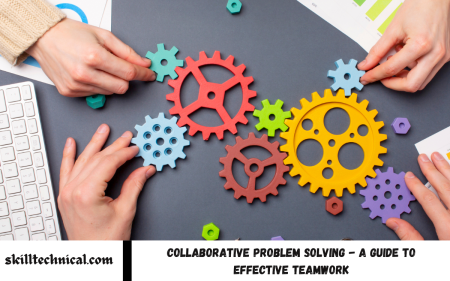
The Dark Side of Collaboration: When Good Intentions Go Wrong
Collaborative problem-solving isn’t a silver bullet. In fact, when done poorly, it can be a recipe for disaster. The same forces that make collaboration powerful—diverse perspectives, open communication, iterative testing—can also derail it if left unchecked. So, what are the pitfalls, and how do we avoid them?
The tyranny of consensus: Not every decision needs a unanimous vote. In fact, some of the best solutions emerge when teams embrace constructive disagreement. The key is to distinguish between healthy debate and endless debate. Set clear decision-making frameworks—like the RACI matrix (Responsible, Accountable, Consulted, Informed)—to ensure that collaboration doesn’t become a black hole of indecision.
The echo chamber effect: Diversity isn’t just about ticking boxes; it’s about bringing in voices that challenge the norm. If your team is full of people who think alike, you’re not collaborating—you’re reinforcing the same old ideas. Actively seek out dissenting opinions, and create spaces where quiet voices can be heard. Tools like anonymous feedback or rotating facilitators can help break the cycle of groupthink.
The collaboration tax: Yes, collaboration has a cost. It takes time, energy, and resources. The trick is to ensure that the benefits outweigh the costs. Not every problem needs a committee. Sometimes, the fastest path to a solution is a single person with the right expertise and authority. The key is to strike a balance—collaborate when it adds value, and act decisively when it doesn’t.
And then there’s the human element. Collaboration can be emotionally taxing. It requires vulnerability, patience, and a willingness to embrace failure. Not everyone thrives in this environment, and that’s okay. The goal isn’t to force everyone into the same mold but to create a culture where collaboration is optional—but when it happens, it’s world-class.
The Future of Work: Collaborative Problem-Solving as the Ultimate Power Skill
We’re standing on the precipice of a new era in work—one where the ability to collaborate isn’t just a nice-to-have but a must-have. The rise of remote and hybrid work has made collaboration harder, not easier. Silos are deeper, communication is fragmented, and the old ways of working no longer cut it. But here’s the good news: collaborative problem-solving is the antidote. It’s the skill that bridges the gap between physical distance and psychological proximity. It’s the force that turns “we’re all over the place” into “we’re all on the same page.”
In the years to come, collaborative problem-solving won’t just be a power skill—it will be the defining power skill. The teams that master it will out-innovate, out-execute, and outlast their competitors. They’ll be the ones that turn crises into opportunities, challenges into triumphs, and ideas into reality. And the best part? This isn’t some distant future. It’s happening right now, in boardrooms and startup garages, in classrooms and coding labs. The question isn’t whether collaborative problem-solving will become a power skill. The question is: are you ready to wield it?
The journey starts with a single step—a commitment to structure, trust, and iteration. It starts with a willingness to listen, to challenge, and to iterate. It starts with the belief that the best solutions aren’t found in isolation but in the alchemy of collaboration. So, take that step. Reach out to a colleague. Start a conversation. And watch as the magic of collaborative problem-solving transforms not just your work, but your world.
Leave a comment