


In the quiet hum of a classroom, a child’s eyes trace the jagged lines of a page, each word a fortress they cannot breach. Dyslexia, that invisible barrier, has long dictated the pace of learning for millions, turning what should be a joyful discovery into a daily struggle. Yet, imagine a world where those same words dissolve into a symphony of sound, where text-to-speech technology doesn’t just read aloud but *understands*—where generative AI doesn’t just assist but *adapts*. This isn’t a distant utopia; it’s the precipice of a revolution in learning, one that promises to rewrite the rules for those with dyslexia and other learning disabilities.
Generative AI, with its ability to process language in ways that mimic human intuition, is poised to shatter the limitations of traditional learning tools. Text-to-speech (TTS) systems, once robotic and monotonous, now pulse with the rhythm of natural speech, infusing emotion and context into every syllable. But the magic doesn’t stop there. These systems are evolving into dynamic companions, capable of adjusting tone, pace, and even vocabulary to suit the unique cognitive landscape of each learner. For a child with dyslexia, this isn’t just about hearing words—it’s about *feeling* them, about experiencing language in a way that finally aligns with their inner voice.

The Alchemy of AI: Transforming Text into a Personalized Symphony
At the heart of this transformation lies the alchemy of generative AI—a process where raw text is not just converted into speech but *transmuted* into an experience tailored to the listener’s needs. Traditional TTS systems often stumbled over complex words or struggled to convey nuance, leaving learners adrift in a sea of robotic monotony. Modern generative AI, however, leverages deep learning models trained on vast corpora of human speech, enabling it to replicate not just the sound of words but their *essence*.
Consider the child who stumbles over multisyllabic words like “extraordinary.” A conventional TTS might pronounce it with robotic precision, but an AI-driven system can break it down phonetically, emphasize the syllables, and even adjust the tempo to match the learner’s comfort level. Worse still, dyslexia often distorts the *meaning* of words in the mind’s eye, turning “there” into “their” or “here” into “hear.” Generative AI can contextualize these words, offering real-time definitions or visual cues to anchor their significance. It’s not just reading—it’s *relearning* the language on the learner’s terms.
Moreover, these systems are becoming attuned to the emotional cadence of speech. A story about a dragon’s fiery breath might be narrated with a dramatic crescendo, while a gentle poem unfolds in a hushed, melodic tone. For a child with dyslexia, who may have internalized frustration or shame around reading, this emotional resonance can be a bridge to confidence. The AI doesn’t just speak; it *connects*.
The Adaptive Edge: How AI Learns Alongside Its Users
What sets generative AI apart is its capacity for *adaptation*—a feature that turns static tools into dynamic allies. Unlike traditional TTS, which offers a one-size-fits-all solution, modern AI systems can evolve alongside their users. Through continuous interaction, they learn to anticipate challenges, refine pronunciation, and even suggest alternative phrasing when a sentence proves too complex.
Imagine a student grappling with a dense science textbook. The AI, sensing their hesitation, might slow down for technical terms or provide a simplified explanation in real time. It could highlight key phrases or even generate a summary in simpler language, ensuring comprehension without oversimplification. This isn’t just assistive technology; it’s a *collaborative* learning partner, one that grows smarter with every interaction.
For those with attention deficits or processing disorders, the ability to customize the listening experience is transformative. Users can adjust the speed, pitch, and even the voice’s gender or accent to suit their preferences. Some systems now incorporate *predictive text* that anticipates the next word based on the learner’s reading patterns, reducing cognitive load and fostering fluency. It’s as if the AI is whispering, “I see you. I’m here to meet you where you are.”
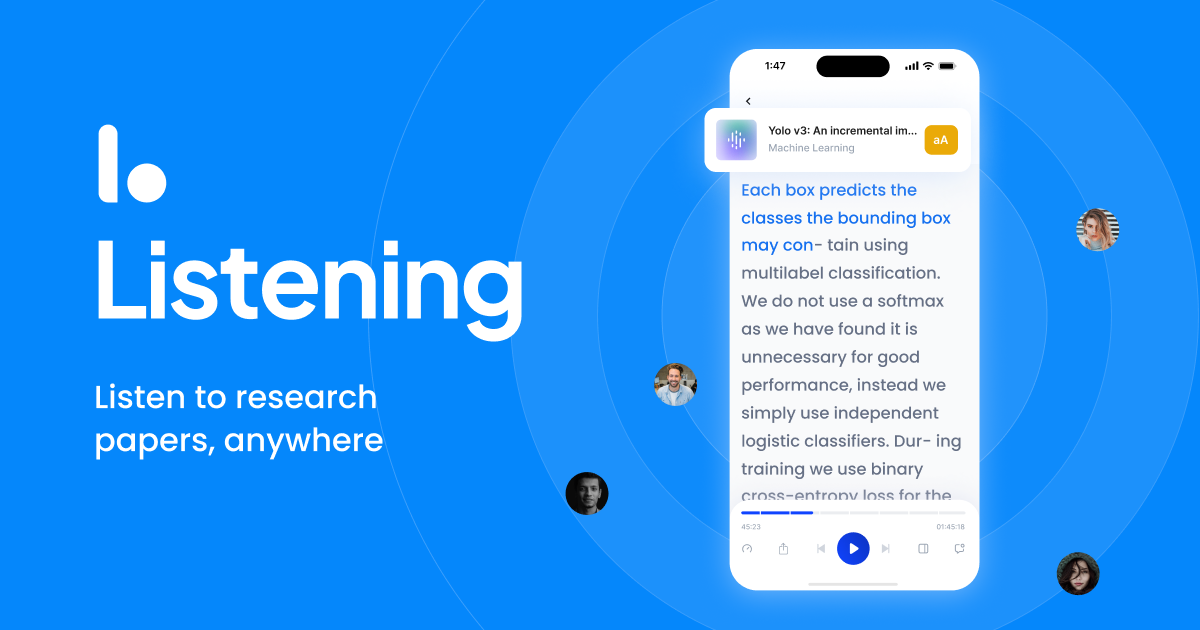
Beyond Dyslexia: A Panacea for Diverse Learning Needs
While dyslexia is the most visible beneficiary of this technology, generative AI is casting a wider net, addressing a spectrum of learning disabilities and cognitive differences. For individuals with auditory processing disorders, AI-driven TTS can help bridge the gap between spoken and written language by reinforcing phonemic awareness. Those with ADHD may benefit from the AI’s ability to segment text into digestible chunks, reducing overwhelm and improving focus.
Even for learners with no diagnosed disabilities, these tools offer a lifeline in an era of information overload. The ability to listen to complex texts while multitasking—whether during a commute or a workout—democratizes access to knowledge. It’s a subtle shift, but one that could redefine how we consume information in a hyper-connected world.
Consider the student with dysgraphia, who struggles to translate thoughts into written words. Generative AI can act as a scribe, transcribing their spoken ideas into coherent text while simultaneously reading it back for review. This dual modality—speaking and listening—reinforces memory and clarity, turning a frustrating process into a fluid exchange. The stigma of “not being able to write” begins to dissolve when the focus shifts from the mechanics of writing to the *ideas* themselves.
The Ethical Compass: Navigating the Future of AI in Education
Yet, with great power comes great responsibility. The integration of generative AI into learning tools raises critical questions about privacy, bias, and the role of human educators. How do we ensure that these systems don’t inadvertently reinforce stereotypes or exclude diverse linguistic backgrounds? What safeguards are in place to protect the data of young learners, whose interactions with AI could reveal sensitive information about their cognitive challenges?
Developers are increasingly prioritizing transparency, allowing users to audit the AI’s decision-making processes and adjust its behavior to align with their values. Open-source models and collaborative research initiatives are fostering inclusivity, ensuring that the benefits of AI aren’t confined to a privileged few. The goal isn’t to replace human teachers but to *augment* their capabilities, freeing them to focus on mentorship, creativity, and the emotional aspects of learning that machines cannot replicate.
There’s also the question of over-reliance. Can AI, no matter how sophisticated, truly replace the tactile experience of reading a physical book or the serendipity of stumbling upon a word’s meaning in a dictionary? The answer lies in balance. Generative AI should be viewed as a *complement* to traditional learning, not a replacement. It’s a tool that can level the playing field, but it’s not a magic wand that erases all obstacles overnight.
The Ripple Effect: Redefining Possibility in Education
The true promise of generative AI for dyslexia and learning disabilities isn’t just in the technology itself but in the cultural shift it heralds. For centuries, learning disabilities have been framed as obstacles to overcome, deficits to correct. But what if we reframed them as *differences* to celebrate? What if the child who once struggled to decode words could now *soar* through them, not despite their dyslexia but because of the tools that finally speak their language?
This is the heart of the revolution: a move from accommodation to *amplification*. Generative AI doesn’t just help learners with dyslexia read; it helps them *thrive*. It transforms frustration into fascination, isolation into connection, and limitation into limitless potential. In classrooms and homes around the world, this technology is already sparking moments of revelation—when a child hears a word for the first time and *understands* it, when a teenager grasps a complex concept that once felt like a locked door, when an adult rediscovers the joy of reading without the weight of shame.

As we stand on the brink of this new era, it’s worth remembering that every technological leap begins with a single spark—a moment when someone dared to ask, “What if?” For those with dyslexia and learning disabilities, that spark is now igniting a bonfire of possibility. The future of learning isn’t just about reading; it’s about *hearing*, *feeling*, and ultimately, *belonging*. And with generative AI as their guide, the next generation won’t just navigate the world of words—they’ll redefine it.
So the next time you see a child’s eyes light up as a story unfolds in their ears, remember: this isn’t just progress. It’s a promise kept.
Leave a comment