


In the relentless march toward a sustainable future, data centers stand at a crossroads. These digital fortresses, humming with the ceaseless energy of computation, are both the backbone of our modern world and a growing concern for environmentalists. The paradox is stark: without data centers, our interconnected lives would grind to a halt, yet their voracious appetite for power casts a long, carbon-stained shadow. Enter green tech—specifically, liquid cooling and renewable Power Purchase Agreements (PPAs)—the twin pillars reshaping the data center landscape into one that is not just efficient, but ecologically harmonious. This transformation isn’t merely an environmental imperative; it’s a technological revolution, redefining how we think about energy, infrastructure, and the very future of computing.
For the curious technologist, the sustainability advocate, or the business leader seeking to align profit with purpose, understanding these innovations is no longer optional. It’s essential. The following exploration will dissect the mechanics, benefits, and real-world applications of liquid cooling and renewable PPAs, while also peeling back the layers to reveal the human stories and global stakes behind each kilowatt saved and each megawatt redirected. Whether you’re here to grasp the technical intricacies, to find inspiration for your next project, or simply to marvel at the ingenuity of modern engineering, prepare to dive into a world where data centers don’t just compute—they coexist.
The Heat Dilemma: Why Traditional Cooling is a Relic of the Past
Picture a data center as a colossal engine, its processors whirring like pistons, each one generating heat as a byproduct of raw computation. In the early days of computing, air cooling sufficed—gentle breezes wafted through server rooms, dissipating the modest thermal output of room-sized mainframes. But today’s hyperscale data centers are a different beast entirely. Packed with thousands of high-performance servers, they churn out heat at a scale that would make a volcano blush. Traditional air cooling, with its reliance on massive HVAC systems and energy-guzzling fans, is no longer just inefficient; it’s a relic of an era before climate consciousness.
The inefficiencies are glaring. Air cooling dissipates heat indirectly, requiring vast amounts of energy to maintain optimal temperatures. Studies suggest that cooling can account for up to 40% of a data center’s total energy consumption—a staggering figure when you consider that the global data center industry consumes more electricity than entire nations. Beyond the energy drain, air cooling struggles with scalability. As servers grow denser and more powerful, the heat they produce intensifies, pushing traditional systems to their breaking point. The result? Overheating, throttled performance, and a relentless cycle of hardware degradation.
Enter liquid cooling—a paradigm shift that replaces air with a far more efficient medium. By circulating specialized fluids directly through server components, liquid cooling siphons away heat with precision, reducing energy consumption by up to 50% compared to air-based systems. It’s not just about efficiency; it’s about reclaiming the thermal energy that would otherwise dissipate into the atmosphere. In an era where every watt counts, liquid cooling isn’t just an upgrade—it’s a revolution.
Diving Deeper: The Three Flavors of Liquid Cooling
Not all liquid cooling is created equal. The technology has evolved into a spectrum of solutions, each tailored to different needs, budgets, and scales of operation. Understanding these variations is key to selecting the right approach for your data center’s unique demands.
1. Direct-to-Chip Cooling: Precision at the Core
Imagine a surgeon’s scalpel, slicing through the noise to target the heart of the problem. Direct-to-chip cooling does just that, channeling coolant directly to the processors and GPUs where heat is generated. This method uses microchannels or cold plates affixed to the chip’s surface, ensuring that thermal energy is whisked away before it can spread. The benefits are immediate: lower energy consumption, reduced noise (no more roaring fans), and the ability to overclock servers without fear of thermal throttling. Companies like Microsoft and Google have already adopted this technology in their high-performance computing clusters, proving that direct-to-chip cooling is not just a niche solution but a mainstream necessity.
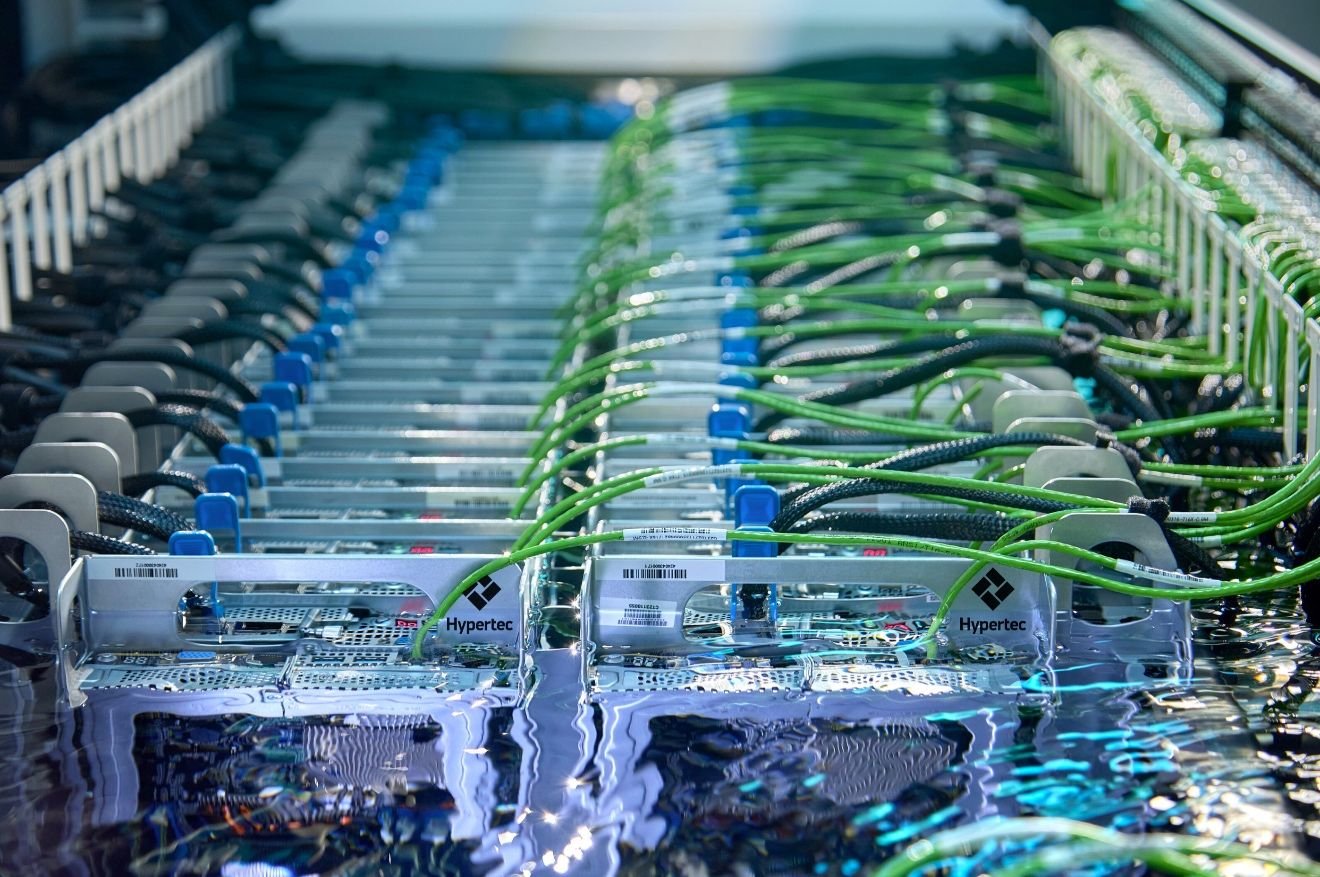
2. Immersion Cooling: Submerging Servers in a Thermal Bath
For those seeking the ultimate in thermal efficiency, immersion cooling offers a breathtakingly simple yet radical solution: submerge the entire server in a dielectric fluid. These fluids, engineered to be electrically non-conductive, envelop servers in a thermal bath, absorbing heat directly from every component. The result is near-silent operation, negligible energy loss, and the ability to pack servers even more densely without overheating. The visual spectacle of servers floating in shimmering liquid is more than just Instagram gold—it’s a testament to the ingenuity of modern engineering. While immersion cooling was once confined to niche applications, it’s now gaining traction in edge data centers and AI workloads, where thermal management is critical.

3. Rear-Door Heat Exchangers: The Unsung Heroes
Sometimes, the most effective solutions are the ones hiding in plain sight. Rear-door heat exchangers attach to the back of server racks, using a closed-loop water system to absorb and dissipate heat before it can circulate through the data center. This method is less invasive than direct-to-chip or immersion cooling, making it ideal for retrofitting existing facilities. It’s also remarkably efficient, reducing cooling energy by up to 30% while maintaining compatibility with traditional air-cooled infrastructure. For data centers operating on tight budgets or constrained by legacy systems, rear-door heat exchangers offer a pragmatic path to sustainability without a complete overhaul.
Renewable PPAs: Powering Data Centers with the Sun and Wind
Even the most advanced cooling system is only as green as the energy powering it. Enter the Power Purchase Agreement (PPA)—a financial mechanism that allows data centers to source renewable energy directly from producers, often at competitive rates. Unlike traditional energy procurement, which relies on the grid’s mix of fossil fuels and renewables, PPAs enable organizations to lock in long-term contracts for wind, solar, or hydroelectric power. The result? A data center that doesn’t just consume energy—it fuels a renewable energy ecosystem.
The appeal of PPAs extends beyond environmental altruism. For businesses, they offer price stability in an era of volatile energy markets, hedge against future carbon taxes, and enhance corporate sustainability credentials. Companies like Amazon, Meta, and Equinix have inked PPAs worth billions, committing to 100% renewable energy for their operations. But the impact isn’t just corporate; it’s systemic. By driving demand for renewable energy, data centers are accelerating the transition to a decarbonized grid, creating a virtuous cycle where digital infrastructure and clean energy reinforce each other.
The Synergy of Cooling and Renewables: A Case Study in Efficiency
To grasp the full potential of green tech in data centers, consider the synergy between liquid cooling and renewable PPAs. Take, for example, a hyperscale data center in Scandinavia, where immersion cooling slashes energy use by 40%, and a 20-year PPA with a nearby wind farm ensures that every kilowatt-hour is 100% renewable. The result? A facility that operates at near-zero net carbon emissions, with cooling costs reduced to a fraction of traditional systems. This isn’t hypothetical—it’s already happening. In Finland, data center operator Academica leverages immersion cooling and hydroelectric power to achieve a PUE (Power Usage Effectiveness) of 1.05, a figure that would have been unthinkable a decade ago.
The benefits ripple outward. Lower energy consumption translates to reduced strain on local grids, while renewable PPAs inject capital into clean energy projects, creating jobs and fostering innovation. For communities hosting data centers, this means economic growth without the environmental trade-offs of the past. It’s a win-win scenario where technology, economics, and ecology converge.
Challenges and Considerations: Navigating the Green Tech Landscape
Of course, the path to greener data centers isn’t without its hurdles. Liquid cooling, for all its advantages, presents implementation challenges. Direct-to-chip systems require meticulous engineering to avoid leaks or thermal hotspots, while immersion cooling demands specialized fluids and maintenance protocols. Retrofitting existing facilities can be costly, and the upfront investment in new cooling infrastructure may deter some organizations. Similarly, renewable PPAs, while financially attractive in the long run, often require significant capital and long-term commitments, which can be daunting for smaller players.
There’s also the question of scalability. While hyperscale operators can afford to pioneer these technologies, mid-sized and edge data centers may struggle to justify the costs. However, as the technology matures and economies of scale kick in, these barriers are gradually eroding. Governments and industry consortia are also stepping up, offering grants, tax incentives, and standardized frameworks to accelerate adoption. The message is clear: the green data center isn’t a distant dream—it’s an attainable reality, provided the will and resources are in place.
The Human Element: Stories from the Frontlines
Behind every server rack and cooling loop are the people driving this transformation. Meet Elena, a thermal engineer at a leading data center in Sweden, who spent years refining immersion cooling systems to handle the heat of AI workloads. Or take Raj, a sustainability manager at a cloud provider in India, who navigated bureaucratic red tape to secure a solar PPA for a facility in Rajasthan. Their stories are a reminder that green tech isn’t just about machines—it’s about human ingenuity, perseverance, and a shared commitment to leaving a lighter footprint on the planet.
These narratives also highlight the global nature of the challenge. In Europe, strict carbon regulations push operators toward innovation, while in the U.S., the Inflation Reduction Act is catalyzing a renewable energy boom. Meanwhile, in developing nations, data centers are leapfrogging traditional infrastructure, adopting green tech from the outset. The result is a mosaic of solutions, each tailored to local contexts but united by a common goal: to redefine what it means to compute sustainably.
Looking Ahead: The Future of Green Data Centers
The data center of tomorrow won’t just be efficient—it will be regenerative. Imagine facilities that don’t just consume energy but produce it, integrating solar panels into rooftops and wind turbines into their architecture. Picture servers cooled by waste heat, repurposed to warm nearby buildings or power district heating systems. These aren’t sci-fi fantasies; they’re the next frontier of green tech, where data centers become active participants in the circular economy.
Artificial intelligence will play a pivotal role in this evolution. Machine learning algorithms are already optimizing cooling systems in real time, predicting thermal loads, and adjusting fluid flows to maximize efficiency. As AI matures, it will enable data centers to become self-regulating ecosystems, where every watt is accounted for, and every decision is guided by sustainability metrics. The convergence of AI, liquid cooling, and renewable energy isn’t just a technological leap—it’s a paradigm shift in how we perceive and interact with our digital infrastructure.
The journey toward green data centers is more than a technical challenge; it’s a moral imperative. In a world where the digital and physical realms are inextricably linked, the choices we make today will echo for generations. Liquid cooling and renewable PPAs are not just tools—they are beacons, guiding us toward a future where technology and nature coexist in harmony. For the innovators, the dreamers, and the pragmatists among us, the message is clear: the future of computing is green. And it’s arriving faster than we think.
Leave a comment