


In an era where the specter of climate change looms larger with each passing season, the urgency to reshape our economies has never been more palpable. Yet, amidst the cacophony of policy debates and technological breakthroughs, a quieter revolution is unfolding—one that is redefining how we validate skills and knowledge in the clean economy. Enter green micro-credentials, the stackable badges of the future, poised to bridge the chasm between ambition and action. These aren’t just digital adornments; they are the currency of a new workforce, where every badge earned is a step toward a more sustainable world.
Imagine a world where a farmer in rural Kenya can earn a badge for mastering drought-resistant agricultural techniques, or a software engineer in Silicon Valley can showcase their proficiency in carbon accounting. These micro-credentials are more than just symbols—they are the scaffolding of a lifelong learning ecosystem, designed to adapt as swiftly as the climate itself. But why do they captivate us so deeply? Perhaps it’s the promise they hold: a future where every individual, regardless of their starting point, can contribute to the clean economy in tangible ways. Or maybe it’s the elegance of their design—a system that is modular, scalable, and inherently democratic.
The Rise of the Green Badge: A Paradigm Shift in Credentialing
Traditional education systems, with their rigid structures and time-consuming degrees, often struggle to keep pace with the rapid evolution of green technologies. Enter micro-credentials, the nimble cousins of diplomas and certificates. These bite-sized, skill-specific badges are not bound by the constraints of academia; instead, they thrive on agility. Whether it’s a course on renewable energy installation or a workshop on circular economy principles, green micro-credentials offer a way to upskill without the years-long commitment of a degree.
The allure of these badges lies in their stackability. Picture a mosaic where each tile represents a skill—perhaps one for solar panel maintenance, another for sustainable supply chain management, and yet another for green building design. Individually, they are powerful; together, they form a comprehensive picture of expertise. This modular approach is particularly transformative for industries grappling with the green transition, where the demand for specialized knowledge outstrips the supply of traditional qualifications.
Consider the construction sector, where the push for net-zero buildings is reshaping job roles. A carpenter might earn a badge in low-carbon materials, while an electrician could specialize in smart grid technologies. These credentials aren’t just for show; they signal to employers that the holder is equipped to meet the demands of a rapidly changing industry. In this way, green micro-credentials are not merely badges—they are the building blocks of a workforce that is as dynamic as the challenges it seeks to address.
From Skepticism to Synergy: Overcoming the Credentialing Conundrum
Of course, no revolution is without its detractors. Critics argue that micro-credentials lack the rigor of traditional education, or that they risk diluting the value of expertise. Yet, the truth is far more nuanced. The skepticism often stems from a misunderstanding of their purpose. These badges are not meant to replace degrees but to complement them, offering a pathway for continuous learning in an era where static knowledge is a liability.
The real magic happens when these credentials are integrated into broader educational and professional frameworks. Take, for example, the rise of lifelong learning platforms that curate micro-credentials from multiple institutions, allowing learners to build a personalized portfolio of skills. This approach democratizes access to education, breaking down barriers for those who might not have the time or resources to pursue a full degree. It also fosters a culture of curiosity, where learning is no longer confined to the classroom but becomes a lifelong pursuit.
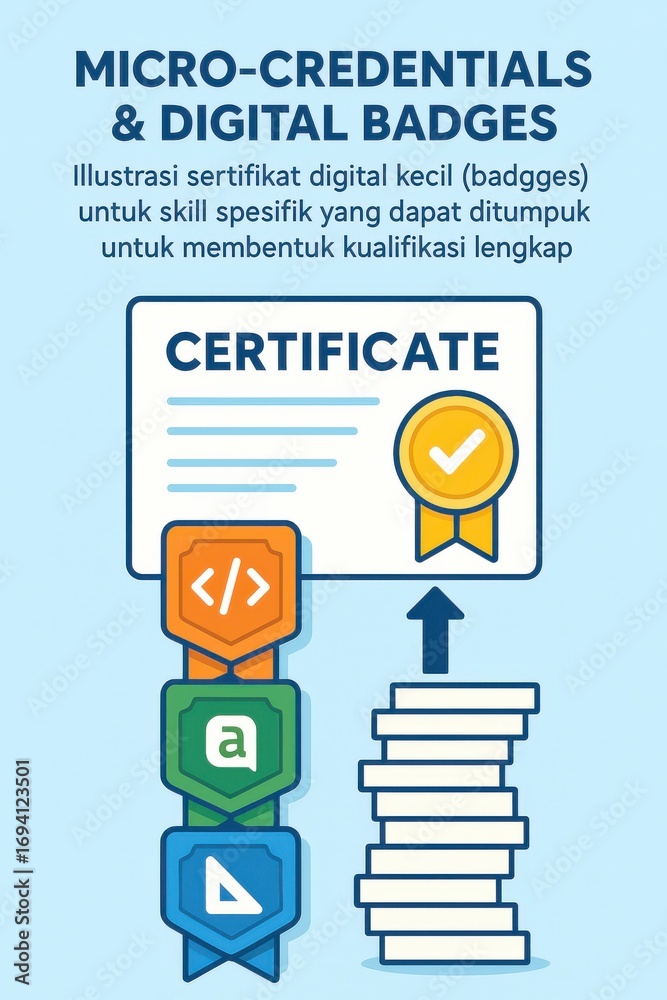
The Clean Economy’s Secret Weapon: Stackable Expertise
The clean economy is not a monolith; it is a sprawling, interconnected web of industries—renewable energy, sustainable agriculture, green finance, and beyond. Each sector demands a unique set of skills, and the workforce must evolve accordingly. Here, stackable micro-credentials shine as a beacon of adaptability. They allow individuals to pivot between industries with ease, armed with the precise skills needed to make an impact.
Take the example of a former oil rig worker transitioning to offshore wind energy. With a micro-credential in wind turbine maintenance, they can leverage their existing technical skills while acquiring new ones tailored to the clean energy sector. This not only smooths the transition but also ensures that the workforce remains agile in the face of economic shifts. The stackable nature of these badges means that workers can continuously refine their expertise, staying ahead of the curve as technologies and regulations evolve.
Moreover, these credentials serve as a bridge between education and employment. Employers, often frustrated by the gap between academic curricula and real-world needs, can now look to micro-credentials as a reliable indicator of a candidate’s practical skills. This alignment between education and industry is critical for the clean economy, where the pace of innovation outstrips the ability of traditional educational systems to keep up.
The Psychology of the Badge: Why We’re Drawn to Stackable Credentials
There’s something inherently satisfying about earning a badge. It’s a tangible reward, a visual testament to one’s progress. Psychologists might call this the Zeigarnik effect—the idea that incomplete tasks create mental tension, driving us to complete them for closure. Micro-credentials tap into this psychological impulse, offering a clear path to mastery that is both achievable and measurable.
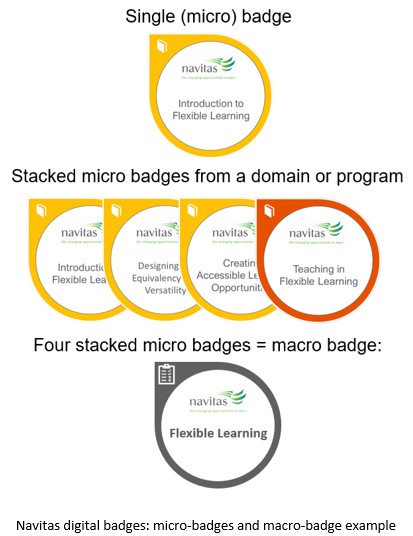
But the fascination with these credentials goes deeper. In a world where information is abundant but attention is scarce, micro-credentials provide a sense of direction. They offer a narrative—a story of growth and achievement that is uniquely personal. For many, this narrative is empowering, a way to reclaim agency in an economy that often feels impersonal and overwhelming.
There’s also a communal aspect to this phenomenon. As more people earn and display their badges, a culture of shared learning emerges. Online forums, professional networks, and even social media platforms become spaces where individuals celebrate their achievements and seek advice from peers. This collective journey fosters a sense of belonging, turning the pursuit of green skills into a shared mission rather than a solitary endeavor.
Designing the Future: How Institutions Can Harness the Power of Green Micro-Credentials
The potential of green micro-credentials is vast, but realizing it requires intentional design. Institutions must collaborate closely with industry leaders to ensure that the skills being taught are not only relevant but also aligned with real-world demands. This means co-creating curricula, embedding work-integrated learning opportunities, and leveraging technology to deliver flexible, on-demand education.
Technology, in particular, is a game-changer. Blockchain, for instance, can be used to create tamper-proof records of achievements, giving employers confidence in the authenticity of a candidate’s credentials. Artificial intelligence can personalize learning pathways, recommending micro-credentials based on an individual’s career goals and existing skills. These innovations are not just bells and whistles; they are the tools that will make green micro-credentials a cornerstone of the clean economy.
Yet, technology alone is not enough. Institutions must also foster a culture of lifelong learning, encouraging students and professionals alike to view education as an ongoing journey rather than a one-time event. This cultural shift requires buy-in from employers, who must recognize the value of micro-credentials and integrate them into their hiring and promotion processes. It also demands a rethinking of traditional credentialing systems, which often prioritize time spent in a classroom over actual competency.
The Ripple Effect: How Green Micro-Credentials Transform Industries
The impact of green micro-credentials extends far beyond individual learners. When industries adopt these credentials, they send a powerful signal to the market: that they are committed to sustainability and innovation. This can attract talent, boost investor confidence, and even influence policy. For example, a company that offers stackable badges in green skills may find it easier to attract top talent, particularly among younger generations who prioritize purpose-driven work.
Consider the renewable energy sector, where the demand for skilled workers is outpacing supply. By offering micro-credentials in areas like solar installation, energy storage, and grid management, companies can quickly upskill their workforce, reducing the time and cost associated with traditional training programs. This not only addresses labor shortages but also accelerates the adoption of clean technologies.

Similarly, in the realm of green finance, micro-credentials can equip professionals with the knowledge needed to navigate the complexities of sustainable investing. A banker with a badge in ESG (Environmental, Social, and Governance) criteria, for instance, is better positioned to advise clients on impactful investment strategies. This not only benefits the individual but also contributes to the broader transition toward a more sustainable financial system.
Conclusion: The Badge as a Beacon of Change
The clean economy is not a distant utopia; it is a tangible future that is being built one skill at a time. Green micro-credentials are the scaffolding of this future, offering a flexible, inclusive, and dynamic way to validate expertise in the pursuit of sustainability. They are more than just badges—they are symbols of a workforce that is ready to meet the challenges of our time with ingenuity and determination.
As we stand on the precipice of this new era, the question is not whether we can afford to embrace these credentials, but whether we can afford not to. The clean economy demands agility, and agility demands a workforce that is as adaptable as the systems it seeks to transform. Green micro-credentials are the key to unlocking this potential, offering a pathway to a future where every individual has the opportunity to contribute to a greener, more equitable world.
So, the next time you see a stack of badges adorning a professional’s profile, remember: it’s not just a collection of digital images. It’s a testament to a journey—a journey toward mastery, toward sustainability, and toward a future where the clean economy is not just a dream, but a reality.
Leave a comment