


In the relentless march toward a decarbonized future, few technologies have captured the imagination quite like high-temperature electrolysis (HTE) and its symbiotic dance with synthetic fuels. These innovations are not merely tools; they are the alchemy of our time, transforming surplus renewable energy into storable, transportable power. Picture a world where the sun’s bounty in the Sahara or the wind’s fury in Patagonia doesn’t dissipate into the ether but is harnessed, refined, and repurposed into liquid gold—liquid that burns clean, powers planes, and fuels ships without a whisper of carbon. This is the promise of green tech at its most audacious, where the boundaries between energy generation and consumption blur into something revolutionary.
The fascination with HTE and synthetic fuels isn’t just about their technical elegance; it’s about the profound shift they represent in how we perceive energy itself. For decades, we’ve treated electricity as a fleeting commodity, impossible to store at scale without significant losses. But HTE changes the game. By operating at temperatures upwards of 700°C, it achieves efficiencies that conventional electrolysis can only dream of, slashing the energy required to split water into hydrogen and oxygen. This isn’t just incremental progress—it’s a paradigm shift, one that turns the very notion of “waste” energy into a valuable resource.
The Alchemy of High-Temperature Electrolysis: Turning Heat into Hydrogen
At the heart of this revolution lies the high-temperature electrolyzer, a marvel of ceramic engineering and electrochemical precision. Unlike its low-temperature counterparts, which rely solely on electricity, HTE leverages both electrical and thermal energy, drawing heat from concentrated solar power or industrial waste streams. This dual-input approach isn’t just a clever hack; it’s a thermodynamic masterstroke. By reducing the electrical energy required, HTE makes hydrogen production viable even when renewable electricity is scarce or expensive.
Consider the solid oxide electrolyzer cell (SOEC), the workhorse of HTE. These devices, often composed of yttria-stabilized zirconia, operate at temperatures where water molecules dissociate with almost effortless grace. The steam fed into the system isn’t just hot—it’s superheated, primed for the electrochemical ballet that follows. The result? Hydrogen yields that can surpass 90% efficiency, a figure that dwarfs the 60-70% typical of alkaline or PEM electrolyzers. But efficiency is only part of the story. The real magic lies in the synergy between HTE and renewable energy sources. When paired with solar thermal plants or geothermal installations, HTE can operate continuously, unshackled from the intermittency that plagues photovoltaic and wind systems.
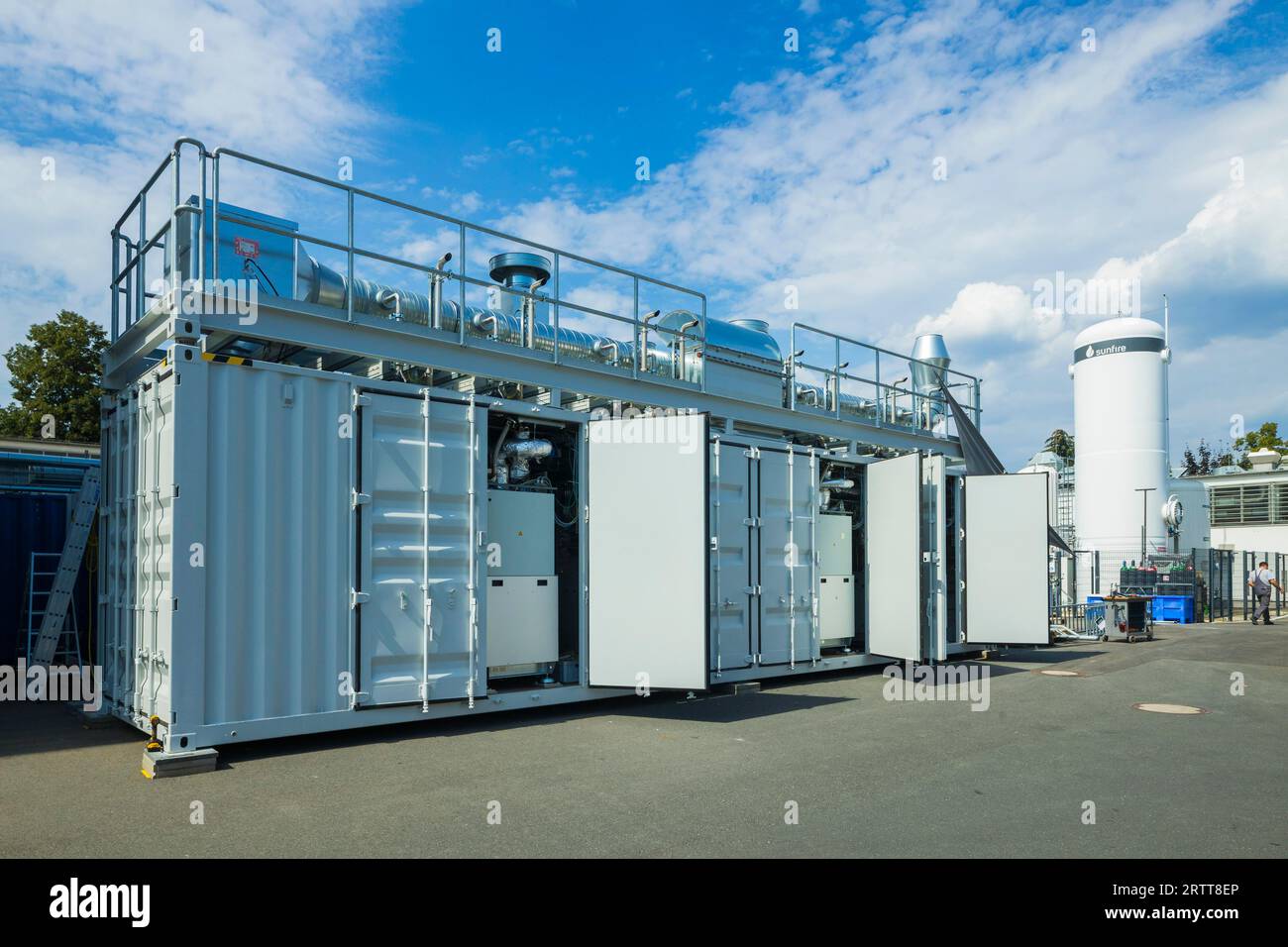
Yet, the path to widespread adoption is fraught with challenges. The materials used in SOECs must withstand thermal cycling and corrosive environments, demanding advances in ceramic science and coating technologies. Scale is another hurdle. While pilot plants in Germany and Japan have demonstrated the technology’s potential, commercial deployment requires gigawatt-scale installations—monuments to human ingenuity that don’t yet exist. But these are not insurmountable obstacles. They are the rungs on the ladder to a hydrogen economy, and with each rung climbed, the view becomes clearer.
Synthetic Fuels: The Missing Link in the Energy Transition
Hydrogen is the ultimate clean fuel, but it’s not without its limitations. Its low energy density and the infrastructure required to transport and store it pose significant barriers. Enter synthetic fuels—liquid hydrocarbons synthesized from hydrogen and captured carbon dioxide. These e-fuels, as they’re often called, are the chameleons of the energy world, capable of mimicking gasoline, diesel, or even jet fuel without the environmental baggage. They’re the bridge between the electricity grid and sectors that can’t easily electrify, from aviation to shipping.
The process begins with green hydrogen, produced via HTE, which is then combined with CO₂ sourced from direct air capture or industrial emissions. Through the Fischer-Tropsch synthesis or methanol-to-gasoline processes, these raw materials are transformed into drop-in fuels that require no modifications to existing engines or infrastructure. It’s a bit like turning base metals into gold, except the alchemy here is powered by the sun and the wind, and the gold is a fuel that leaves no carbon footprint.
But why go through the trouble of creating synthetic fuels when we already have electric vehicles and biofuels? The answer lies in energy density and convenience. A single liter of synthetic gasoline contains roughly 34 megajoules of energy, compared to just 0.5 megajoules in the best lithium-ion batteries. For long-haul trucking, aviation, or maritime shipping, where weight and volume are critical, synthetic fuels are not just an option—they’re a necessity. They’re the reason why companies like Siemens Energy and Porsche are investing billions into e-fuel production, betting on a future where the internal combustion engine isn’t obsolete but reborn as a zero-emission powerhouse.
Of course, the economics of synthetic fuels are still a work in progress. Current production costs hover around $10 per gallon, far above the $3 per gallon of conventional gasoline. Yet, as renewable energy costs continue to plummet and carbon pricing becomes more stringent, the gap is narrowing. The International Energy Agency estimates that by 2030, e-fuels could become cost-competitive with fossil fuels in some regions, particularly where renewable electricity is abundant and cheap. The key will be scaling up production while driving down the energy intensity of the synthesis process.
The Symbiosis: How HTE and Synthetic Fuels Reinforce Each Other
The relationship between HTE and synthetic fuels is one of mutual reinforcement, a feedback loop that amplifies the benefits of both technologies. HTE provides the high-purity hydrogen needed for fuel synthesis, while the demand for synthetic fuels justifies the investment in large-scale HTE plants. This synergy is already playing out in projects like the Haru Oni pilot plant in Chile, where wind-powered HTE is used to produce hydrogen for synthetic gasoline. The plant, a collaboration between Siemens Energy, Porsche, and HIF Global, is a microcosm of what’s possible when two green technologies converge.
But the potential extends far beyond pilot plants. Imagine a future where deserts are dotted with solar thermal towers, their heat driving HTE systems that produce hydrogen around the clock. That hydrogen is then shipped to coastal refineries, where it’s combined with CO₂ captured from the air to create synthetic methanol—a fuel that can power ships or be converted into plastics. The entire process is closed-loop, with no net emissions, and the only inputs are sunlight, wind, and seawater. It’s a vision that sounds like science fiction, yet every component already exists in some form. The challenge is stitching them together into a cohesive, scalable system.
The geopolitical implications of this symbiosis are equally profound. Countries blessed with abundant renewable resources—Australia, Morocco, Saudi Arabia—could become the new oil sheikhdoms, exporting not fossil fuels but green hydrogen and synthetic fuels. The shift would upend global energy markets, reducing the influence of petrostates while empowering nations that have long been on the periphery of the energy economy. It’s a rebalancing act that could reshape alliances, economies, and even cultures.
The Road Ahead: Challenges and Opportunities
Despite the promise, the road to a hydrogen-synthetic fuel economy is lined with obstacles. The first is political. Governments must commit to long-term policies that incentivize green hydrogen and e-fuel production, such as tax credits, carbon pricing, and mandates for sustainable aviation fuels. The second is technological. While HTE and synthetic fuel production are mature enough for pilot projects, scaling them up will require breakthroughs in materials science, process optimization, and energy storage. The third is economic. The capital expenditures for these systems are staggering, and without clear revenue streams, private investment will remain cautious.
Yet, the opportunities far outweigh the challenges. For industries that have struggled to decarbonize—steel, cement, chemicals—green hydrogen and synthetic fuels offer a lifeline. For countries seeking energy independence, they provide a path away from fossil fuel dependence. And for the planet, they represent a chance to bend the emissions curve downward before it’s too late.
The fascination with these technologies isn’t just about their potential to save the world; it’s about their ability to redefine what’s possible. They challenge our assumptions about energy, forcing us to think beyond the grid and the pump. They invite us to imagine a future where energy is not extracted but created, where waste is not a byproduct but a feedstock, and where the very air we breathe becomes a resource. It’s a future that’s within reach, if we’re willing to take the leap.
As the sun sets on the fossil fuel era, high-temperature electrolysis and synthetic fuels stand as beacons of hope—a reminder that innovation isn’t just about incremental improvements but about reimagining the world from first principles. The journey won’t be easy, but the destination is worth every step. The age of green alchemy has only just begun.
Leave a comment