


We all have days when the to-do list feels like a mountain we can’t quite climb. Tasks pile up, priorities blur, and by evening, we’re left wondering where the time went. Yet, there’s a quiet ritual practiced by some of the most productive people—the daily review. It’s not just about checking off boxes; it’s about understanding the rhythm of your day, recognizing patterns, and making intentional adjustments. But why does this simple habit feel so elusive? And how can we craft a daily review that actually transforms our productivity instead of adding another task to the pile?
The Illusion of Productivity: Why We Miss the Bigger Picture
We live in a culture that glorifies busyness. The more tasks we complete, the more we feel we’ve earned our keep. Yet, this obsession with output often blinds us to the quality of our work and the sustainability of our efforts. A daily review isn’t just a recap—it’s a mirror. It forces us to pause and ask: What did I actually accomplish today, and was it meaningful?
Consider this: How often do we finish a day feeling drained, only to realize we spent hours on low-impact tasks? A well-structured review helps us identify these inefficiencies before they become habits. It’s not about self-criticism; it’s about clarity. Without this reflection, we risk falling into the trap of reactive living—where our time is dictated by urgency rather than importance.
Designing Your Review: Structure Over Spontaneity
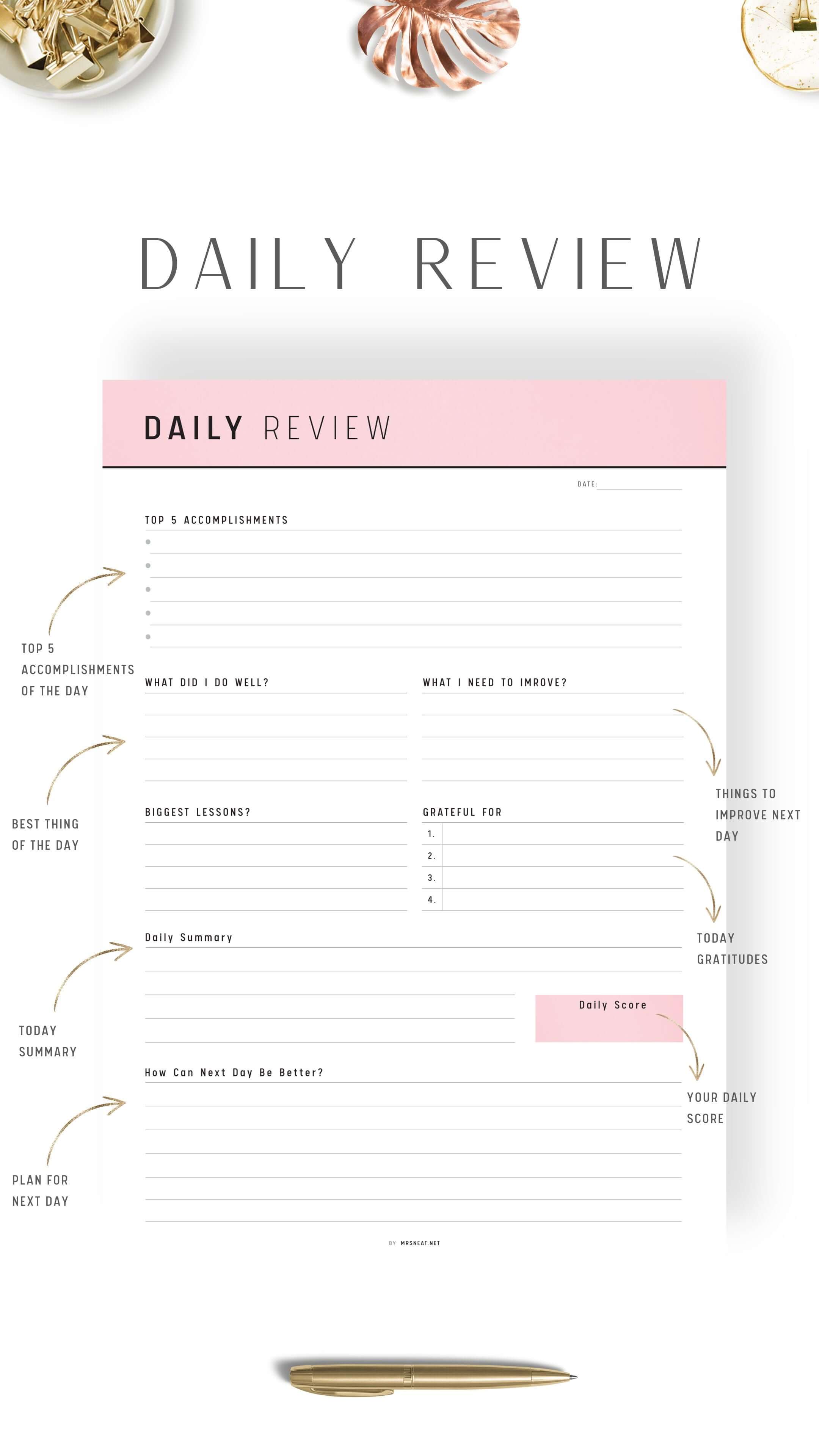
The key to a daily review that works isn’t complexity—it’s consistency. A rigid, over-engineered system will crumble under the weight of daily life. Instead, aim for a framework that’s flexible enough to adapt but structured enough to guide you. Here’s how to build one:
1. The Three-Part Framework
Break your review into three digestible parts: Reflect, Recharge, Redirect.
- Reflect: Spend 5–10 minutes reviewing your day. What went well? What didn’t? Did you meet your priorities, or were you pulled in a dozen directions? Write it down—even if it’s messy. The act of articulating your thoughts brings hidden patterns to light.
- Recharge: Acknowledge your wins, no matter how small. Did you finish a report? Help a colleague? Take a walk? Celebrating these moments reinforces positive behavior and combats the burnout cycle.
- Redirect: Use your reflections to set intentions for tomorrow. Adjust your priorities based on what you’ve learned. This isn’t about rigid planning; it’s about informed decision-making.
This structure keeps the review focused without feeling like a chore. The goal isn’t perfection—it’s progress.
2. The Power of Questions
Questions are the scaffolding of a meaningful review. Instead of vague prompts like “How was your day?” try these:
- What’s one thing I did today that aligned with my long-term goals?
- Where did I waste time or energy?
- What’s one thing I can do tomorrow to make it better?
These questions cut through the noise and force you to confront the reality of your day. They also reveal deeper truths—like whether you’re procrastinating on tasks that scare you or avoiding work that truly matters.
The Deeper Resistance: Why We Skip the Review
If the daily review is so transformative, why do so few people stick with it? The answer lies in psychology. Our brains are wired to avoid discomfort, and reflection often surfaces uncomfortable truths. Maybe we realize we’ve been avoiding a critical project, or we notice a pattern of saying “yes” to too many commitments. These insights can feel like failures, but they’re actually the first step toward growth.
Another barrier is the fear of time. We tell ourselves we don’t have 10 minutes to spare, yet we’ll spend hours scrolling through social media or rehashing the day’s events in our heads. The review isn’t stealing time—it’s reclaiming it. It’s the difference between reacting to life and intentionally shaping it.
Tools and Tactics: Making the Review Stick
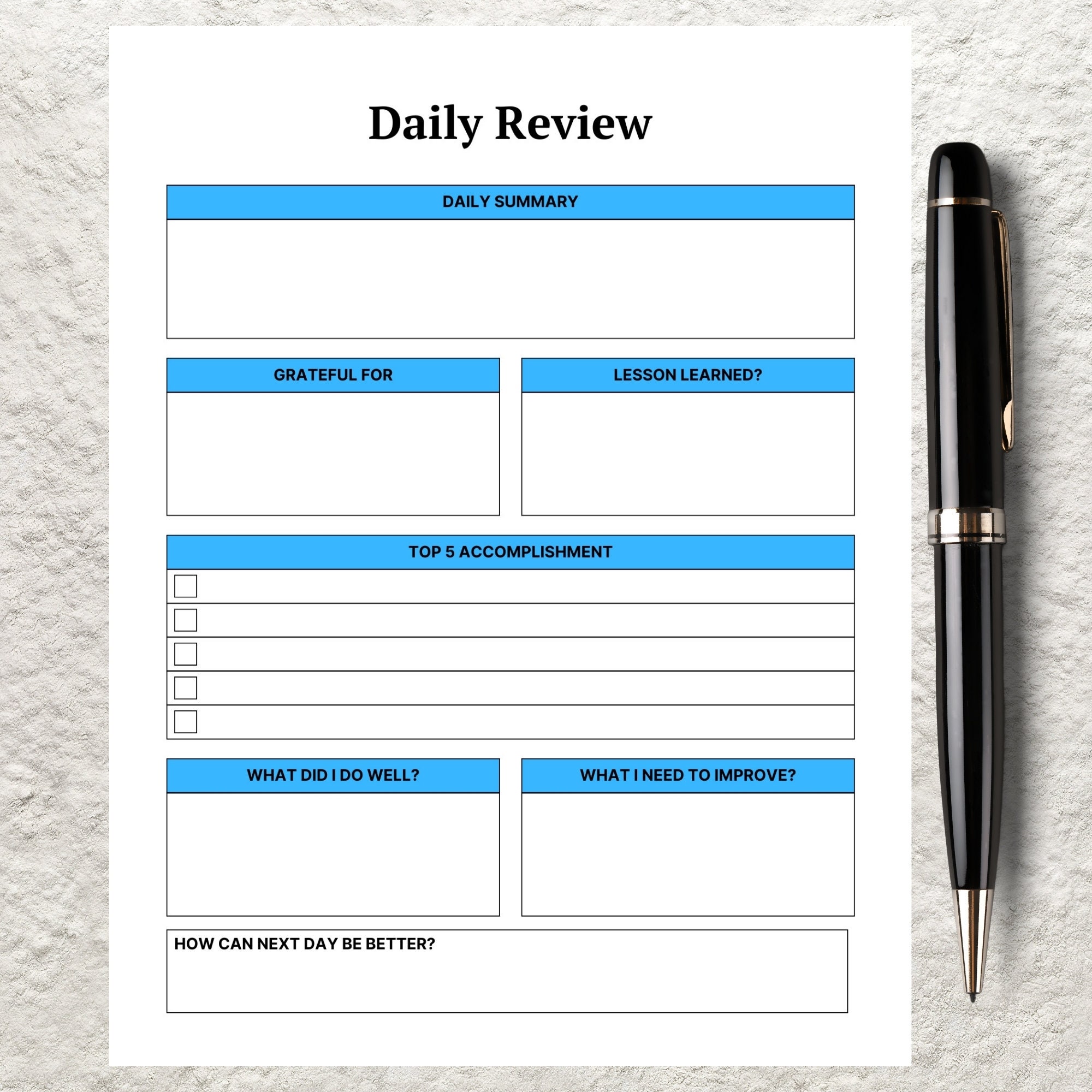
A daily review doesn’t require fancy apps or expensive planners. The best tools are the ones you’ll actually use. Here are a few approaches to consider:
1. Analog vs. Digital
Some people thrive with pen and paper, while others prefer digital tools. If you’re tactile, a journal or planner with dedicated sections for reflection can be grounding. For the tech-inclined, apps like Notion, Evernote, or even a simple Google Doc can work. The medium matters less than the consistency.
2. Time Blocking
Schedule your review at the same time every day—ideally at the end of your workday or right before bed. Treat it like a non-negotiable appointment. If mornings work better for you, use that time to set intentions for the day ahead. The key is to anchor the habit to an existing routine, like your morning coffee or evening wind-down.
3. Accountability Partners
Share your reflections with a colleague, friend, or mentor. Knowing someone else will ask about your review can motivate you to follow through. Alternatively, join a productivity-focused community where members share their daily insights. The social aspect turns reflection into a shared journey rather than a solitary task.
From Review to Action: Turning Insights into Impact
A daily review is only as valuable as the actions it inspires. The real magic happens when you use your reflections to make tangible changes. Here’s how to bridge the gap between insight and impact:
1. Identify One Thing to Improve
Instead of a laundry list of changes, pick one area to focus on tomorrow. Maybe it’s setting clearer boundaries with meetings or dedicating uninterrupted time to deep work. Small, consistent improvements compound over time.
2. Adjust Your Environment
If you consistently notice distractions derailing your day, tweak your workspace. Silence notifications, use noise-canceling headphones, or block time on your calendar for focused work. Your environment should serve your goals, not sabotage them.
3. Revisit Your Goals Regularly
Your daily review should ladder up to your bigger objectives. Every week or month, take a step back and ask: Are my daily actions aligning with my long-term vision? If not, it’s time to recalibrate. The review isn’t just about the day—it’s about the life you’re building.
The Ripple Effect: How a Daily Review Transforms More Than Just Your Productivity
The benefits of a daily review extend beyond task management. They seep into every aspect of your life, fostering a sense of control and intentionality. When you take the time to reflect, you become more aware of your energy levels, emotional triggers, and even your relationships. You start to notice when you’re operating on autopilot and when you’re truly present.
Over time, this habit cultivates a growth mindset. You begin to see challenges as opportunities rather than obstacles. You develop resilience because you’re not just reacting to life—you’re shaping it. And perhaps most importantly, you reclaim a sense of agency in a world that often feels chaotic.
So, if you’ve ever felt like your days are slipping through your fingers, try building a daily review. Start small. Be patient. And trust the process. The goal isn’t to create a perfect system—it’s to create a life that feels intentional, one day at a time.
Leave a comment