


Business chaos isn’t just a storm to weather—it’s a crucible where resilience is forged and clarity is born. When deadlines collide, priorities blur, and the unexpected becomes the norm, productivity often takes a backseat. Yet, what if chaos wasn’t the enemy of progress, but its catalyst? What if the key to staying productive wasn’t about controlling the storm, but learning to dance in the rain? This isn’t just another productivity checklist. It’s a shift in perspective—one that transforms overwhelm into opportunity and turns disruption into direction.
The Myth of Productivity in Calm Waters
We’ve been sold a lie: that productivity thrives in stillness. That the ideal workday is a serene, distraction-free oasis where focus flows effortlessly. But reality rarely cooperates. True productivity isn’t born from perfect conditions—it’s forged in the fire of chaos. Consider the entrepreneur who launches a product during a market crash, or the team that pivots overnight to meet a sudden demand. Their success didn’t come from waiting for calm; it came from mastering the art of navigating turbulence.
Chaos isn’t the exception—it’s the new normal. The businesses that don’t just survive but thrive during disruption are those that redefine productivity not as a state of order, but as a dynamic process of adaptation. The first step? Stop fighting the chaos. Start understanding it.
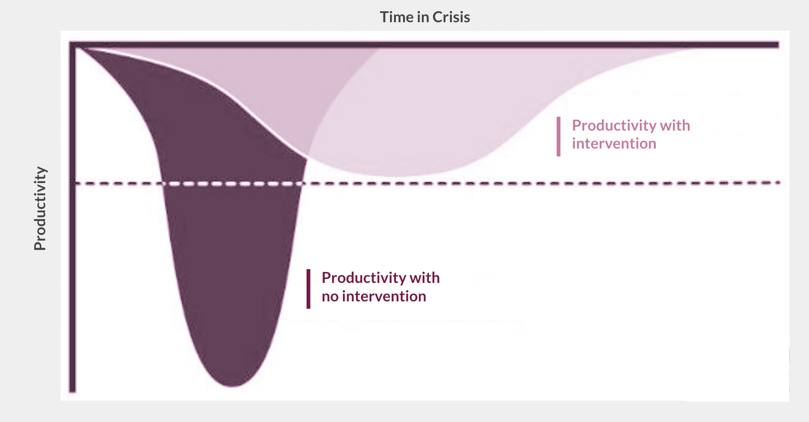
Reframing Chaos: From Threat to Tool
Our brains are wired to perceive chaos as a threat. It triggers the same fight-or-flight response as a predator in the wild. But what if we could rewire that response? What if chaos could become a tool rather than a foe?
The trick lies in perspective. Instead of asking, “How do I stop this chaos?” ask, “How can I use this chaos to my advantage?” This isn’t about denial—it’s about leverage. Chaos creates urgency, which sharpens focus. It forces prioritization, stripping away the non-essential. It reveals inefficiencies that might have gone unnoticed in the calm. The businesses that harness chaos don’t just weather storms—they build stronger ships in the process.
Take the example of a retail company facing supply chain disruptions. Instead of scrambling to restore the old system, they might use the chaos to streamline their inventory, negotiate better terms with suppliers, or even explore alternative revenue streams. Chaos becomes the spark for innovation, not the source of panic.
The Power of Micro-Commitments
In chaos, big goals feel paralyzing. The key to staying productive isn’t setting audacious targets—it’s breaking them down into micro-commitments. These are the tiny, actionable steps that feel manageable even when the world feels unmanageable.
For example, instead of saying, “I’ll finish the quarterly report today,” commit to: “I’ll outline the first three sections by 10 AM.” Instead of “I’ll overhaul our marketing strategy,” start with “I’ll research three competitors’ campaigns.” These small wins build momentum, reduce overwhelm, and create a sense of control.
Micro-commitments work because they shift the focus from the outcome to the action. In chaos, outcomes are uncertain. Actions are not. And when you stack enough small actions, they inevitably lead to progress—even if the path isn’t linear.

Boundaries in the Blur: Protecting Your Focus
Chaos thrives on distraction. Notifications, last-minute requests, and shifting priorities can turn a productive day into a fragmented mess. The solution? Intentional boundaries.
Start by identifying your focus zones—blocks of time where you need uninterrupted concentration. Communicate these zones to your team, your clients, and even your family. Use tools like calendar blocks, “Do Not Disturb” modes, or even physical signals (like closing your laptop lid) to enforce them.
But boundaries aren’t just about time—they’re about energy. Chaos drains mental resources, so protect your cognitive bandwidth. This might mean saying no to non-essential meetings, delegating tasks that others can handle, or even scheduling “recharge” breaks to prevent burnout. Remember: productivity isn’t about doing more—it’s about doing what matters, with clarity and intention.
The Chaos-Proof Routine: Structure Without Rigidity
Routines are the scaffolding that keeps productivity alive in chaos. But rigid routines crumble under pressure. The key is to design a flexible framework—one that provides structure without stifling adaptability.
Consider the daily “anchor” activities that ground you: a morning routine (even if it’s just 10 minutes of stretching and planning), a midday reset (a walk or a short meditation), and an evening wind-down (reviewing the day’s wins, no matter how small). These anchors create rhythm without demanding perfection.
Then, layer in buffer time—unstructured blocks where you can address unexpected tasks or simply regroup. This isn’t wasted time; it’s your secret weapon against chaos. When the unexpected hits, you’ll have the space to pivot without derailing your entire day.
For example, a project manager might block 30 minutes each morning to triage emails and requests. If a crisis arises, they can address it immediately without losing sight of their priorities. The routine holds; the details adapt.

Leveraging the Chaos: Turning Disruption into Direction
The most productive people in chaos don’t just survive—they strategize. They use disruption as a compass, redirecting their energy toward what truly matters.
Start by asking: “What’s the one thing that, if achieved, would make today a success?” This isn’t about ignoring everything else—it’s about prioritizing ruthlessly. In chaos, not all tasks are equal. Some are urgent but trivial; others are important but not time-sensitive. Your job is to identify the few that move the needle.
Next, look for hidden opportunities. Chaos exposes weaknesses, but it also reveals gaps in the market, inefficiencies in processes, and unmet needs in your team. Use this insight to innovate. For example, a sudden drop in customer engagement might prompt a pivot in marketing strategy. A team member’s absence could lead to cross-training that strengthens the whole group.
The goal isn’t to control the chaos—it’s to direct it. To take the raw energy of disruption and shape it into momentum. Because the businesses that don’t just survive chaos, but leverage it, are the ones that emerge stronger on the other side.
The Long Game: Building Resilience for the Next Storm
Productivity in chaos isn’t a one-time fix—it’s a skill. And like any skill, it strengthens with practice. The businesses that thrive in disruption aren’t those that avoid chaos; they’re the ones that build resilience to navigate it.
Start small. Each time you face chaos and still make progress, you reinforce your capacity to handle the next challenge. Each micro-commitment you fulfill builds confidence. Each boundary you enforce strengthens your focus. Over time, what once felt overwhelming becomes manageable. What once felt like a setback becomes a setup for success.
The truth is, chaos isn’t going away. But neither is your ability to adapt. The question isn’t whether you’ll face disruption—it’s how you’ll use it to fuel your growth. Will you let it paralyze you, or will you let it propel you? The choice is yours. And the time to start is now.
Leave a comment