


The Architecture of Attentional Sanctuaries
Imagine your mind is a library. For centuries, this library had quiet, well-defined rooms: a room for reading, a room for conversation, a room for rest. The digital age, however, bulldozed the walls. Now, every room broadcasts the sound of a distant train, the flicker of a neon sign, and the chatter of a hundred disembodied voices. Focus, the ability to dwell deeply in a single room of thought, has become an architectural problem. The most effective digital habits are not merely about turning things off; they are about rebuilding the walls, installing silent doors, and curating the very atmosphere of your mental spaces. This is not a retreat from technology, but a reclamation of sovereignty over your own attention.
The unique appeal of these habits lies in their seduction of depth. A life of fractured attention is a shallow pond, skimming surface thoughts. A life of curated digital focus is a deep ocean, allowing for pressure, mystery, and the discovery of hidden treasures. To build this ocean, you must first understand the materials you are working with.
Notifications: The Phantom Limb of Interruption
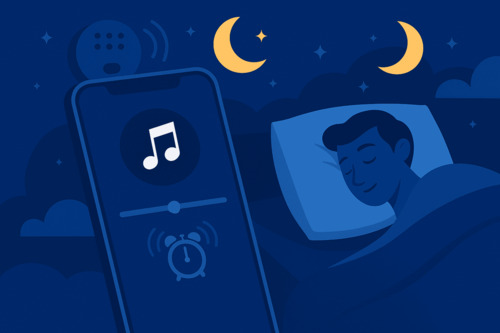
The ping, the buzz, the glowing red badge—these are not innocent signals. They are ritualized violations of your cognitive privacy. Every notification is a small, symbolic whip crack, snapping your head away from your intended path. Research suggests it can take over twenty minutes to fully recover the depth of focus lost to a single interruption. The habit, therefore, is not to silence them, but to render them invisible. Turn off every notification that is not from a human being in your immediate presence. Not “silent mode,” which still allows the screen to light up. Total, complete, and aggressive muting. Your phone becomes a tool you consult, not a master that summons you. The phantom limb of anticipation begins to wither, and your mind learns to stay in its chosen room.
The Curated Scroll: Sourcing Intention Over Impulse
The endless feed is a predator of future time. Its design is insidious; it offers a thousand tiny, low-stakes rewards, slowly eroding your ability to engage with a single, high-stakes reward (like finishing a report, reading a book, or composing a thought). The counter-habit is the curated scroll. This is the deliberate, scheduled consumption of digital media. Instead of opening Twitter or Instagram when you feel a pang of boredom, you open a folder of bookmarked sources you trust—long-form journalism, thoughtful newsletters, deep-dive video essays. You are no longer a passive filter feeder, swallowing whatever the algorithm vomits your way. You are a deep-sea diver, selecting specific pearls. Schedule two fifteen-minute windows a day for this curated consumption. The rest of the time, the feed is a locked door. Your mind, freed from the constant threat of the next trivial offering, begins to roam and settle in spacious fields of its own design.
Digital Hygiene: The Unseen Foundation

This is the quietest, most powerful habit of all. Digital hygiene is the practice of periodically clearing the clutter. It is the active, deliberate pruning of your digital garden. Unsubscribe from email lists that bring no value. Archive old documents. Delete apps you haven’t used in a month. Clear your desktop of icons. This is not busywork; it is a psychological detox. Every file, every email, every app icon is a tiny cognitive artifact, a ghost of a past decision or a potential future demand. When your digital space is clean, your brain does not have to constantly process the question, “Should I deal with this?” The mental noise drops by a decibel or two. Over a day, this decibel reduction accumulates into a profound silence, a space where focus can breathe. It is the habit of refusing to let your tool become a junkyard.
The Sacred Hour of Unbroken Attention
The most transformative habit is the deliberate performance of a single, deep task without any digital interruption. This is the “sacred hour.” For sixty minutes, your phone is in another room. Your browser is closed. Your computer is offline, or at least, all notifications are suspended. You are doing one thing: writing, coding, sketching, analyzing. This act is a ritual of defiance against the culture of fragmentation. The first ten minutes will feel like withdrawal—an itch to check, a restlessness of the mind. This is the brain’s addiction speaking. Do not listen. The next twenty minutes are the descent. You sink into the work. The last thirty are the flow state, where time dissolves and the thinking becomes effortless and pure. One sacred hour per day, consistently, rebuilds the neural pathways of sustained attention. It is the most difficult and the most rewarding habit. It is the proof that your attention is not a chaotic resource, but a muscle you can train.
The digital world is not going away. But you can stop living in its chaotic antechamber. By architecting your digital environment with intention—by muting the whip cracks, curating the scroll, establishing hygiene, and carving out sacred hours—you transform your focus from a victim of circumstance into a master of design. The result is not just productivity, but a richer, deeper experience of your own life. You are no longer a passenger on a noisy train; you are the captain of a silent ship, navigating the vast and wonderful ocean of your own mind.
Leave a comment