


The Digital Backbone of High Performance
In an era where operational margins are razor-thin and sustainability mandates are no longer optional, the most successful organizations share a quiet, invisible advantage. They are not simply reacting to energy costs; they are dissecting them, optimizing them, and turning kilowatt-hours into a strategic asset. The difference between a company that merely survives an energy crisis and one that thrives lies in the sophistication of its Energy Management System (EMS). For top performers, this is not a utility function; it is the digital backbone of decision-making. They understand that without granular, real-time visibility, efficiency is merely guesswork.

Beyond the Meter: The Shift from Passive to Predictive
The landscape of energy management has undergone a profound evolution. Traditional systems were passive—they collected data from a single utility meter and produced a monthly bill. High performers have abandoned this model entirely. They now deploy hybrid systems that merge the Internet of Things (IoT) with advanced analytics. The key differentiator is the ability to move from reporting to predicting. These systems ingest thousands of data points per second from sub-meters, HVAC controllers, production line sensors, and even weather feeds. Using machine learning algorithms, they forecast energy demand 24 to 48 hours in advance. This predictive capability allows a facility manager to pre-cool a building before a heatwave or shift a high-energy production batch to a low-tariff period. The result is not just a reduction in consumption, but a fundamental reshaping of when and how energy is used.
The Four Pillars of a High-Performance EMS
While the technology stack varies, every system used by top-tier firms rests on four non-negotiable pillars. The first is Real-Time Monitoring at the component level. This is not about knowing that the whole plant is drawing 2 MW; it is about knowing that Compressor #7 is drawing 3% more power than its baseline due to a dirty filter. The second pillar is Automated Control. Top performers do not rely on humans turning off lights or tweaking thermostats. They employ closed-loop systems that automatically shed non-critical loads within milliseconds when a demand threshold is triggered. The third is Integration. The EMS must talk to the building management system, the production planning software, and the financial close ledger. Disparate systems create data silos; integrated systems create intelligence. The final pillar is Granular Reporting that connects technical performance to financial outcomes. An executive wants to see that a 5% reduction in kWh translated into a specific dollar savings in the quarterly report.
Hardware, Software, and the Human Interface
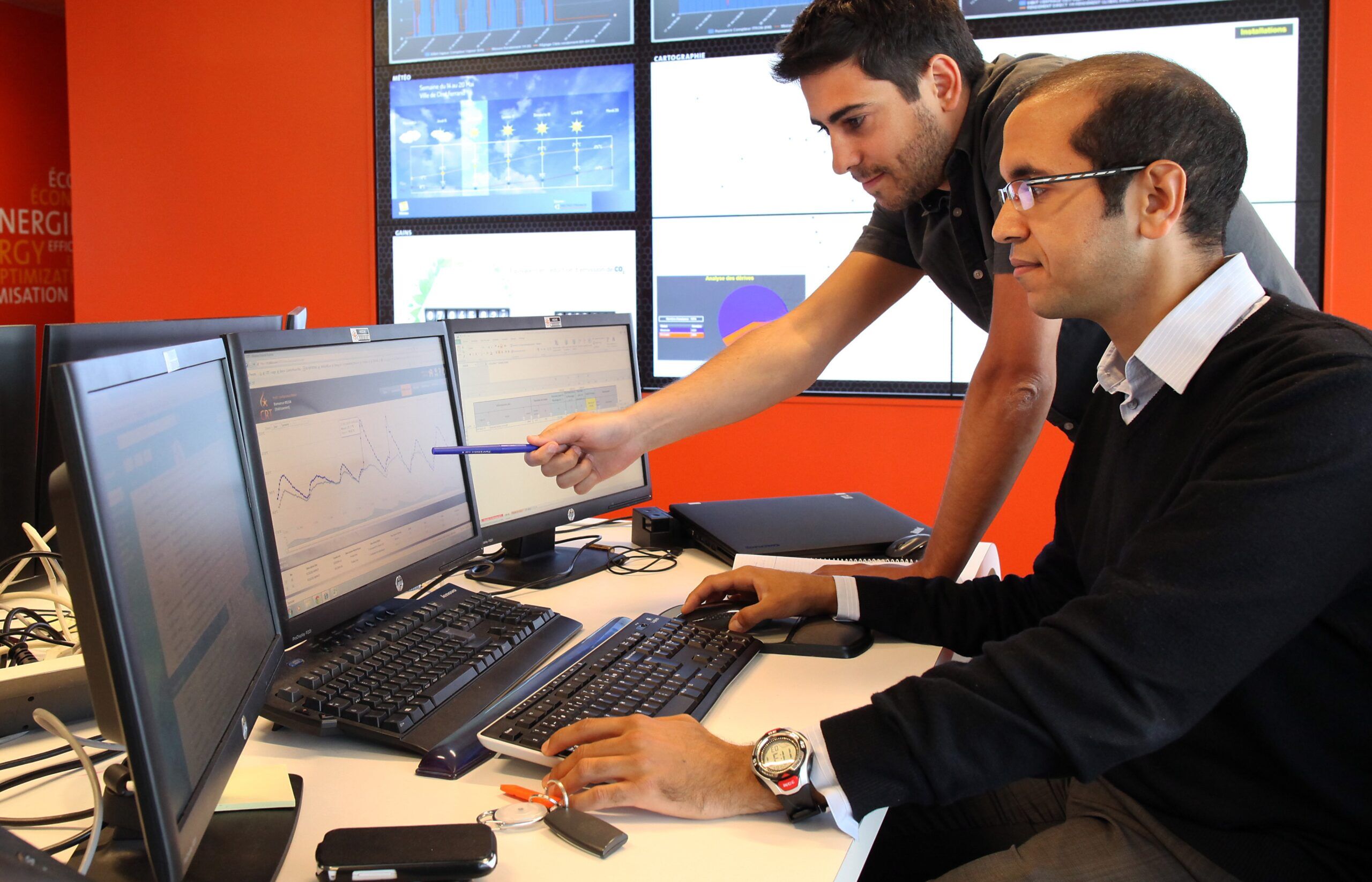
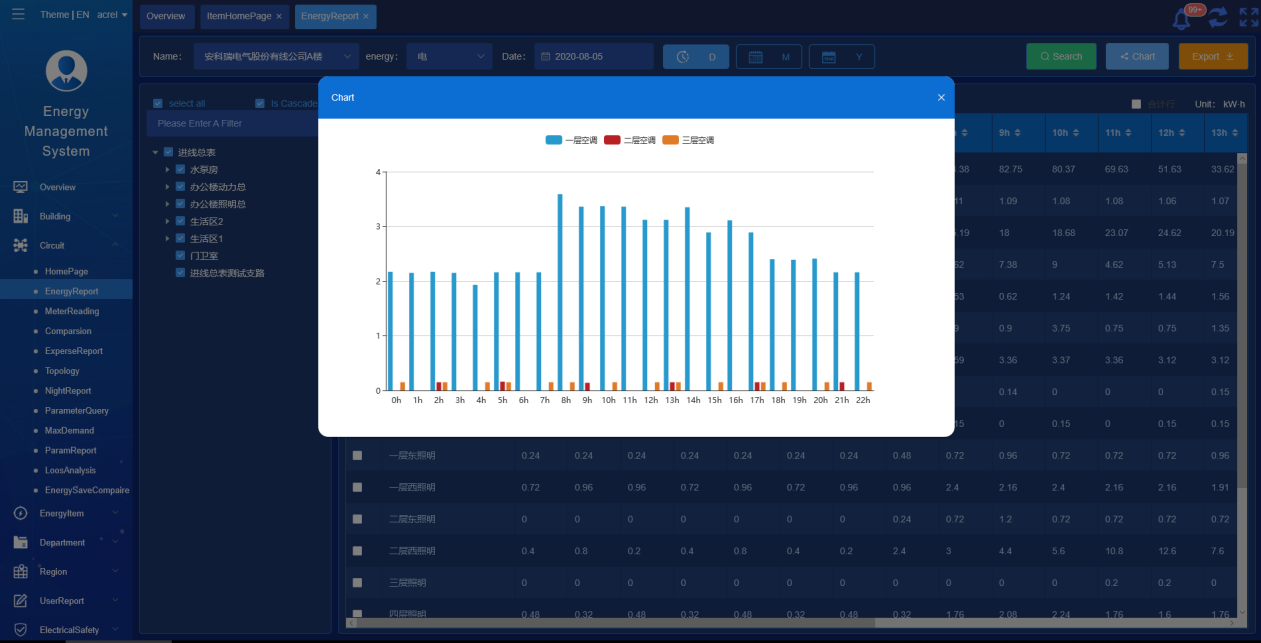
It is a common misconception that an EMS is purely a software solution. The hardware layer is equally critical. Leading systems utilize a mesh network of smart meters, current transformers, and environmental sensors. These devices must be accurate to within 0.5% and capable of transmitting data even in hostile industrial environments. However, hardware is only as valuable as the software that interprets it. The best platforms employ edge computing, where some analysis happens directly on the device to reduce latency. The data flows into a central cloud platform where dashboards visualize energy flows as intuitive heat maps and sankey diagrams. Yet, the most sophisticated element is often overlooked: the human interface. The system must present actionable insights, not raw data. A red alert for “Compressor #7” is useless without a button that says “View Recommended Fix.” Top performers design their EMS to be the co-pilot for the operations team, not a mere flight recorder.
Type-Specific Strategies: Industrial vs. Commercial vs. Hybrid
There is no single “best” EMS; there are best applications. In heavy industrial settings—steel mills, chemical plants, data centers—the focus is on load shedding and process optimization. These systems can control massive motors and furnaces, dynamically balancing the load to avoid expensive demand peaks. For commercial buildings like corporate headquarters or retail chains, the emphasis shifts to zone-based conditioning and occupancy-driven lighting. Here, the EMS learns usage patterns over weeks and anticipates needs based on calendar and weather data. A growing third category is the hybrid renewable EMS. For organizations with on-site solar, battery storage, or electric vehicle fleets, the system must manage energy generation, storage, and consumption as a single orchestrated flow. A top performer in this space will charge their batteries from the grid at midnight when rates are lowest, discharge during the afternoon peak to avoid demand charges, and store excess solar for the evening. This requires an EMS that can execute four different operating modes in a single day.
The Hidden ROI: Beyond Kilowatt-Hour Reduction
While cost reduction is the primary driver, the most valuable return from a world-class EMS is often intangible. First is predictive maintenance. By tracking the electrical signature of a motor—its current draw, phase imbalance, and harmonic distortion—the system can detect bearing wear or winding degradation weeks before a catastrophic failure. This prevents costly unplanned downtime, which is often orders of magnitude more expensive than the electricity saved. Second is regulatory compliance. With carbon reporting and energy auditing becoming mandatory in many jurisdictions, a robust EMS provides an auditable trail of data. Top performers use this to secure green financing, qualify for tax credits, and satisfy ESG criteria without hiring armies of auditors. Finally, there is culture. When a company demonstrates that it treats every resource with surgical precision, it instills a discipline that spills over into waste reduction, quality control, and employee engagement. Energy management becomes a language of continuous improvement.
Selecting the Right System: A Framework for Excellence
For organizations aspiring to join the ranks of top performers, the selection process is strategic. First, conduct an energy audit to identify the 20% of loads that consume 80% of the cost. This baseline is non-negotiable. Second, prioritize open protocols. A proprietary EMS that locks you into a single vendor is a liability. Look for platforms that support Modbus, BACnet, and MQTT standards. Third, demand a clear roadmap for AI. The system must be capable of moving from descriptive analytics (what happened) to prescriptive analytics (what to do) within a planned upgrade cycle. Fourth, evaluate the user experience. If the operations team needs a PhD in data science to navigate the interface, the system will fail. The best EMS platforms feel like a premium smartphone app—intuitive, fast, and contextual. The final criterion is scalability. A system that works brilliantly for a single site must be capable of connecting a portfolio of hundreds without a performance drop. The goal is not to manage energy but to master it, and that mastery starts with the choice of the system itself.
Leave a comment