


The Spectacle of Finality: Decoding Execution Rituals of Elite Performers

The confluence of power, performance, and mortality has long fascinated those who study the history of statecraft. Among the most compelling, and unsettling, manifestations of this triad are the execution rituals of elite performers—not merely musicians and stage actors, but the grander cast of political figures, religious leaders, and societal icons whose deaths were orchestrated as public spectacles. Readers exploring this dark corridor of history will encounter a rich tapestry of content that ranges from the macabre choreography of Renaissance justice to the modern, often sanitized, media rituals that mark the downfall of public figures. This is not a study of mere capital punishment, but an examination of how societies wrote their final sentence through symbolic acts, prescribed staging, and the brutal artistry of the end.
The Architecture of the Final Stage: Scaffolds, Galleries, and the Public Gaze
One of the most prominent themes in this subject is the deliberate architectural framing of execution as a performance. Content here delves into the physical spaces designed to maximize dramatic tension and moral instruction. The scaffold was not a mere wooden platform; it was a stage. Readers can expect detailed analyses of Renaissance Italian plazas transformed into theaters of justice, where the condemned, often a nobleman or a charismatic preacher, became the lead actor in a morality play. The elevation of the platform, the use of black cloth, the positioning of the executioner as a masked antagonist—every element was curated to create a lasting impression. For example, the photo above from a Renaissance inventory depicts the moment a condemned man addresses the crowd before the ax falls, a crucial act of contrition or defiance that was as much a part of the ritual as the killing itself. Articles on this aspect explore how the physical site—a church square, a royal palace courtyard, a newly erected gallows—functioned as a liminal space between earthly law and divine judgment, with the public serving as both jury and audience.
Narratives of the Condemned: The Final Speech as Performance Art

A critical layer of content centers on the performative utterances of the condemned. Before the literal curtain fell, elites were expected to deliver a set-piece speech that conformed to social or religious expectations. This is not about last-minute cries of innocence; rather, it is a study in rhetorical strategy. Readers diving into this area will find transcripts and analyses of these final words, often published in chapbooks and circulated widely. The speaker might confess to sins, forgive the executioner, or, more audaciously, deliver a political sermon criticizing the regime that sentenced them. The execution of Mary, Queen of Scots, is a textbook example, where her final prayers and comportment were designed to project martyrdom and royal dignity. Modern parallels appear in the “perp walks” and public apologies of disgraced celebrities and politicians—a ritualized humiliation that lacks the finality of the noose but shares the same theatrical DNA. The poster for David Icke’s documentary, shown above, plays on this same theme: the idea that elite rituals, whether of power or downfall, are always a carefully managed performance for a watching world. Content in this section dissects how the condemned used their final moments to reclaim agency, framing their own narrative before the state silenced it forever.
The Role of the Crowd: From Moral Witness to Consumer
No analysis of execution rituals is complete without a deep dive into the audience. Readers will find extensive discussion of how the crowd’s behavior was both regulated and manipulated. In early modern Europe, the populace was expected to react with horror, pity, and ultimately, moral correction. The spectacle was designed to reinforce the social order. However, as we move into the 19th and 20th centuries, the tone shifts. Content explores how the crowd transformed from a necessary witness for justice to a consumer of violence. The public hanging of criminals in London’s Tyburn drew thousands who treated the event as a carnival, complete with vendors, songs, and pickpockets. This transition from solemn ritual to popular entertainment is a recurring thread. Modern iterations—such as the online mob that assembles to watch a celebrity’s career implode in real-time, or the leaked footage of a public figure’s arrest—retain the voyeuristic thrill without the blood. Articles here compare the emotional trajectory of a Renaissance spectator with that of a 21st-century doom-scroller, revealing how the “execution” of an elite performer’s reputation follows a similar narrative arc of buildup, climax, and catharsis.
Iconography and Aftermath: The Commodification of the Dead Icon
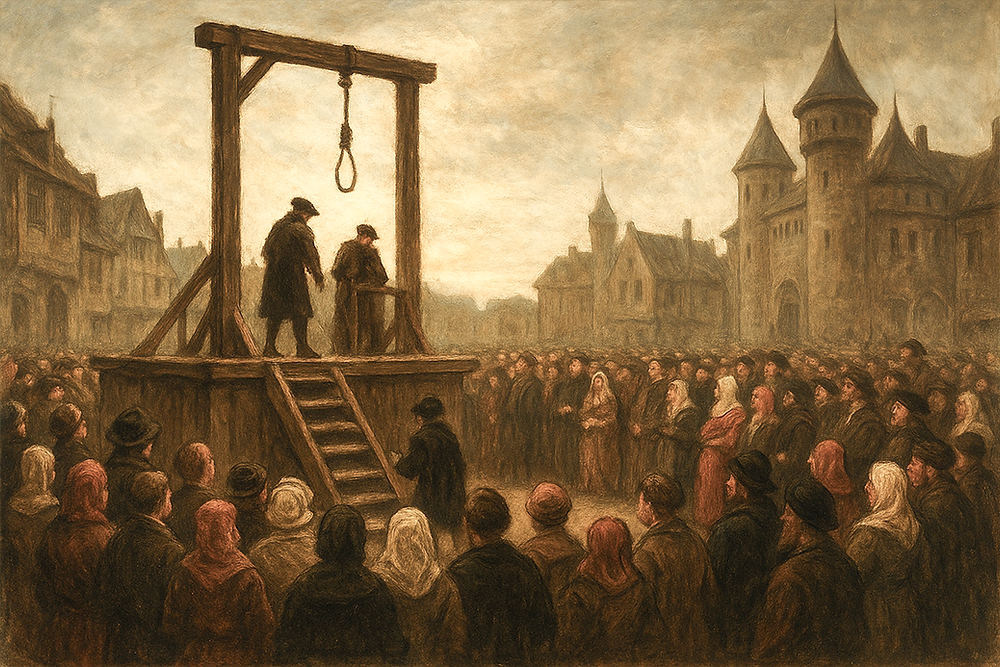
The ritual does not end with the body’s collapse. Content on the iconography and afterlife of executed elites reveals a thriving market in relics, images, and hagiographies. Readers can expect discussions of how the head of a traitor was displayed on a pike—a brutal visual punctuation to the trial—while the corpse of a beloved performer might be preserved, photographed, or replicated in wax. The image above, showing a European execution spectacle, captures the moment of death itself, but the real story often began afterward. Printed broadsides with lurid illustrations were sold within hours. Death masks were taken. In the modern era, the “execution” of a celebrity’s legacy is documented across social media, with fans and detractors creating memes, documentaries, and conspiracy theories. The physical body may be gone, but the symbolic body of the elite performer persists, becoming a commodity for mass consumption. This section of research examines how relics of execution—from the very axe used to behead Anne Boleyn to the broadcast of a disgraced CEO’s perp walk—serve as both historical artifact and fetish object, keeping the ritual alive long after the last breath.
The Performer’s Agency: Resistance, Dignity, and the Final Act
Finally, the most nuanced content in this field examines the extent to which the condemned elite could still direct their own performance. While the state scripted the event, the performer had room for improvisation. Detailed accounts reveal how some used the execution to stage a final act of rebellion: refusing to blindfold, joking with the executioner, or wearing defiant clothing. The political prisoner who raises a fist, the cult leader who sings a hymn, the rock star who flashes a peace sign as the bullet enters—these are all forms of counter-performance. Articles here dissect the psychology of control in a situation designed for total submission. The term “dignity” recurs frequently, as scholars debate whether the condemned’s composure under duress represents genuine transcendence or a final, desperate performance for posterity. This content challenges readers to consider the execution not as a passive event done to someone, but as a co-created ritual between the state, the performer, and the audience—a three-part harmony of brutality and grace, where even in death, the elite performer’s agency flickers defiantly before being extinguished.
Leave a comment