


The Focus Habits of World‑Class Performers
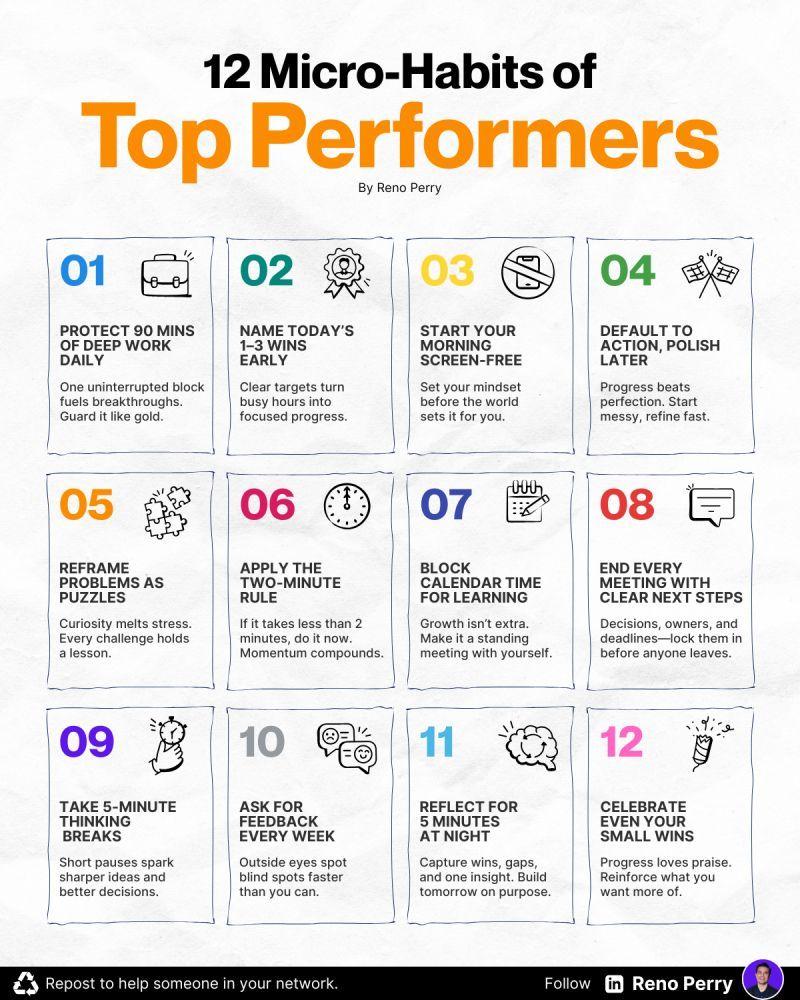
The line between good and great is rarely drawn with a broad brush of talent. Across the worlds of elite athletics, high-stakes finance, and groundbreaking science, a quieter distinction emerges: the ability to command one’s own attention. World-class performers do not simply work harder; they build a fortress around their focus. They understand that in an age of constant interruption, sustained attention is the rarest and most valuable asset. What follows is a dissection of the specific focus habits that separate the remarkable from the competent—habits that transform raw effort into refined art.
Deep Work: The Architecture of Unbroken Attention
The most pervasive myth is that top performers are always “on.” In reality, they are ruthlessly selective about when they are on. The foundational habit is the deliberate cultivation of deep work—blocks of time, usually 90 to 120 minutes, where external input is completely severed. This is not about multitasking or quick check-ins; it is about entering a cognitive state where complex problems yield to sustained mental pressure. A neurosurgeon, for example, does not check emails mid-procedure. Similarly, a top software engineer or composer creates a physical and digital environment that mimics the isolation of an operating room. They close tabs. They silence devices. They close the door. The habit is not just about the work itself, but the ritual of entry—a cup of tea, a specific playlist, a glance at a preset goal—that signals to the brain that a period of intense concentration has begun.
Atomic Rejection: The Power of Strategic Refusal

Focus is often defined not by what you do, but by what you refuse to do. World-class performers exhibit what behavioral economists call a high “opportunity cost” threshold. They reject meetings without agendas, notifications without urgency, and requests that stray from their core mission. This is not arrogance; it is a mathematical understanding of attention. Every yes to a distraction is a no to a deeper insight. The habit manifests as a conscious, often ruthless calendar. They leave gaps—white space—between commitments. They do not answer their phone during certain hours. They practice “atomic rejection,” where even the smallest, seemingly trivial interruption (a glance at a trending article) is denied its reward of mental energy. They know that the cost of re-entering a flow state is exponentially higher than the few seconds the interruption itself consumes.
Designed Boredom: The Unconventional Fuel for Focus
A counterintuitive habit among peak performers is the deliberate embrace of boredom. Where most people reach for a screen during a lull—a wait in line, a moment of silence—the elite do not. They sit with the quiet. This practice, often built into a morning routine or a commute, trains the brain to tolerate a low-stimulation environment without seeking constant novelty. Jack Dorsey, for instance, has spoken of the value of walking without a destination or a podcast. The science behind this is clear: when the brain is not constantly fed micro-doses of dopamine from digital inputs, it becomes more capable of sustaining focus on a single, demanding task. This habit is a form of cognitive resistance training. The more comfortable you become with stillness, the less likely you are to break your focus for the cheapest form of amusement.
Micro‑Resets: The 90‑Second Pivot

No human can maintain peak focus for eight consecutive hours. The great fallacy of productivity culture is the expectation of linear output. World-class performers understand the physiology of attention and use micro-resets to maintain quality. After a period of deep work, they do not pivot to another demanding task. Instead, they execute a deliberate, short break—often just 60 to 90 seconds. This could be standing up, looking at a distant object out a window, stretching the shoulders, or taking three deep breaths. The purpose is not to rest the body, but to reset the brain’s attentional circuitry. This tiny habit prevents the accumulation of mental fatigue, which is the primary cause of errors and poor decision-making. They do not “power through” the fog; they step back so they can step forward with clarity.
Environmental Curation: The Erasure of the Unnecessary
The physical workspace of a top performer is often surprisingly sparse. This is not an aesthetic choice; it is a cognitive strategy. A cluttered desk creates a cluttered mind. The phenomenon is called “attention residue”—when your eyes land on a stray object (an old receipt, a forgotten book), a small part of your mental energy is unconsciously dedicated to processing that stimulus. World-class performers curate their environments to produce near-zero cognitive drag. They remove the friction of distraction. This means putting the phone in another room, using a single monitor program, and keeping only the tools for the immediate task on the desk. They also curate their digital environment, using website blockers or simple pen-and-paper lists to offload the burden of remembering. They treat focus not as a willpower contest, but as a design problem. The best way to win against temptation is to never let it into the room.
Rhythmic Self‑Awareness: Knowing Your Cognitive Tide
The final distinguishing habit is a deep, personal knowledge of one’s own circadian rhythms. Top performers do not force themselves to do creative work at 3:00 PM if they are biologically wired for analytical work in the morning. They map their energy levels over weeks, identifying the two daily windows—often two to three hours each—where their focus is deepest. This is not about “morning person” versus “night owl” in a vague sense; it is a precise understanding. A writer might know that her first draft can only be written between 6:00 AM and 8:30 AM. A trader might know his best decisions happen in the first two hours after the market opens. By matching the type of work to the type of energy, they avoid the psychic drain of fighting biology. Focus becomes less an act of will and more an act of alignment—a quiet, intelligent surrender to the body’s own signal.
Conclusion: The Habit of Becoming
These habits—deep work, strategic refusal, designed boredom, micro-resets, environmental curation, and rhythmic awareness—are not a checklist to be ticked off. They are a system, a living architecture that world-class performers refine over years. They require patience, the willingness to say no to the noise, and the courage to sit quietly with a difficult problem. The result is not merely more output, but a sharper, more serene way of being. The focus habits of the truly elite are, in the end, habits of intentional living. They remind us that in a world desperate for our attention, the most radical act is to give it to something worthy.
Leave a comment