


The Goal‑Execution Framework That Works
There is a peculiar tension in modern organizational life, a quiet dissonance between what we say we want and what we actually achieve. We draft grand vision statements, populate meticulous roadmaps, and nod in agreement at the necessity of alignment. Yet, when the quarterly numbers arrive or the project post‑mortem is written, the gap between intention and outcome yawns wide. This is not a failure of ambition, but a failure of architecture. The frameworks we inherit often treat goal‑setting and execution as separate disciplines—one an exercise in aspiration, the other in brute force. The truth, however, lies in a more nuanced synthesis: a framework that does not merely connect goals to execution, but weaves them into a single, living system.
Why Goals Fail to Resonate
Most goal‑setting rituals begin with a noble flourish—a town hall, a cascading memo, a dashboard of cascading KPIs. Yet within weeks, those same goals feel like distant abstractions. The problem is not a lack of clarity, but a lack of emotional and structural traction. Goals that are carved in stone at the top of the hierarchy rarely survive contact with the messy, adaptive reality of day‑to‑day work. Employees do not see how their daily decisions feed into the larger story. The goals become ornaments, not compasses. The deeper fascination here lies in our collective hunger for meaning: we want to know that our labor serves a coherent purpose, not just a checklist. A framework that ignores this psychological need will always be hollow.
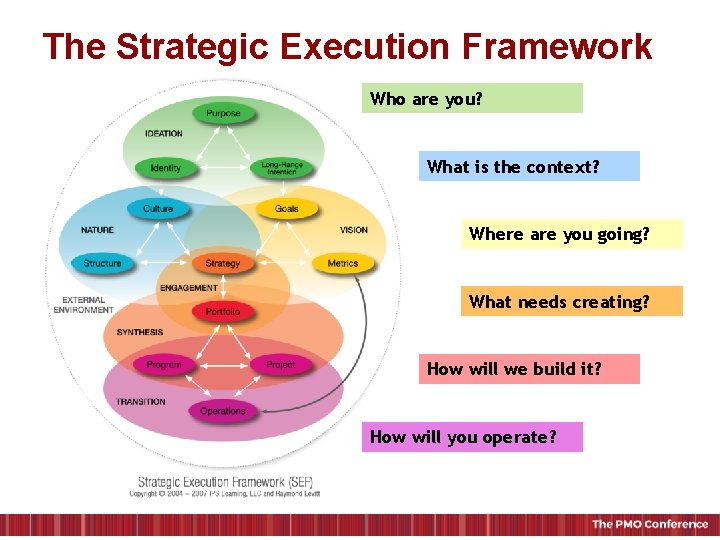
The Architecture of Integrated Execution
A working goal‑execution framework is not a linear sequence. It is a closed loop that enforces three interdependent dynamics: translation, friction, and reflection. Translation converts abstract strategic intent into concrete, contextual actions that feel native to each team’s environment. Friction is the healthy tension created when execution data challenges the original assumptions—forcing recalibration rather than blind persistence. Reflection turns outcomes into learning, which feeds back into the goal itself. This triadic structure mimics natural systems: a tree does not “set a goal” to grow three feet; it adjusts its growth based on sunlight, soil, and wind. Organizations, too, must treat goals as hypotheses, not decrees.
Execution as a Narrative, Not a Machine
Too many execution models borrow the language of engineering—dashboards, triggers, workflows—while forgetting that work is ultimately a human story. The most effective frameworks treat execution as a narrative arc. Each project milestone is a scene; each obstacle is a plot twist; each cross‑functional handoff is a character interaction. This does not mean abandoning metrics. Rather, it means nesting metrics inside a story that gives them weight. When teams can articulate not just what they did, but why it mattered and how it changed the trajectory, execution becomes less of a chore and more of a craft. The fascination with “productivity hacks” often stems from a deeper desire to feel like the protagonist of our own work lives, not just a cog.
The Role of Supporting Infrastructure
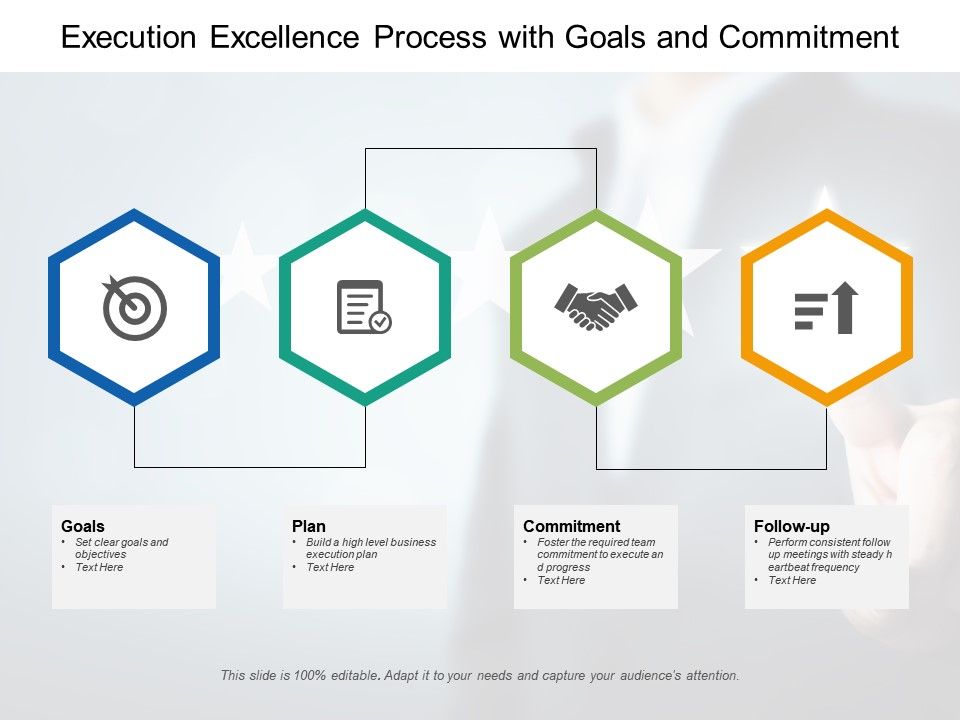
No framework survives without scaffolding. Goals and execution require supporting infrastructure—not just software, but rituals, rhythms, and relational trust. A weekly “check‑in” that is merely a status update is infrastructure of the wrong kind. Effective infrastructure creates space for questioning: Are we still pursuing the right goal? Is our execution path the most elegant? What have we learned that changes the assignment? This is where the concept of “execution plan showing goals processes and supporting infrastructure” becomes tangible. The supporting layer is not a footnote; it is the soil in which the seeds of execution grow. Without it, the best‑designed goals wither under the sun of competing priorities and urgent fires.
Measuring What Matters, Not What Is Easy
One of the quiet tragedies of most goal‑execution frameworks is that they measure what is countable, not what is consequential. An organization might celebrate hitting a revenue target while ignoring the erosion of team morale or the neglect of long‑term capability building. A robust framework builds in dissonant data—information that challenges the narrative of success. It tracks not only lagging indicators (did we hit the number?) but also leading indicators (are we building the conditions to hit the number consistently?). It also measures the health of the execution process itself: cycle time, decision velocity, feedback frequency. The goal is not just to achieve, but to become the kind of organization that achieves reliably and adaptively.
The Fascination Beneath the Surface
Why do we return, again and again, to frameworks like these? Because the surface problem—missed deadlines, misaligned teams—masks a deeper fascination with order and agency. We are drawn to the promise that if we just find the right structure, we can tame chaos, reduce anxiety, and prove our worth. But the frameworks that truly work do not promise control; they promise coherence. They acknowledge that goals and execution are not two sides of a coin, but two notes in a single chord. The organizations that thrive are not those with the most aggressive targets or the most sophisticated project management tools. They are those that have built a framework where goals breathe, execution listens, and every person in the system can answer the question: What are we building, and why does it matter to me?

Conclusion: The Elegance of the Continuous Loop
The goal‑execution framework that works is not a static document or a quarterly ritual. It is a continuous loop of intention, action, feedback, and recalibration. It respects that strategy is a living thing, that execution is a craft, and that the people doing the work are not resources to be optimized but collaborators to be honored. In a world increasingly defined by complexity and speed, the most enduring competitive advantage may not be a brilliant strategy, but the discipline to execute that strategy with humility and intelligence. That is the framework worth building. That is the framework that, once understood, becomes almost impossible to abandon.
Leave a comment