


The Blueprint Beyond the Boardroom
Innovation is often depicted as the province of Silicon Valley startups and sprawling corporate R&D labs—a realm of whiteboards, venture capital, and patent filings. Yet, beneath this high-stakes veneer lies a more fundamental truth: innovation is a cognitive muscle, a systematic approach to problem-solving that operates just as effectively in the quiet corners of our daily lives. The “Innovation Blueprint” is not merely a business tool; it is a mental framework for recalibrating how we cook dinner, manage our time, or navigate a career pivot. This blueprint provides a structured path for turning mundane friction into elegant solutions, applying the same principles of iteration, constraint analysis, and customer empathy—where the “customer” is often ourselves.
What makes this blueprint so powerful in an everyday context is its emphasis on process over epiphany. We are conditioned to believe that breakthroughs require a flash of genius, but the Innovation Blueprint argues for the opposite: that repeatable methodologies, such as the Double Diamond framework (discover, define, develop, deliver), can transform how we tackle personal projects. By shifting from reactive survival to proactive redesign, we begin to see life not as a series of burdens, but as a portfolio of opportunities for incremental improvement.

Decoding the Core Pillars of the Blueprint
To wield the Innovation Blueprint in your personal life, one must first understand its foundational pillars. The first pillar is Empathic Observation. In a business setting, this means watching users struggle with a software interface. At home, it means honestly observing why you consistently fail to meet your fitness goals. Is it a lack of willpower, or is the barrier physical—like having to dig your gym bag out of a cluttered closet? The blueprint demands that we suspend judgment and become anthropologists of our own behavior. The second pillar is Constraint Reframing. Instead of seeing a tight budget or a limited schedule as a death knell, the blueprint teaches us to treat constraints as creative catalysts. If you only have twenty minutes to prepare a healthy meal, that limitation becomes the design spec for a new cooking system, not an excuse to order takeout.
The third pillar is Rapid Prototyping. This is perhaps the most liberating concept for everyday life. You do not need a fully planned five-year plan to change your morning routine. Instead, you design a rough “prototype” for the next three days. Test a new alarm app. Try journaling for exactly two minutes. The blueprint values speed and feedback over perfection. Finally, there is Iterative Feedback. You evaluate what worked, what broke, and what surprised you. Then you tweak the prototype. This loop—observe, frame, prototype, feedback—becomes the operating system for a more intentional life.
Content Types Within the Blueprint
When you dive into the Innovation Blueprint for everyday life, you encounter a rich ecosystem of content types designed to address different learning styles and contexts. The first type is the Case Study of the Self. Unlike corporate case studies that analyze Apple or Tesla, these are personal narratives of change. For example, a reader might encounter a detailed account of how a busy parent used the blueprint to redesign their grocery shopping, cutting waste in half while saving thirty minutes per week. These stories are not mere inspiration; they are data points. They deconstruct the frustration into a clear “How Might We” statement—such as, “How might we reduce the cognitive load of planning meals for a family of four with conflicting schedules?”
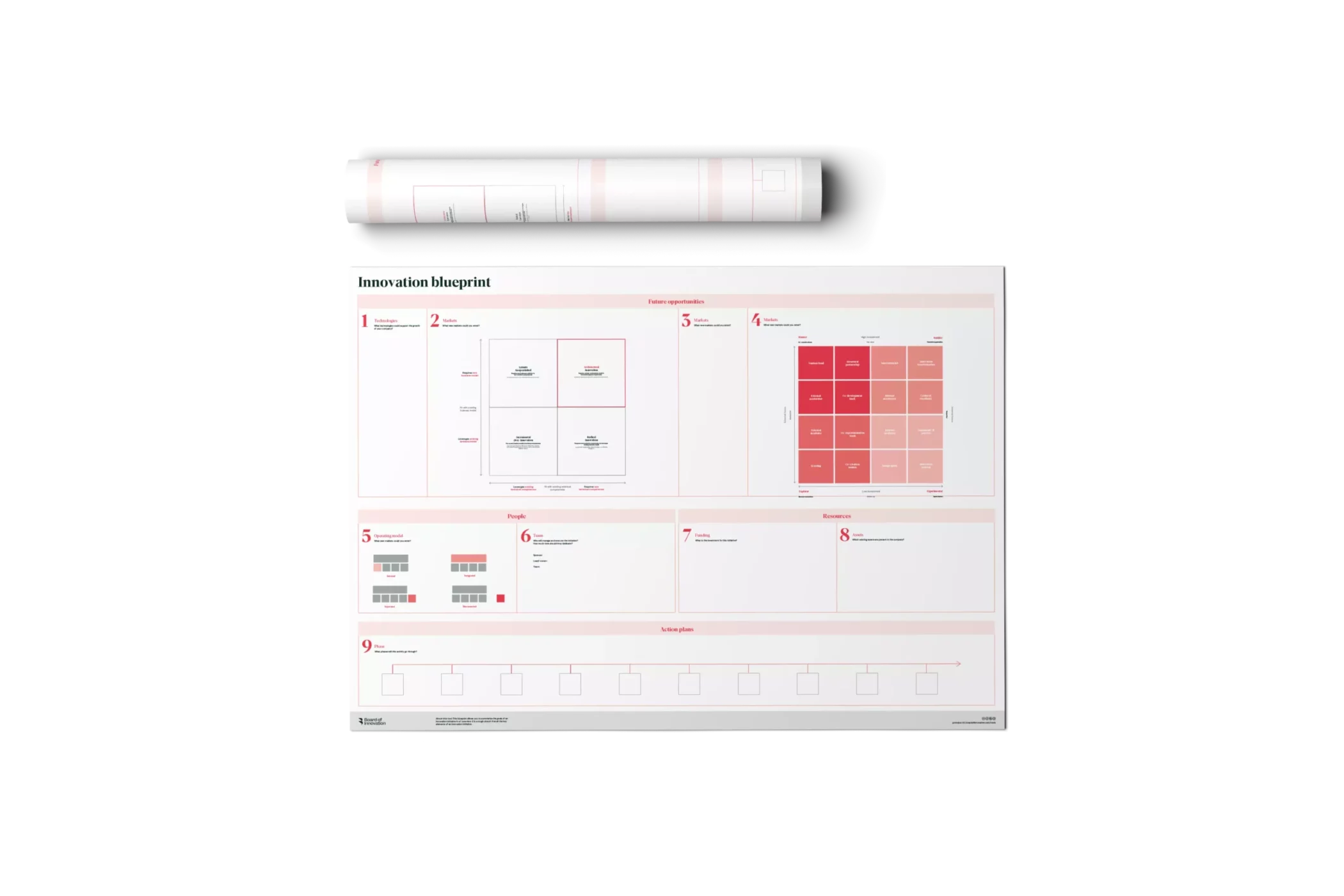
Another essential content type is the Framework Matrix. This takes the abstract theory of innovation and makes it tactile. You will find tables and decision trees that help you categorize your daily problems. Is your issue a “wicked problem” that requires a systemic change (like breaking a procrastination habit), or is it a “tame problem” that simply requires a better checklist (like organizing your inbox)? The matrix provides a diagnostic tool, telling you which part of the blueprint to deploy. Visual learners will appreciate infographics that map out the “Innovation Funnel” for a personal project, showing how you can start with dozens of crazy ideas and converge on one practical solution.
You will also find Constraint-Driven Exercises. These are short, guided workbooks. A typical exercise might ask you to list three “luxury constraints” you could artificially impose on a project to spark creativity. For instance, “What if I could only write my morning to-do list using five words?” or “What if I had to cook dinner tonight using only ingredients found in my pantry and one fresh item?” These exercises train the mind to see restrictions not as prison walls, but as a railing to steady oneself upon. Finally, there is the Reflection Prompt. Unlike a standard journaling prompt that asks “How do you feel?”, a blueprint prompt asks, “Which assumption about your daily commute was proven false when you prototyped a new route?” This shifts the focus from emotion to evidence.
Translating Theory into Tangible Routines
The ultimate test of the Innovation Blueprint is its translation from a conceptual framework into a sustainable routine. The content you consume is designed to bridge exactly that gap. You will find articles that walk you through a “15-Minute Innovation Sprint”—a micro-session where you identify a single pain point (like losing your keys every morning) and apply the blueprint’s steps in a compressed timeframe. The output might be a simple physical change: a dedicated key hook placed not by the door, but next to where you put down your coffee cup.
These practical guides often include Trackable Metrics. Instead of vague goals, you are encouraged to measure “cycles of iteration.” Did you redesign the system three times this month? Did your “failure rate” (the number of prototypes that were discarded) produce a better final system? By quantifying the process, the blueprint demystifies innovation. It becomes a habit, a personal lean methodology. The content will also teach you to create a “Personal Innovation Log,” a simple spreadsheet where you track problems, solutions attempted, and the specific constraints you applied. Over time, this log becomes a map of your cognitive growth.
The content is also deeply embedded with Metacognitive Layers. Every article on the Innovation Blueprint implicitly asks you to think about how you think. When you read about the “Law of Requisite Variety” (the idea that a system must be as complex as the problems it faces), you are not just learning a systems theory term. You are being prompted to examine whether your current life management systems are too simplistic. Do you use the same approach for a creative block as you do for a financial planning issue? The blueprint teaches you to diversify your problem-solving repertoire.

From Consumption to Creation
Ultimately, the content of the Innovation Blueprint for Everyday Life is not something to be passively consumed. It is a call to action—a toolkit designed to transform you from a consumer of solutions into the architect of your own. The articles, exercises, and case studies are all scaffolding for a new perspective. They whisper a quiet but radical idea: that you do not have to accept the friction of life as a given. The broken drawer, the chaotic schedule, the stalled hobby—these are not character flaws; they are design challenges waiting for a blueprint. The most successful readers of this content do not just nod along. They stop reading, grab a piece of paper, and draw a circle. They write “Problem” inside it, then draw another circle and write “Constraint.” They begin the work of building a better everyday world, one small, iterated prototype at a time.
Leave a comment