


The Phantom Hour: Why Your Calendar Bleeds Time
Every knowledge worker knows the feeling. You glance at your calendar mid-week and see a landscape of color-coded blocks. Each one represents a meeting, a promise of collaboration, a tacit agreement to move a project forward. But as you emerge from the third consecutive hour of digital faces or boardroom chairs, a disquieting silence settles. What was actually accomplished? The sensation is less a loss of productivity and more a slow, bureaucratic bleed—a siphon draining your most valuable resource, one agenda item at a time.
The common observation is simple: too many meetings waste time. The deeper reason for our collective fascination, however, is not the volume. It is the design. We are attending the wrong meetings, in the wrong format, with the wrong expectations. The secret to reclaiming five hours a week is not about canceling everything. It is about constructing a Meeting Strategy so rigidly efficient that it becomes a sanctuary of progress rather than a graveyard of intent.
Precision Targeting: The Curse of the Unspecific Agenda
The single greatest lie in professional communication is the “status update.” When a meeting’s purpose is to inform, what should have been a five-line email metastasizes into a thirty-minute vortex of tangents, rabbit holes, and performative listening. Why do we tolerate this? Because the status update meeting offers a false sense of alignment. It feels productive to hear everyone confirm they are “on track,” but this feeling is an illusion.
A truly strategic meeting does not begin with an agenda. It begins with a Desired Outcome. Before anyone books a time slot, the organizer must articulate, in a single sentence, what decision must be made or what problem must be solved. If no clear outcome exists, the meeting is killed in the cradle. This is not anti-collaboration; it is anti-noise. By ruthlessly filtering every invite through this lens, you immediately eliminate the 40% of meetings that exist merely to justify a manager’s existence or to create a paper trail of effort.
Once the outcome is defined, the agenda transforms from a list of topics into a list of questions to be answered. Each question is allocated a strict time budget—no more than ten minutes. If a topic cannot be resolved within that window, it is either deferred or flagged as an issue requiring a separate, focused session. This structure forces participants to think before they speak, treating talking time as a scarce resource.
The Architecture of Attention: Building the Anti-Zoom Room
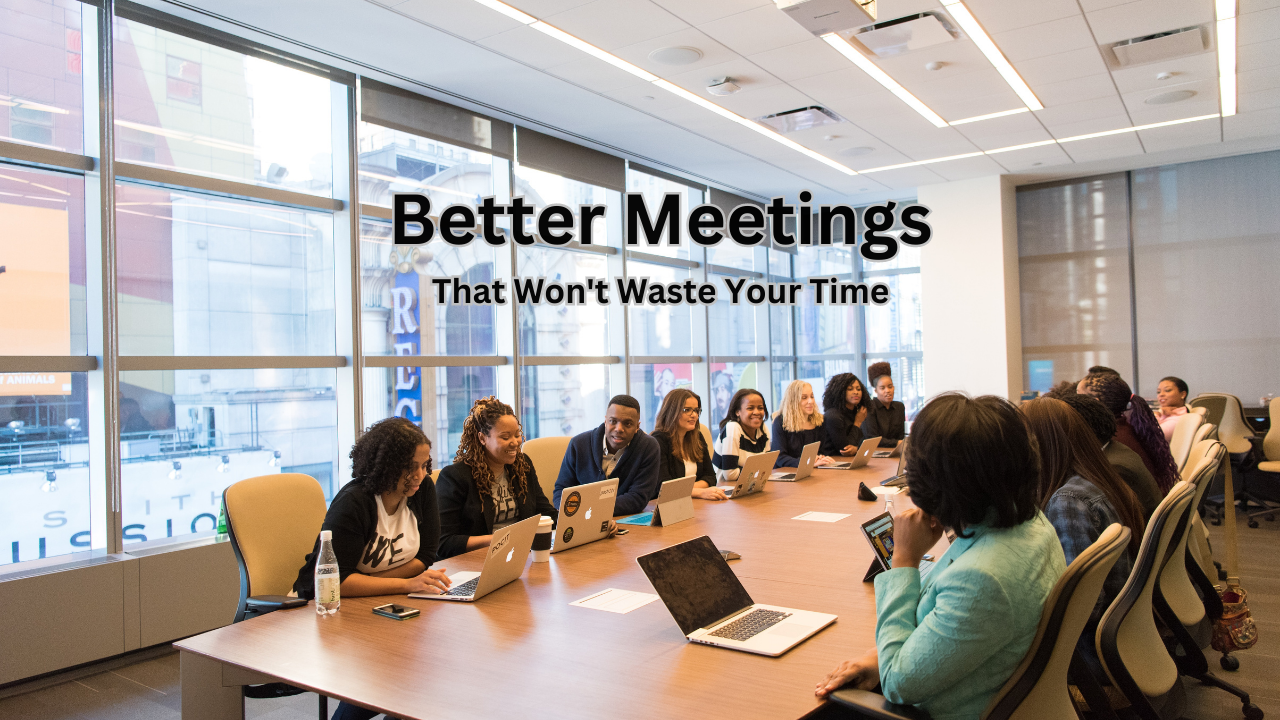
Physical and digital spaces are not neutral. The default setup of a conference room—a long table, chairs facing a projector, laptops open—encourages a culture of parallel distraction. People are present in body but mentally sorting emails, Slack messages, or the pending quarterly report. This is the silent killer of depth. When attention is fragmented, the meeting’s energy dissipates, and decisions are deferred to “let’s take this offline,” which is just a polite way of saying “let’s waste more time later.”
The strategy here is radical: enforce a no-laptop and no-phone rule for the first fifteen minutes. This isn’t about control; it’s about presence. Without the digital crutch, participants are forced to listen, to write notes by hand, and to engage with the material cognitively. The result is a compression of time. What used to take an hour of back-and-forth gets resolved in twenty minutes of sharp, focused discussion.
Furthermore, consider the room’s layout. Remove the table. Place chairs in a circle. This simple act shifts the power dynamic from hierarchical (the head of the table) to collaborative (the circle). It signals that every voice is equally valuable, and that the meeting’s output depends on collective intelligence, not positional authority. The physical discomfort of sitting without a table to hide behind accelerates the urge to reach a conclusion.

The Exit Velocity: A Meeting Is Not a Movie
Most meetings operate on the assumption that they must fill their allotted hour. This is a tragic fallacy. The goal of a meeting is to reach its outcome, not to use its time. If you solve the core problem in twelve minutes, the meeting is over. End it. The cultural pressure to “get your money’s worth” from a sixty-minute slot is a primary driver of meeting bloat.
You must build an exit culture. The meeting owner announces at the start: “We are aiming for twenty minutes today, and we are done when we have the decision.” When participants know the session might end early, they arrive prepared and focused. The lingering, aimless phase—the “does anyone have anything else?” moment—is extinguished. This practice alone, across a week of six meetings, saves roughly two hours. The other three hours come from the compound effect of never scheduling a meeting that should have been a document, a spreadsheet, or a quick asynchronous check-in.
But the strategy is not complete without a ruthless debrief. After the meeting, the organizer must send a one-page summary within one hour. The summary contains exactly three things: the decision made, the next action item for each person, and the date of the follow-up (if any). This single act prevents the slow erosion of accountability. It turns a fluid conversation into a concrete artifact of progress. Without it, the five hours you saved are immediately re-lost in a subsequent meeting to “clarify what we decided last time.”

Reclaiming the Lost Hours
The five hours are not a myth. They are currently buried under the weight of “quick syncs,” “touch bases,” and “alignment sessions.” By shifting from a culture of meeting attendance to a culture of outcome delivery, you don’t just save time—you change the nature of work itself. The calendar returns to being a tool for deep craft, not a cage of obligation. The empty space you create becomes the most fertile ground for the strategic thinking that originally justified your position. The meeting, once a necessary evil, becomes a precise, surgical tool—a weapon of execution instead of a tomb for potential.
Leave a comment