


The Productivity Benefits of Intelligent Automation
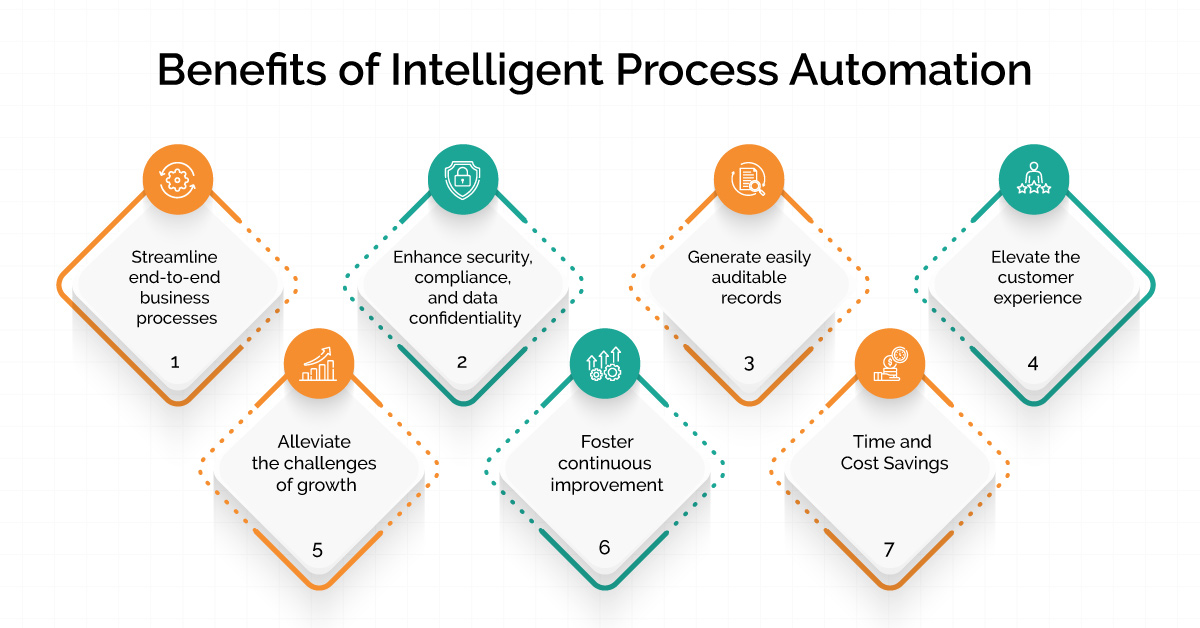
In the grand theatre of modern enterprise, productivity has long been the protagonist—a restless hero forever seeking a better script. But the old playbook, reliant on manual choreography and rote repetition, has begun to feel like a soliloquy delivered in an empty hall. Enter Intelligent Automation, not merely as another supporting character, but as a silent conductor capable of orchestrating an entire symphony of tasks. It is not the brute force of mechanization, but the subtle art of cognitive delegation. This is the story of how we stop sprinting on a treadmill and start flying on a glide path.
The most compelling metaphor for Intelligent Automation is that of a digital alchemist. It takes the lead ore of mundane, high-volume tasks—data entry, invoice processing, report generation—and transmutes them into gold: liberated human hours, sharpened accuracy, and a relentless 24/7 operational cadence. Unlike traditional robotic process automation (RPA), which simply mimics keystrokes like a puppet, Intelligent Automation marries that robotic skeleton with the nervous system of artificial intelligence. It can read, reason, and even learn. It does not just move paper; it understands the ink.
The Architecture of Fluidity: Breaking the Batch Mentality
The first great gift of Intelligent Automation is the dissolution of the “batch”—that antiquated practice of waiting for a month-end, a shift change, or a human to be available. Historically, productivity was measured in aggregates: “We processed 500 claims this week.” Intelligent Automation rewrites this into a continuous stream. It operates in milliseconds, not meetings. It collapses time.
Consider the supply chain. A manual approval process for a vendor invoice might languish in an inbox for three days, creating a bottleneck that stalls production. An intelligent automation agent, equipped with natural language processing, can scan the invoice, cross-reference it against a contract, flag discrepancies, and process payment in under ninety seconds. This is not just speed; it is the elimination of friction. The organization no longer churns on a weekly heartbeat; it pulses in real-time. The productivity gain is not in working harder, but in eliminating the idle waiting that quietly erodes corporate energy.
Human Renaissance: The Unexpected Liberation
Perhaps the most profound benefit is not what the machines do, but what they stop doing to the humans. There is a pervasive fear that automation will replace workers. But the smartest practitioners view it as a great career liberator. Intelligent Automation excels at the “Three Ds”: Dull, Dirty, and Dangerous. It vacuums up the soul-crushing, repetitive tasks that drain cognitive bandwidth.
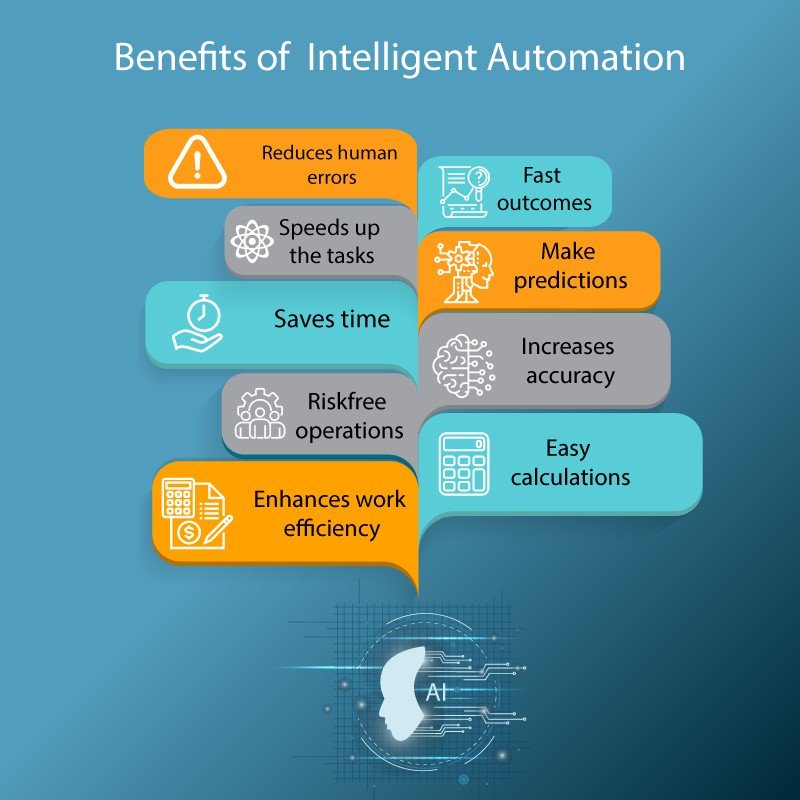
When knowledge workers are released from the prison of spreadsheet reconciliation and CRM data scrubbing, something remarkable occurs. They do not become lazy; they become inventive. The human talent that was devoted to clicking buttons is now directed toward creative problem-solving, client relationships, and strategic innovation. Productivity, in this new context, is not measured by the number of fields filled, but by the quality of insights generated. An insurance claims adjuster, freed by automation that scrapes reports and organizes evidence, can spend that reclaimed time speaking empathetically with a claimant—turning a transactional process into a relationship builder. The automation does not dehumanize work; it rehumanizes it by carving out space for genuine human intellect.
Precision as a Byproduct: The Cost of Error
Human beings are wonderfully imaginative, but statistically terrible at repetitive, high-focus tasks. Fatigue sets in. A decimal point drifts. A data field is overlooked. These “small” errors accumulate into a tax on productivity—rework loops, compliance penalties, and lost trust. Intelligent Automation brings the virtue of mathematical fidelity. It is immune to boredom. It processes every transaction with the same unblinking precision at 3:00 AM as it does at 3:00 PM.
This precision cascade has a direct productivity impact. Consider a financial reconciliation process. A human auditor might achieve 98% accuracy. An Intelligent Automation system, leveraging machine learning and rule sets, can reach 99.9% accuracy. The 1.9% difference might seem trivial, but in a high-volume environment handling ten thousand transactions a month, it eliminates nearly two hundred hours of error-correction labor. That is a week of full-time work that simply vanishes from the to-do list. The system does not “help” you be more productive; it erases the drag that non-productivity creates.
Scalability Without Strain: The Elastic Enterprise
One of the most treacherous productivity killers is the “growth spike.” A sudden influx of customers, a regulatory change, or a seasonal rush can overwhelm a team, leading to burnout and attrition. Traditional hiring for these peaks is expensive and slow. Intelligent Automation offers elastic scalability. It is the infrastructure equivalent of cloud computing applied to human labor.
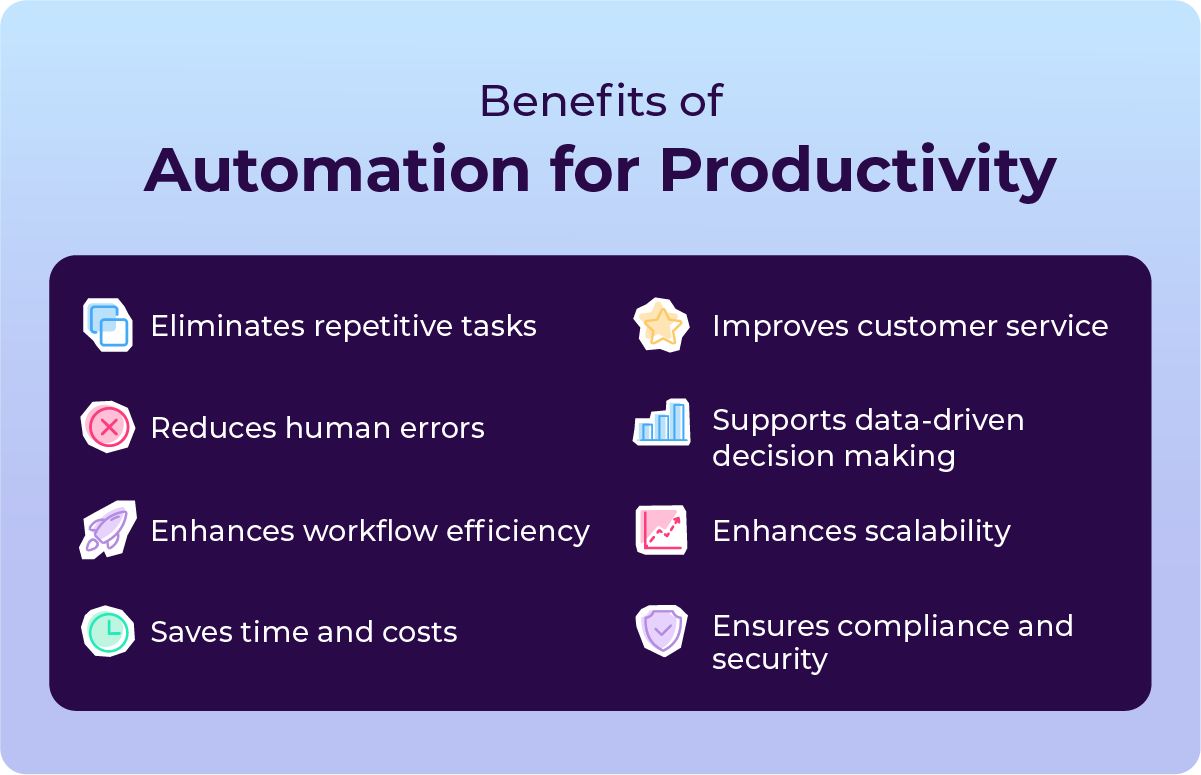
A bot can be duplicated in minutes. It does not require onboarding, benefits, or vacation time. When demand surges, the automation layer absorbs the excess. When demand wanes, it scales back without tears. This elasticity transforms productivity from a linear function (more output = more people = more cost) into a near-exponential function. The organization becomes antifragile—it gets stronger when pressured. The team no longer dreads the Monday morning inbox deluge; the system has already sorted, prioritized, and responded to 70% of it before the first coffee is poured.
The Invisible Hand: The Ultimate Appeal
The most intoxicating appeal of Intelligent Automation is its invisibility. True productivity should feel effortless. It should not be a constant battle of willpower against chaos. When implemented well, Intelligent Automation operates like a well-tuned engine in a luxury vehicle. The driver does not think about the pistons firing or the fuel injectors; they merely feel the smooth acceleration. The robot does the drudgery; the human does the glory.
This is the ultimate paradox: the most productive organization is not the one that is always busy, but the one that is effortlessly effective. The humming of the automated processes becomes background music, allowing the melody of human creativity to swell. We are not replacing the artist; we are perfecting the canvas. And in that perfect silence of tasks done right, we discover our true productivity—not in the doing, but in the becoming.
Leave a comment