


The Peripatetic Productivity Paradox: Why Movement Makes Machines of Thought
There is a peculiar, almost furtive pleasure in the sight of two colleagues strolling the perimeter of a corporate campus, gesturing animatedly at the sky. We observe them, these peripatetic thinkers, and we feel a pang of something—not quite envy, but a recognition of a truth we have forgotten. The observation is banal: walking while talking feels different. But the reasons for this fascination run deeper than simple fresh air. It is not merely that we are moving our legs; we are, in a very real sense, unlocking a different engine of cognition. The walking meeting is not a wellness trend dressed in business casual. It is a profound, biologically grounded method of hacking the very nature of productivity itself.
The Neurology of the Stride: Why Motion Unlocks Clarity
The seductive power of the seated meeting lies in its illusion of focus. We sit, we stare, and we believe we are concentrating. Yet the brain, that most restless of organs, often rebels. The default mode network—the part of our mind responsible for daydreaming, connecting disparate ideas, and creative leaps—is suppressed by forced stillness. A walking meeting, conversely, engages the cerebellum and the motor cortex in a low-stakes, rhythmic task. This moderate physical activation triggers a cascade of neurochemicals: endorphins for mood, dopamine for motivation, and—crucially—norepinephrine for attention. The brain is not distracted by the walk; it is liberated by it. The mundane task of putting one foot in front of the other quiets the shouting voice of the inner critic, creating a mental vacuum into which new solutions can rush. The result is not a diluted conversation, but a sharper, more lateral one.

Breaking the Hierarchy of the Conference Room
A polished mahogany table is a stage. It imposes a geometry of power: the head, the sides, the corners. This physical setup psychologically reinforces a hierarchy that can stifle innovation. The most junior voice often hesitates to contradict the senior executive at the head of the table. The walking meeting, by its very nature, dismantles this stage. There is no head of the table. There is only a path, a horizon, and the shared rhythm of two or three people moving forward together. When bodies are side-by-side, facing the same direction, the conversation inherently becomes a collaboration. Eye contact is intermittent, replaced by a shared gaze toward a common goal. This subtle shift reduces the pressure of direct confrontation, making it easier to float half-formed ideas, challenge assumptions, and build upon each other’s contributions without the defensive posturing of a static boardroom. The session becomes a journey, not a verdict.
The Treadmill Solution: Engineering the Inevitable
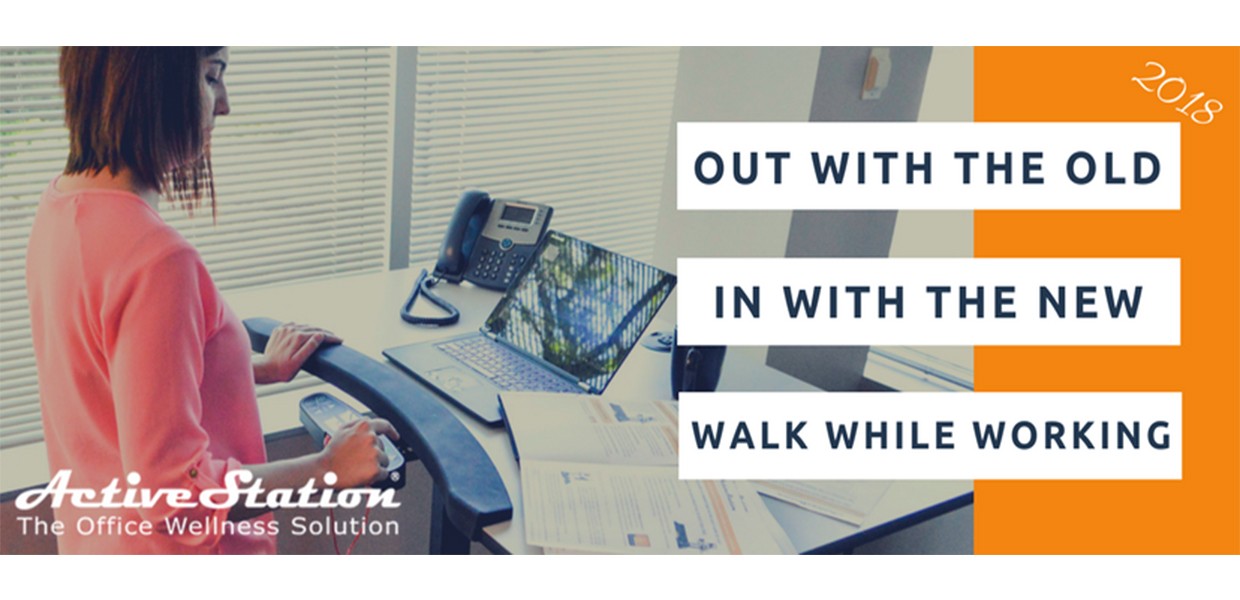
Of course, the great enemy of the outdoor walking meeting is the weather, and the great prerequisite is a walkable environment. Not every office is nestled beside a tree-lined boulevard. This is where the engineered solution—the blend of a standing desk with a treadmill—becomes a powerful, if more solitary, tool. A treadmill desk is not a piece of exercise equipment; it is a cognitive catalyst. It acknowledges the core truth: that the human body is not designed for the stasis of a chair. A slow, steady pace of one to two miles per hour is often ideal for reading, writing, or a tête-à-tête. While it lacks the social egalitarianism of an outdoor walk with a colleague, it offers a parallel neurochemical benefit for individual deep work. Stagnation breeds procrastination; a gentle, persistent motion creates a sensory grounding that keeps the mind tethered to the task at hand. It is a private, personal walking meeting with your own workload.
The Art of the Structured Amble
For all its promising chaos, the walking meeting must be governed by a specific etiquette to avoid becoming an aimless ramble. The first rule is simplicity: small groups thrive; large groups fail. Three is the magic number; four is the maximum. A fifth person creates a trailing cluster that is inefficient and socially awkward. Second, define the distance as a proxy for time. Instead of a thirty-minute block, propose a specific loop: “Let’s walk the perimeter of the building.” This gives the conversation a natural, physical cadence and a clear endpoint. Third, designate a note-taker who can dictate into a phone, as writing while walking is a recipe for a sprained ankle. Finally, embrace silence. The pressure to fill every moment with talk dissipates on a walk. A pause for a breath of air or to admire a passing cloud is not dead air; it is incubation time. The most productive pieces of a walking meeting often occur in the spaces between the words.
From Fascination to Function
The initial fascination with the walking meeting—that odd, compelling image of the ambling executive—is not a sign of managerial eccentricity. It is a primal instinct reasserting itself. For millions of years, the human mind evolved while the human body was in motion, traversing savannahs and tracking game. We solved problems, negotiated alliances, and told stories not in static caves, but on the move. The modern conference room is an evolutionary anomaly. To reclaim the walking meeting is to reclaim a more natural, and thus more effective, state of cognition. It is an acknowledgment that the body is not a distraction from the mind’s work, but its very partner. The fascination is well-placed. The deeper reason we stare is that we sense, intuitively, that these walking colleagues have stumbled upon a secret: that the path to a better idea is, quite literally, a path.
Leave a comment