


The Silent Architecture of Company Growth
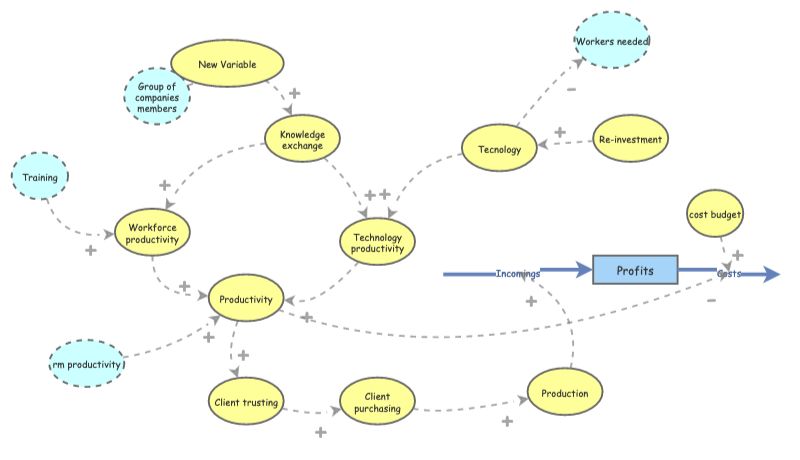
Every business begins as a kinetic sculpture of chaos and ambition. The early days are a rush of adrenaline, where the founder wears every hat, and success hinges on sheer force of will. Yet, as the company scales, a peculiar observation emerges: the very habits that fueled the startup’s survival begin to suffocate its expansion. The founder’s superhuman productivity, when spread across dozens or hundreds of employees, often devolves into a decentralized blur—a thousand individuals running a thousand different races. Why does this happen? The answer lies not in laziness or lack of talent, but in the absence of a unified structure. We are fascinated by the “productivity framework” because it promises to solve a riddle that haunts every growing organization: how to make many minds move as one, without turning them into cogs. It is the invisible architecture that turns raw human effort into a self-reinforcing engine of growth.
The Myth of Diligence: Why More Effort Is Not Enough
The common assumption is that company growth requires everyone to simply work harder. Burn the midnight oil, track every minute, reply to emails on Sunday. Yet this belief is a siren song. In my consulting work, I’ve watched teams exhaust themselves while their output plateaus—a condition I call “productive entropy.” The deeper reason for our fascination with frameworks like TTK (The Personal Productivity Framework) is that they expose a hard truth: efficiency without alignment is wasted motion. A sales team that closes ten deals a week but misleads customers about delivery times creates more work for the fulfillment department. A marketing team that generates 1,000 leads a month but ignores the sales pipeline’s capacity is merely generating noise. The framework’s magic lies in forcing a company to choose its bottlenecks deliberately. It asks not “how can we do more,” but “what is the one constraint that, if fixed, multiplies everything else?” This shift from volume to leverage is the quiet heart of scalable growth.
The Rhythm of Iteration: Structure That Breathes
Once a company acknowledges that more effort is not the answer, the next challenge is emotional rather than logical: how to impose structure without killing creativity. The smartest frameworks—and the reason we call them “frameworks” rather than “manuals”—are not rigid scaffolds but living rhythms. They operate like jazz, not sheet music. A well-built productivity framework uses a cadence of check-ins, retrospectives, and priority reviews that adapt to the company’s heartbeat. For example, a common practice is the “weekly alignment”: every Monday, each team shares exactly three commitments that directly support the company’s quarterly objective. On Friday, they review what was actually delivered. This rhythm creates a pulsing feedback loop. It is not a system of punishment but of calibration. The narrative of growth becomes less about heroic sprints and more about disciplined steps. The framework gives leaders a lens to see where the engine is misfiring—a department that consistently misses its Friday review is not “lazy”; it is likely missing resources, clarity, or authority. And that is a fixable problem.
The Efficiency Paradox: When Speed Slows You Down
Perhaps the most counterintuitive revelation from studying productivity frameworks is that the fastest-growing companies are often the slowest in the short term. They invest an hour in a planning session to save ten hours of rework. They standardize tedious processes not because they are boring, but because automation liberates human intelligence for higher-order thinking. Consider the role of document systems: a cloud-based repository of standard operating procedures might feel bureaucratic, but it creates a single source of truth. When a new hire can find the “how to process a refund” guide in three clicks instead of interrupting three colleagues, the company buys back the most precious resource: cognitive bandwidth. The TTK framework, for instance, emphasizes creating “second brains”—digital ecosystems where knowledge is not trapped in individual brains but shared, searchable, and continually improved. This is the deeper lesson: productivity is not about speed. It is about reducing the friction that makes people dumb. Remove friction, and growth becomes a natural state, not a forced march.
Culture as the Byproduct of Process
There is a romantic notion that culture is built through ping-pong tables, mission statements, and free snacks. But the most durable company cultures are actually the byproduct of a good productivity framework. When employees know exactly what is expected of them, see how their work connects to a larger goal, and have the tools to do their job without chaos, they feel respected. Trust emerges not from platitudes but from reliable systems. A framework that insists on weekly one-on-ones between manager and report, for example, is not just a scheduling exercise—it is a commitment to treating people as complex humans with obstacles, not as units of output. The narrative of growth thus becomes one of mutual empowerment. The company grows because the individuals within it feel less like cogs and more like craftsmen. The fascination with frameworks is, at its core, a yearning for clarity in a world that is complex, ambiguous, and prone to entropy. We are drawn to them because they offer a path from noise to signal, from chaos to coherence.
The Future Belongs to the Structured
In the end, the productivity framework that truly grows companies is not a secret formula. It is a willingness to be boring in the right ways. It means having the discipline to measure, the humility to adjust, and the foresight to design processes for the company you want to become, not the company you are. The most successful organizations I have observed do not have geniuses pulling rabbits out of hats every month. They have ordinary people executing extraordinary systems with consistency. The framework is the stage. The people are the actors. And the growth is the standing ovation that happens almost by accident, because the mechanics of the production were so meticulously engineered that the audience forgot they were watching a machine at all. This is the silent architecture of growth—and it is the only one that scales.
Leave a comment