


The Strategic Thinking Habits That Boost Output
Most people mistake motion for progress. They fill their calendars with back-to-back meetings, fire off emails in rapid succession, and tick tasks off lists with mechanical precision—yet the needle on meaningful output barely moves. This is the productivity paradox of our age: doing more while achieving less. The antidote is not another time management app or a stricter schedule. The shift that actually changes outcomes is far more fundamental. It is the adoption of strategic thinking habits, a mental architecture that does not simply organize work but transforms how you perceive the work itself. These habits promise a startling reframing: that output is not a function of effort, but of leverage. And to find leverage, you must first learn to see the system, not just the task.
The Anticipation Instinct: Seeing the Shape of Problems Before They Arrive

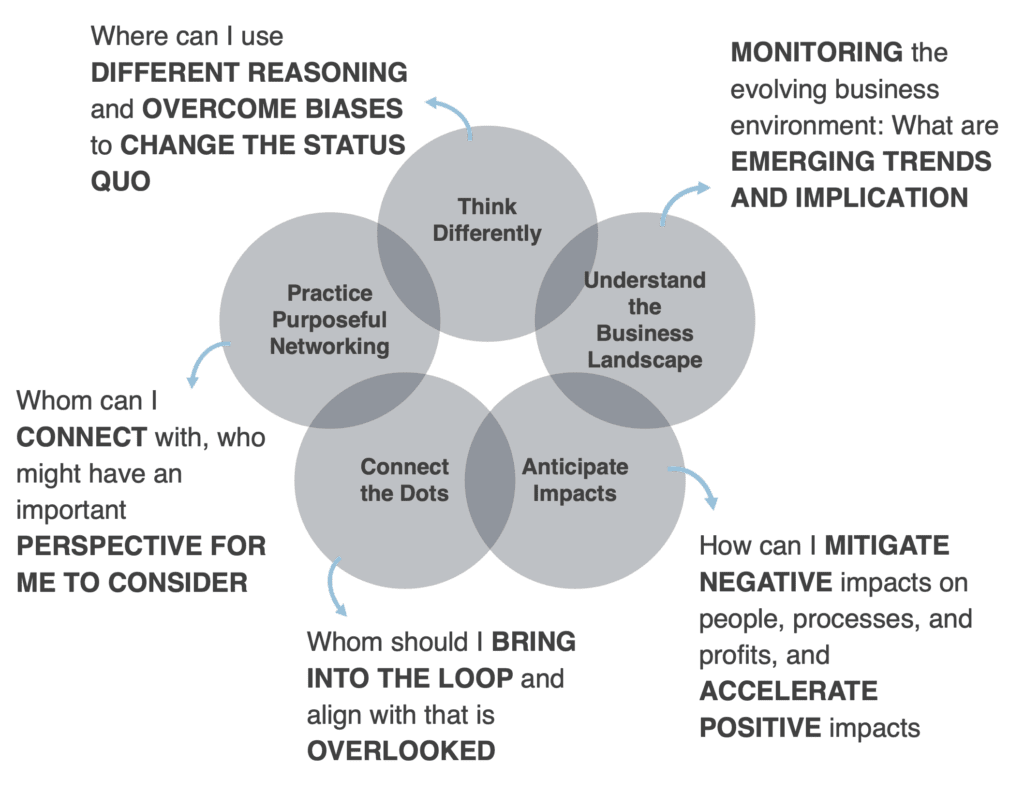
Strategic thinkers do not react; they rehearse. The first habit is to cultivate what you might call the anticipation instinct—a deliberate practice of projecting current trajectories forward. While the average worker wakes up and asks, “What do I need to get done today?” the strategic thinker asks a different question: “If I continue on this path, what will my biggest bottleneck be three weeks from now?” This shift in focus is unnervingly powerful. It turns your output from a series of fire drills into a choreographed sequence. You begin to notice the subtle cues that others miss: a client’s vague email that hints at scope creep, a team member’s quiet disengagement that will later cost a deadline, a market trend that is barely a ripple but will become a wave. The promise here is simple: by investing a small amount of energy in anticipating friction, you eliminate exponentially more energy spent on emergency fixes. Output becomes fluid because the obstacles have already been sidestepped, not smashed through.
Critical Questioning: The Art of Deconstructing the Obvious
The second habit is as uncomfortable as it is essential: the habit of critical questioning. Most professionals are trained to execute, not to interrogate. They receive a brief and immediately begin building a plan. A strategic thinker does the opposite. They freeze. They ask the uncomfortable questions that make others shift in their seats. “What is the actual outcome we are trying to create, and why are we assuming this is the best route?” This is not mere skepticism; it is a disciplined dismantling of assumptions. Consider the team that spends weeks polishing a presentation deck. A strategic thinker might step back and ask, “Is the output we need a polished deck, or is it a decision from the client?” That single question shifts the entire focus. Perhaps a short memo or a prototype would yield the same result in half the time. The habit of questioning forces you to separate the signal from the noise, the core output from the decorative work that surrounds it. By doing so, you strip away the effort that produces no result, leaving only the work that genuinely moves the needle. The volume of your output may drop, but its power multiplies.
Pattern Recognition: Connecting Disparate Dots into Coherent Strategy

Where others see isolated events, strategic thinkers see patterns. This habit is less about raw intelligence and more about intentional observation. It involves stepping back from the granular details of daily work and noticing the recurring shapes in your data, your conversations, and your failures. Perhaps every project that has gone late has shared a common early-stage flaw: a lack of stakeholder alignment. Or perhaps every successful campaign you have run followed a specific sequence of audience engagement. The strategic thinker does not treat these as coincidences. They build mental models—simple frameworks that predict future outcomes based on past patterns. This habit supercharges output because it eliminates the need to reinvent the wheel. When you recognize the pattern of a rising conflict between departments, you do not wait for it to escalate; you apply the known solution pattern early. When you see the pattern of a breakthrough idea, you replicate the conditions that birthed it. Output becomes less about grinding through tasks and more about navigating a known landscape with a reliable map.
Deliberate Abandonment: The Power of Stopping the Wrong Work
The most counterintuitive habit of strategic thinkers is the habit of deliberate abandonment. In a culture obsessed with grit and persistence, choosing to stop doing something is seen as weakness. Yet the highest-output individuals know that capacity is finite. Every hour spent on a mediocre project is an hour stolen from a potentially exceptional one. This habit requires brutal honesty. You must regularly audit your commitments and ask, “If I were not already doing this, would I start it today?” If the answer is no, you have permission to abandon it. This goes beyond simple prioritization. It is the strategic decision to let certain things fail, to politely decline opportunities that do not fit the core mission, and to declare certain tasks as finished even if they are not perfect. The promise is a radical clearing of mental space. By abandoning low-yield activities, you create a vacuum that draws in higher-quality work. Your energy is no longer diluted across a dozen fronts; it is concentrated into a single, powerful current. That concentration is where output transforms into impact.
Reflective Pauses: The Strategic Use of Stillness
Finally, the most overlooked habit is the reflective pause. The modern knowledge worker is addicted to noise—constant Slack messages, email pings, and the dopamine hit of immediate responses. Strategic thinkers deliberately starve this addiction. They schedule short, non-negotiable blocks of silence into their week. This is not daydreaming or laziness. It is the conscious act of allowing thoughts to settle so that the deeper connections—the patterns, the critical questions, the anticipations—can surface. Think of it as the distillation process. Your day is filled with raw data and chaotic inputs. The reflective pause is the heat that boils away the water, leaving behind the concentrated essence. It is in these still moments that you realize the email you were about to send is unnecessary, or that the proposed meeting could be replaced by a single shared document. The output boost from this single habit is immense because it prevents the most common productivity killer: busywork that masquerades as importance. The mind, given space to breathe, becomes a tool of precision instead of a machine of reaction. It does not merely produce more; it produces the right things.
These five habits form an interlocking system. Anticipation prevents problems. Critical questioning eliminates unnecessary effort. Pattern recognition accelerates decision-making. Deliberate abandonment clears the path. And reflective pauses ensure you remain the pilot of your work, not just a passenger. The promise they offer is not a miracle of time—there are still only twenty-four hours in a day. The promise is a shift in how you use those hours. Stop trying to do everything faster. Start trying to see everything more clearly. The output will follow, not as a result of sheer force, but as the natural outcome of a mind that has learned to work with strategy, not against it.
Leave a comment