


The Architect of Intellect: Constructing Your Ultimate Study Routine for High Performance
There is a subtle alchemy in the mind of a high performer. It is not merely the accumulation of facts, but the deliberate orchestration of cognitive energy. Too often, students and professionals treat study as a siege—a frantic, last-minute assault on a fortress of information. But true mastery is not a battle; it is an architectural endeavor. It requires the blueprints of a cathedral, not the rubble of a siege tower. To build a routine for high performance is to become the architect of your own intellect, laying foundations of neural pathways where ideas can walk with purpose and dwell in clarity.
Laying the Bedrock: The Geometry of Attention
The first mistake of the novice architect is building on sand—attempting to study in an environment of constant interruption and sensory noise. High performance demands a sanctified space, a temenos in the ancient Greek sense: a sacred precinct cut off from the mundane. This is not just about a clean desk. It is about engineering a gravitational field for your attention. Remove the phone from the room entirely; it is a digital Siren, its call sweet and ruinous. Use noise-canceling headphones not for music, but for silence. The room should be cool (around 68°F), dimly lit with a single task lamp on the material, and stripped of visual clutter. In this blank canvas, your focus becomes the only brush that matters. The geometry of your physical space directly dictates the geometry of your mental space. If the room is chaotic, the mind will follow suit. Order the external, and the internal will respond like iron filings to a magnet.
The Stonecutter’s Rhythm: The Pomodoro Principle
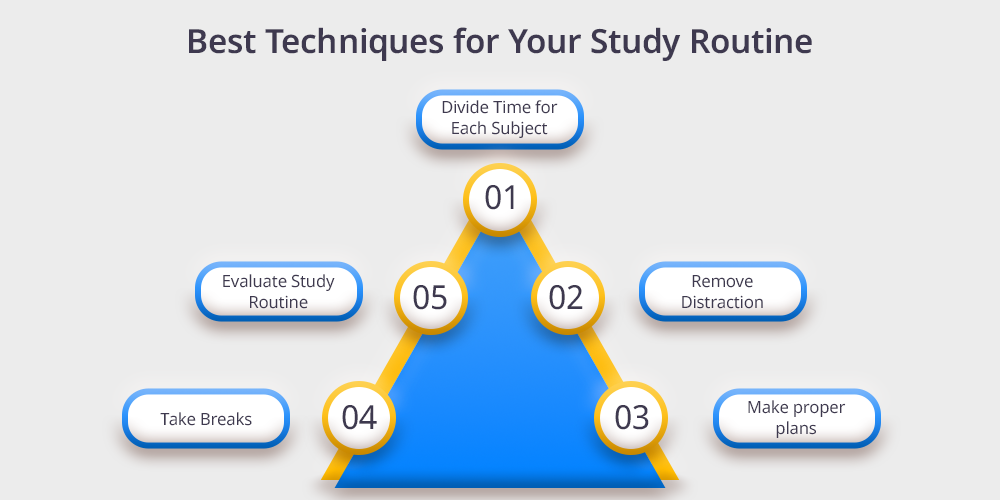
Mountains are not moved by a single, desperate heave, but by the steady rhythm of the chisel. The most effective study routine respects the natural cycle of mental exertion and recovery. The Pomodoro Technique is not a gimmick; it is a prescription for sustainable cognitive labor. The classic block is 25 minutes of intense, uninterrupted focus followed by 5 minutes of complete detachment. Do not check email during the break. Do not scroll social media. Stand up. Look out a window. Feel the air on your skin. This rest is not laziness; it is your brain washing its own synaptic dishes. For high performance, extend the blocks to 50 minutes of work with a 10-minute break, but never exceed 90 minutes without a longer 20-30 minute reset. After four cycles, take a long break of thirty minutes. This rhythm trains your brain to trust that focus is a finite, manageable sprint, not an endless marathon. The fear of exhaustion dissolves when you know a reprieve is coming.
The Scaffolding of Retrieval: The Testing Effect
A building that is not inspected will eventually collapse. A mind that only reads will eventually forget. The secret to high performance is not passive review but active retrieval. This is the moment you put down the textbook, close the laptop, and force yourself to reconstruct the information from the dry chaos of memory. Write everything you remember on a blank sheet of paper. Explain a complex concept out loud, as if teaching a curious child. Do this before you feel ready. The discomfort of forgetting is the chisel that deepens the neural groove. When you struggle to recall a fact, and then find the answer, that synapse is strengthened a hundredfold compared to simply re-reading the sentence. Build retrieval practice into your routine as a non-negotiable pillar. Before starting a new study block, spend five minutes reviewing the previous block’s material without looking at notes. This is your brain’s daily inspection—catching the cracks before they become chasms.
The Cathedral of Meaning: Deep Work and Concept Mapping
Surface-level learning produces brittle knowledge, easily shattered by a novel question. High performance builds a cathedral of meaning—vaulted structures where concepts interconnect and support each other. This requires Deep Work, a state of flow where you are completely absorbed. To enter this state, you need a clear target. Do not sit down to “study biology.” Sit down to “map the relationship between the Krebs cycle and oxidative phosphorylation.” Use a large sheet of paper and draw a concept map. Place the central idea in the middle, and branch out with connecting lines, arrows, and brief annotations. This visual architecture forces you to see the relationships, not just the isolated facts. The metaphor becomes a literal drawing. When you can trace a path from one concept to another, you have built a bridge in your mind. The routine should allocate the first 45 minutes of a study session to building these mental maps, while the mind is freshest and capable of heavy lifting.
The Spire of Sleep: Consolidation as a Tool
No cathedral is built in a day, and no neural architecture is solidified without the night. Sleep is not the absence of study; it is the most active part of the process. During deep sleep, the brain replays the day’s learning, transferring information from the hippocampus (temporary storage) to the neocortex (permanent vault). To leverage this, review your concept map or most difficult material for ten minutes immediately before bed. This primes your mind for the nocturnal rehearsal. Do not study anything new for at least 30 minutes prior to sleep; avoid blue light from screens. The student who sleeps eight hours after a focused study session will outperform the student who stayed up three hours late cramming. The routine must schedule sleep with the same rigor as a study block. Go to bed at the same time each night. Wake at the same time. The spire of your mental cathedral reaches its highest point not in the daylight of the library, but in the quiet darkness of your slumber.
Conclusion: The Living Structure
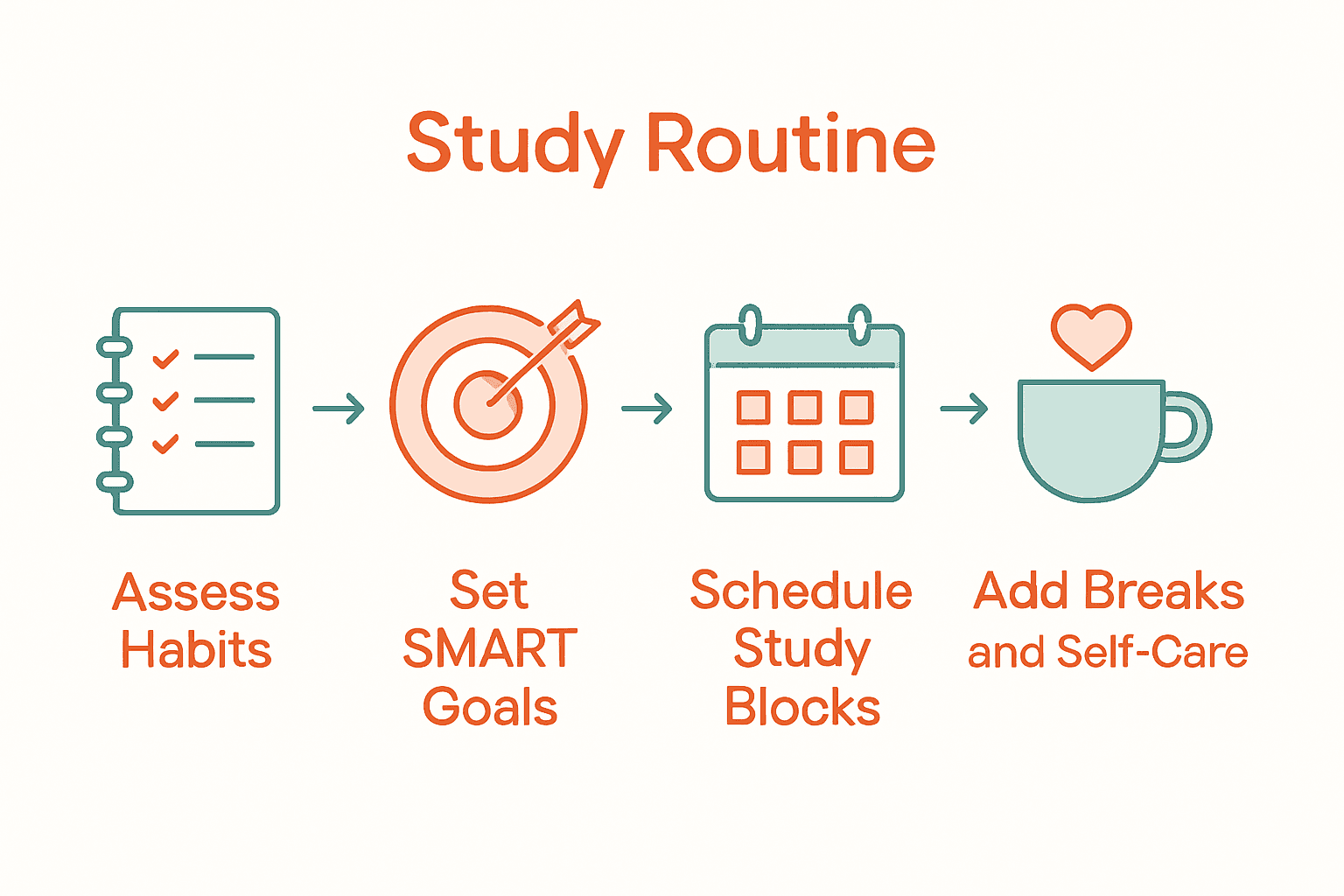
A great building is never truly finished; it is maintained, renovated, and adapted. Your study routine is a living structure. At the end of each week, spend fifteen minutes reflecting on the blueprints. What blocks crumbled? What walls stood firm? Adjust the dimensions. Perhaps you need shorter Pomodoro intervals, or a different time of day for deep work. High performance is not a static formula but a dynamic dance with your own biology and psychology. Build the routine with intention, execute it with discipline, and let your intellect become the most resilient and beautiful architecture ever constructed—one where every idea has a room, every concept a window, and every memory a foundation that cannot be shaken.
Leave a comment