


In the grand theater of life, where each of us plays a starring role, there exists an invisible specter that lingers in the wings—the Imposter Syndrome. It’s that nagging voice whispering, *You don’t belong here. You’re a fraud.* It’s the shadow that stretches across your achievements, distorting them into mere luck or timing. But what if I told you that this specter, though formidable, is not invincible? Cognitive Behavioral Therapy (CBT) offers a lantern to illuminate its cracks, a scalpel to dissect its illusions, and a blueprint to rebuild the architecture of your self-assurance. Let’s embark on a journey through the labyrinth of self-doubt, armed with the tools of CBT, to reclaim the narrative of your own competence.
Imagine your mind as a vast, untamed jungle. The vines of negative self-talk coil around your thoughts, choking the vibrant flora of confidence. CBT is the machete that cuts through this overgrowth, revealing the path to clarity. At its core, CBT is not just a therapeutic technique—it’s a cognitive alchemy, transforming the base metal of doubt into the gold of self-efficacy. It operates on the principle that our thoughts, feelings, and behaviors are inextricably linked, and by reshaping one, we can transform the others. So, let’s wield this tool with precision and purpose.
The Roots of the Imposter: Unraveling the Cognitive Knots
To dismantle the Imposter Syndrome, we must first understand its roots. It thrives in the fertile soil of cognitive distortions—those twisted thought patterns that warp reality into a funhouse mirror. One of the most insidious is all-or-nothing thinking, where success is either perfection or failure, with no middle ground. Another is personalization, the habit of attributing external successes to luck while internalizing failures as personal flaws. These distortions are the puppeteers pulling the strings of your self-doubt.
CBT teaches us to interrogate these distortions like a detective sifting through clues. Ask yourself: *Is this thought based on evidence, or is it a figment of my imagination?* For instance, if you’ve just aced a project, do you dismiss it as “just good timing,” or do you acknowledge your skill and effort? The latter is the voice of truth; the former is the Imposter’s siren song. By labeling these distortions—cognitive reframing—we strip them of their power, revealing the stark, unvarnished truth beneath.

The Art of Thought Records: Your Personal Detective Agency
CBT’s thought records are your detective’s notebook, a place to document the crime scenes of your self-doubt. Each entry is a case file: the situation, the automatic thought, the emotion it evokes, and the evidence for and against that thought. For example, if you’re convinced you’re about to be “found out” at work, your thought record might look like this:
- Situation: A colleague praises your presentation.
- Automatic Thought: “They’re just being polite; I bombed it.”
- Emotion: Anxiety, shame.
- Evidence For: You stumbled over a few words.
- Evidence Against: Your data was meticulously researched; the audience engaged deeply.
By weighing the evidence, you expose the Imposter’s lies. The thought record isn’t just a tool—it’s a mirror, reflecting back the distorted image of your self-perception and allowing you to reshape it into something truer, something kinder.
Behavioral Experiments: The Laboratory of Self-Discovery
CBT doesn’t just dwell in the realm of thought—it’s a behavioral crucible, where actions forge new neural pathways. Behavioral experiments are your chance to test the Imposter’s hypotheses. Suppose you believe, *”If I speak up in meetings, I’ll sound stupid.”* Your experiment could be: *Speak once in the next meeting and observe the reactions.* More often than not, you’ll find that your fears are unfounded. The Imposter thrives in the shadows of avoidance; experiments drag it into the light, where it withers.
These experiments are not about grand gestures but micro-moments of courage. They’re the pebbles that, over time, wear down the mountain of doubt. Each success—no matter how small—is a brick in the foundation of your confidence. And remember, failure isn’t the opposite of success; it’s data. If your experiment doesn’t go as planned, ask: *What did I learn?* The Imposter’s narrative crumbles when confronted with curiosity.
The Power of Self-Compassion: Dismantling the Inner Critic
CBT isn’t just about dismantling the negative; it’s about cultivating the positive. Enter self-compassion, the antidote to the Imposter’s venom. It’s the practice of treating yourself with the same kindness you’d offer a dear friend. When the Imposter whispers, *”You’re not good enough,”* self-compassion replies, *”I’m doing my best, and that’s enough.”* This isn’t softness—it’s strategic resilience.
Self-compassion has three pillars: mindfulness (observing your thoughts without judgment), common humanity (recognizing that everyone struggles), and self-kindness (offering yourself warmth). When you integrate these, the Imposter’s voice loses its sting. You begin to see your flaws not as failures but as signposts, guiding you toward growth. After all, even the most dazzling stars have dark spots—it’s what makes them real.
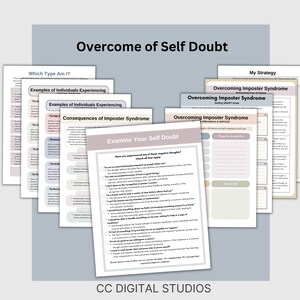
The Ripple Effect: How CBT Transforms Beyond the Self
Mastering CBT for the Imposter Syndrome isn’t just a personal victory—it’s a cultural shift. When you silence the Imposter’s voice, you give others permission to do the same. Your confidence becomes a beacon, illuminating the path for those who feel lost in the fog of self-doubt. CBT teaches that vulnerability isn’t weakness; it’s the raw material of connection. When you admit, *”I don’t have all the answers,”* you invite others to do the same, fostering a community where authenticity thrives.
Moreover, CBT equips you with a toolkit for life. The skills you hone—thought challenging, behavioral experiments, self-compassion—are portable. They’re the Swiss Army knife in your mental backpack, ready for any challenge. Whether you’re navigating a high-stakes presentation or a quiet moment of self-reflection, these tools remind you: *You are the author of your story, not the Imposter’s pawn.*
The Long Game: Patience and Persistence
CBT isn’t a quick fix; it’s a marathon, not a sprint. The Imposter Syndrome is a deeply ingrained habit, and like any habit, it takes time to rewire. There will be days when the old tapes play on loop, when the voice of doubt feels louder than your own. On those days, remember: progress isn’t linear. It’s a spiral—sometimes you’ll loop back, but each time, you’ll rise a little higher.
Celebrate the small wins. Did you question a negative thought today? That’s a victory. Did you take one step outside your comfort zone? That’s progress. The Imposter thrives on perfectionism; CBT thrives on curiosity and growth. So, be patient. Be persistent. And most importantly, be kind to yourself along the way.
In the end, managing the Imposter Syndrome with CBT is about reclaiming your narrative. It’s about recognizing that the voice whispering *”You don’t belong”* is not your truth—it’s a distorted echo of past fears, societal pressures, or even well-meaning criticism. CBT doesn’t erase the echo; it teaches you to turn up the volume on your own voice, until it drowns out the noise of the Imposter. And when that happens, you’ll realize something extraordinary: you were never the fraud. You were always the hero of your own story.
Leave a comment