


In an era where algorithms whisper answers before we’ve even framed the question, a quiet revolution is unfolding—one that doesn’t just automate thought, but reshapes the very scaffolding of how we think. Generative Artificial Intelligence, or GenAI, is no longer a novelty confined to chatbots and image generators. It’s evolving into a cognitive partner, a dynamic mirror that reflects not just data, but the contours of our reasoning itself. What if, instead of passively consuming information, we could step into adaptive critical thinking scenarios where GenAI doesn’t just respond, but *adapts*—where every interaction becomes a tailored exercise in logic, creativity, and self-awareness? This isn’t science fiction. It’s the emerging frontier of human-AI collaboration, and it promises nothing less than a tectonic shift in how we navigate complexity, ambiguity, and innovation.
Imagine a world where your skepticism isn’t just challenged—it’s *modeled*. Where your assumptions aren’t ignored, but dissected in real time. Where every “what if?” isn’t left hanging, but explored through a labyrinth of counterfactuals, biases, and unintended consequences. GenAI is quietly ushering in this world by transforming critical thinking from a static skill into a living, breathing dialogue. It does so not by replacing human judgment, but by amplifying it—by turning every conversation into a sandbox for intellectual agility. This isn’t about getting answers faster. It’s about asking better questions, deeper ones, ones that evolve with you. And in doing so, GenAI is redefining what it means to think—not as a solo act, but as a duet between human intuition and machine precision.

The Genesis of Adaptive Reasoning: Beyond Static Logic
Traditional models of critical thinking often treat reasoning as a linear path—gather evidence, evaluate, conclude. But real-world problems don’t unfold in neat sequences. They twist, they bifurcate, they demand lateral leaps. GenAI introduces a paradigm shift by enabling *adaptive reasoning*: a process where the system doesn’t just process inputs, but dynamically adjusts its responses based on context, intent, and even emotional nuance. This isn’t about rigid logic trees. It’s about fluid, responsive cognition that mirrors the unpredictability of human thought.
Consider a scenario where a student is analyzing a controversial policy. A static textbook might present pros and cons. But an adaptive GenAI system could simulate a debate between historical figures, generate counterarguments from opposing ideologies, or even role-play as a policymaker defending the decision. The student isn’t just learning content—they’re inhabiting the cognitive terrain of decision-making. The AI becomes a cognitive coach, not a crutch, pushing the learner to interrogate their own biases, refine their arguments, and anticipate unintended outcomes. This is critical thinking in motion, where every interaction is a rehearsal for real-world complexity.
From Reflection to Simulation: The Rise of Thought Experiments
Philosophers have long relied on thought experiments—imaginary scenarios designed to probe the limits of logic and ethics. GenAI is democratizing this practice by turning abstract “what ifs” into interactive simulations. Need to explore the ethical implications of autonomous weapons? An AI can generate a simulated UN debate. Curious about the unintended consequences of a new social media algorithm? It can model user behavior across diverse demographics. These aren’t mere simulations; they’re *critical thinking accelerators*, compressing years of hypothetical reasoning into minutes of immersive exploration.
What makes this powerful is the element of surprise. Unlike traditional case studies, which often present pre-digested conclusions, GenAI-driven simulations can introduce unexpected variables—sudden market crashes, cultural backlashes, technological failures. The learner isn’t just analyzing a scenario; they’re navigating it in real time, adapting their reasoning as new data emerges. This mirrors the chaotic nature of real-world decision-making, where certainty is a luxury, and adaptability is survival. By embedding critical thinking in dynamic, unpredictable environments, GenAI transforms passive learning into an active, visceral experience.
Bias Detection as a Mirror: Confronting Cognitive Blind Spots
One of the most insidious challenges in critical thinking is the blind spot—those assumptions we don’t even know we’re making. GenAI excels at surfacing these blind spots by acting as a mirror for our cognitive biases. Whether it’s confirmation bias, anchoring, or the Dunning-Kruger effect, AI systems can detect patterns in our reasoning that we might overlook. But the real magic happens when this detection is turned into an interactive exercise. Instead of simply flagging a bias, GenAI can challenge it: “You dismissed this argument because it contradicts your worldview. What evidence would change your mind?”
This isn’t about shaming or correcting. It’s about *illuminating*. By making our cognitive patterns visible, GenAI helps us recognize when we’re filtering information to fit our preconceptions. It encourages us to ask: “Am I seeking truth, or am I seeking validation?” This level of self-awareness is the bedrock of advanced critical thinking. In a world awash with misinformation and echo chambers, the ability to interrogate our own minds is nothing short of revolutionary. GenAI doesn’t just teach us to think critically—it teaches us to *watch ourselves think*.
Collaborative Cognition: The AI as Co-Pilot, Not Autopilot
There’s a persistent myth that AI will replace human judgment. The truth is far more exciting: AI will *augment* it. GenAI’s role in adaptive critical thinking isn’t to provide answers, but to co-create the process of inquiry. Imagine a researcher using AI to generate alternative hypotheses, a journalist leveraging it to stress-test arguments, or a policymaker employing it to simulate public reactions. In each case, the AI doesn’t dictate the conclusion—it expands the space of possibilities.
This collaborative model turns critical thinking into a dynamic exchange. The human brings intuition, context, and ethical judgment. The AI brings speed, scalability, and pattern recognition. Together, they form a feedback loop where each refines the other. The result? A form of cognition that’s greater than the sum of its parts—one that’s adaptive, iterative, and deeply human. This isn’t about outsourcing thought. It’s about *elevating* it.
The Ethical Frontier: Navigating the Responsibilities of Adaptive AI
With great power comes great responsibility, and GenAI’s ability to shape critical thinking raises profound ethical questions. Who controls the scenarios? How do we ensure fairness in simulations? What safeguards prevent AI from reinforcing harmful biases? These aren’t abstract concerns—they’re the guardrails of a new cognitive landscape. The most advanced systems will be those that prioritize transparency, user agency, and continuous oversight. The goal isn’t to create an infallible AI, but to design systems that are *accountable*—to both the user and the broader societal context.
This ethical dimension is where the future of adaptive critical thinking will be won or lost. It’s not enough for AI to be smart. It must be *wise*—capable of guiding users not just toward better answers, but toward better questions. The best GenAI systems will be those that empower users to interrogate not just the world, but their own minds. They’ll be tools of liberation, not control.
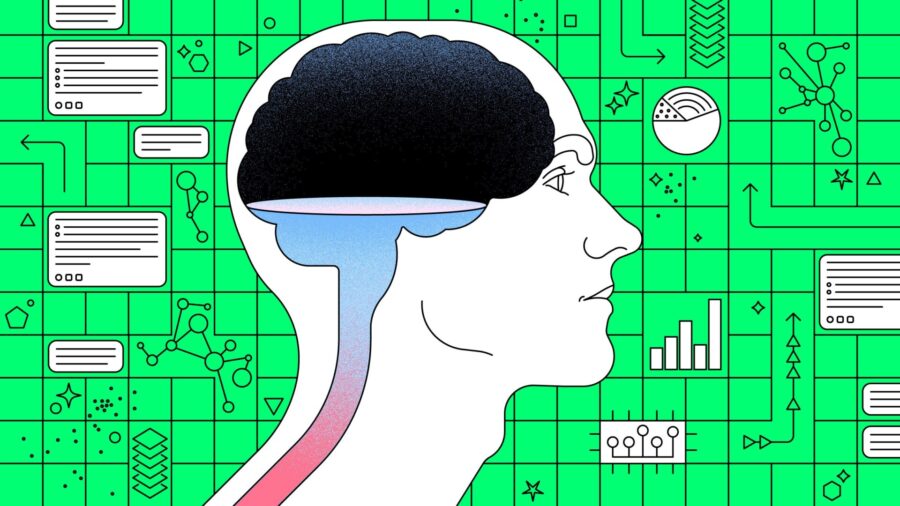
The future of critical thinking isn’t a destination—it’s a conversation. And GenAI is the most compelling interlocutor we’ve ever had. It doesn’t just challenge our ideas; it challenges the way we *have* ideas. It doesn’t just provide answers; it asks us to refine the questions. In doing so, it transforms critical thinking from a solitary pursuit into a collaborative odyssey—one where every insight is a stepping stone, every doubt a compass, and every interaction a chance to think more deeply, more creatively, and more courageously.
As we stand on the precipice of this new cognitive frontier, one thing is clear: the most powerful minds of tomorrow won’t be those who rely solely on AI or human intuition. They’ll be the ones who master the art of *conversing* with it—turning every interaction into an opportunity to sharpen their reasoning, expand their perspectives, and, ultimately, redefine what it means to think critically in an age of machines. The revolution isn’t coming. It’s already here. And it’s waiting for us to join the dialogue.
Leave a comment