


Ever felt like life has a way of knocking you down just as you’re about to dust yourself off? One minute, you’re cruising along, and the next—bam!—a curveball sends your plans spiraling. What if I told you that the difference between a quick recovery and a prolonged slump isn’t luck, but a well-crafted routine? That’s right. A bounce-back routine isn’t just a feel-good concept; it’s your strategic playbook for turning setbacks into comebacks. But here’s the twist: most people wait for motivation to strike before they act. What if motivation never shows up? What then?
Let’s fix that. Below, we’ll break down how to design a routine that doesn’t just wait for inspiration—it creates it. From morning rituals to evening reflections, we’ll cover the science, the psychology, and the practical steps to build a system that keeps you rising, no matter what life throws at you.
—
Why Routine Beats Motivation (Every. Single. Time.)
Motivation is a fickle friend. It arrives unannounced, lingers for a bit, and then vanishes without warning. Routine, on the other hand, is the quiet workhorse that keeps you moving even when your emotions are screaming, “Take a nap instead!” Studies in behavioral psychology show that routines reduce decision fatigue by automating choices. When you remove the need to debate whether you should work out or scroll through social media, you free up mental energy for what truly matters.
Consider this: Your brain is wired to conserve energy. Without a routine, every small decision becomes a mental marathon. A bounce-back routine acts like a GPS—it reroutes you when life takes an unexpected turn. The key isn’t to rely on willpower; it’s to design a system where success is inevitable.

—
The Anatomy of a Bounce-Back Routine: What to Include
A truly effective bounce-back routine isn’t a one-size-fits-all checklist. It’s a personalized toolkit designed to address the physical, mental, and emotional dimensions of recovery. Here’s what to consider:
1. The Morning Reset: Start Strong, Stay Strong
Your morning sets the tone for the entire day. A strong start doesn’t mean waking up at 5 AM to meditate (unless that’s your jam). It means creating a ritual that grounds you. Try this:
- Hydrate immediately: Chug a glass of water to rehydrate after sleep and kickstart your metabolism.
- Move for 5 minutes: Stretch, dance, or do a quick yoga flow. The goal isn’t intensity; it’s to signal to your body that it’s time to wake up.
- Write one thing you’re grateful for: Gratitude rewires your brain to focus on abundance, not lack.
Why it works: These small actions create momentum. Once you’ve completed them, your brain associates consistency with control—a powerful antidote to chaos.
2. The Midday Power Pulse
Around 2–3 PM, energy often dips. This is where most people reach for caffeine or sugar. Instead, try a “power pulse” to reset your focus:
- Take a 10-minute walk outside: Sunlight and movement boost dopamine and serotonin.
- Do a 2-minute breathing exercise: Inhale for 4 counts, hold for 4, exhale for 6. Repeat 5 times.
- Sip cold water: Dehydration worsens fatigue. A splash of cold water on your face can jolt you awake.
Pro tip: Pair this with a “worry dump.” Spend 2 minutes writing down everything stressing you out. Then, tear it up or burn it (safely!). This symbolic act signals to your brain that you’re releasing control.
3. The Evening Wind-Down: Recharge for Tomorrow
Sleep is your body’s recovery mode, but most people sabotage it with late-night scrolling or unresolved stress. Your evening routine should:
- Dim the lights 1 hour before bed: This triggers melatonin production.
- Write down 3 wins from the day: Even small victories count. This trains your brain to scan for positives.
- Practice “mental flossing”: Spend 5 minutes visualizing tomorrow’s priorities. This reduces anxiety about the unknown.
Why it matters: A solid wind-down routine ensures you wake up ready to tackle challenges, not dreading them.
—
Overcoming the Biggest Bounce-Back Roadblock: The “I Don’t Have Time” Excuse
Here’s the hard truth: You always have time for what matters. The issue isn’t lack of time; it’s lack of priority. If you’re honest with yourself, you’ll admit that scrolling TikTok for 30 minutes is a choice—not a necessity. The same goes for skipping your routine because “life got busy.”
So, how do you make time when it feels impossible? Try these hacks:
- Stack habits: Pair your routine with an existing habit. For example, do 5 squats every time you brush your teeth.
- Start tiny: Commit to just 2 minutes of your routine. Often, starting is the hardest part, and once you begin, you’ll likely continue.
- Batch your routine: Combine steps. For example, hydrate while stretching or listen to a podcast while walking.
- Use the “5-minute rule”: If you’re resisting, tell yourself, “I’ll just do it for 5 minutes.” Nine times out of ten, you’ll keep going.
The goal isn’t perfection; it’s progress. Even on your worst days, doing something is better than doing nothing. That something becomes the foundation for your comeback.
—
When Routines Fail: What to Do When You Hit a Wall
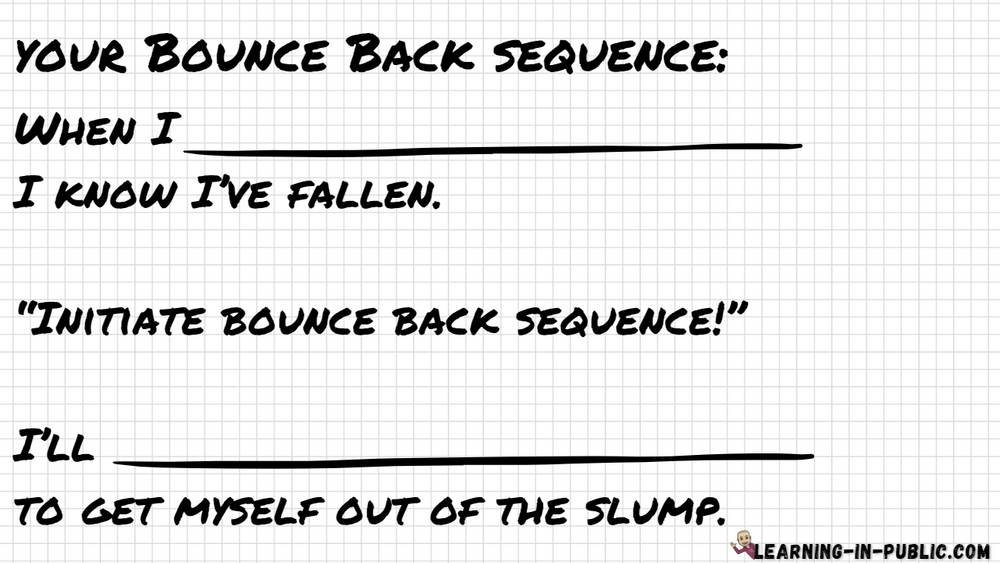
Let’s be real: Routines aren’t magic. There will be days when you miss a step—or all of them. The difference between those who bounce back and those who stay down is their response to failure. Here’s your playbook for when the routine crumbles:
1. Pause and Assess (Don’t Panic)
Ask yourself: What triggered this slip? Was it stress, exhaustion, or a lack of clarity? Identifying the root cause helps you adjust your routine to prevent future slips.
2. Reset with a “Minimum Viable Day”
Instead of aiming for a full routine, commit to the bare minimum:
- Drink water.
- Move for 2 minutes.
- Write one thing you’re proud of.
This keeps the habit alive without overwhelming you.
3. Reframe the Slip
Think of setbacks as data points, not failures. Each miss teaches you something about your limits and preferences. Use it to refine your routine, not abandon it.
—
Your Bounce-Back Routine: A Living Blueprint
A bounce-back routine isn’t a rigid script; it’s a dynamic tool that evolves with you. Start with the framework above, but don’t be afraid to tweak it. Maybe you’re a night owl who thrives on evening workouts. Maybe journaling feels like a chore—swap it for a voice memo. The key is to design a system that feels doable, not daunting.
Remember: Resilience isn’t about never falling. It’s about knowing exactly how to get back up—and having a routine that makes the process automatic. So, what’s one small step you’ll take today to build your bounce-back routine? Start there. The rest will follow.
Leave a comment