


The Pitfall of Perpetual Preparation
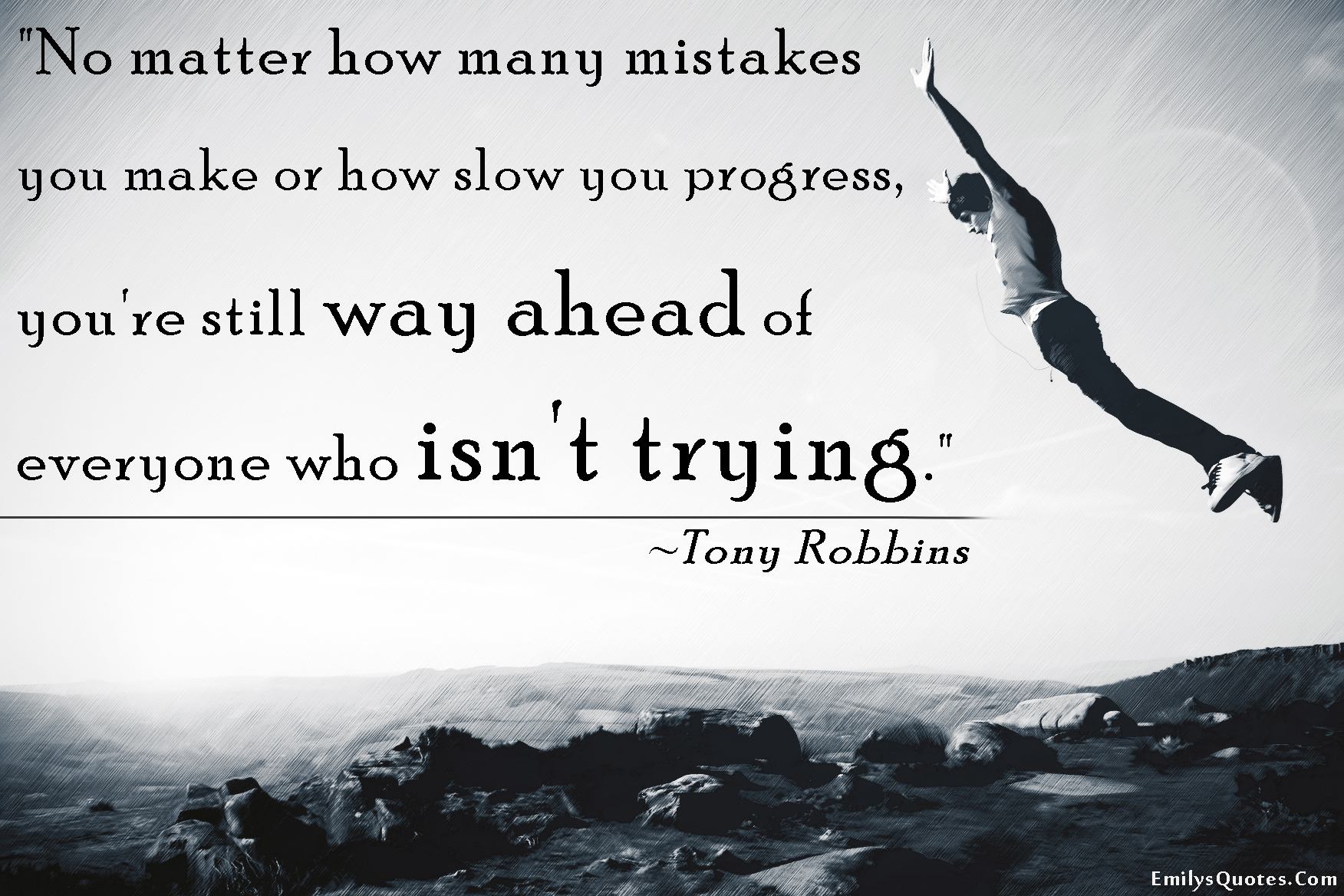
There is a seductive lie whispered in the quiet hours of self-improvement: that you are not yet ready. It manifests as an endless loop of consuming books, subscribing to courses, and perfecting the perfect morning routine—all while your actual goals remain untouched. This is the mistake of valuing readiness over action. The mind convinces itself that more information is the missing key, when in truth, expertise is forged in the crucible of imperfect execution. Readers of motivational content often find themselves trapped here, mistaking the architecture of a life for the living of it. The slowest path to progress is the one where you refuse to take the first step until you feel bulletproof. You do not grow in the library of your ambitions; you grow in the messy, unpredictable arena of doing.
The Cult of the Grand Gesture
A particularly subtle form of self-sabotage is the obsession with the dramatic overhaul. We believe that self-development demands a clean slate—a total transformation that occurs overnight. Consequently, we reject the small, consistent habits that actually compound into change. A person who commits to running a marathon next year might skip a single morning jog today, reasoning that one small failure is insignificant when the target is so large. This is a cognitive distortion. The grand gesture is an illusion; it promises a shortcut but delivers only burnout. The reader expecting a single, earth-shattering piece of advice will miss the quiet power of incremental progress. In this context, the most significant “mistake” is undervaluing the microscopic adjustments that restructure your identity over time. You slow down because you are waiting for a lightning strike when you should be building a fire, one twig at a time.
The Comparison Trap Disguised as Benchmarking
In an era of curated highlights, it is dangerously easy to mistake someone else’s highlight reel for your own reality. A reader drawn to self-development content often studies the successes of others not for inspiration, but for comparison. This creates a silent, corrosive metric: “I am behind.” You measure your chapter two against another person’s chapter twenty. This error is twofold. First, it blinds you to the unique timeline of your growth. Second, it forces you to adopt strategies that worked for a different personality, a different environment, and a different set of circumstances. The result is a frantic, reactive life where you are always chasing a phantom pace. The true art of development is to systematically ignore the speed of others and focus on the trajectory of your own line. When you stop racing, you begin to actually travel.

The Fear of the “Wrong” Choice
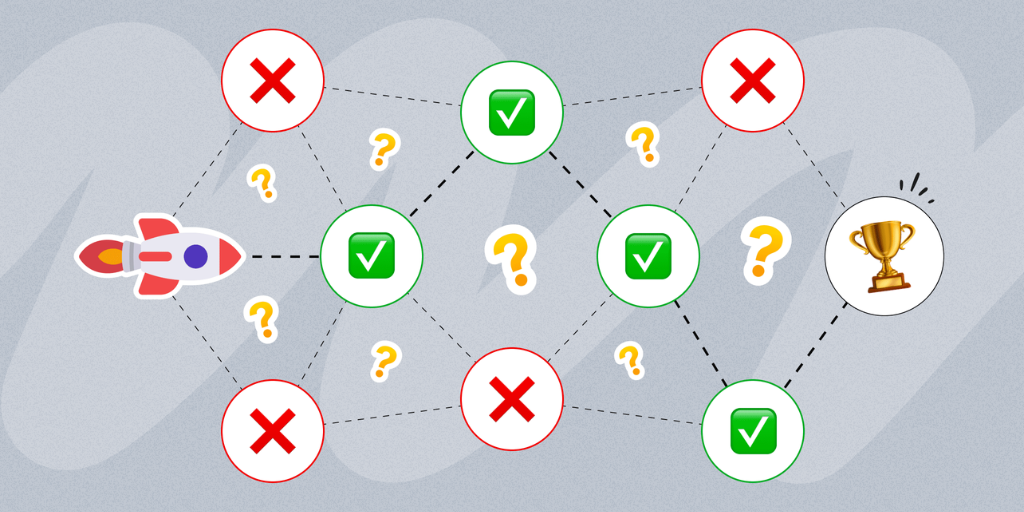
Many aspiring individuals operate under the tyranny of the perfect decision. They believe that every step must be strategically optimal, as if life were a chess game where one wrong move leads to checkmate. This leads to a paralysis known as “analysis paralysis.” Instead of choosing a direction and course-correcting as they go, they refuse to move until the path is completely illuminated. This is a profound mistake because it negates the nature of growth itself. You cannot discover what works for you by thinking about it. You must test, fail, and adjust. The most successful people are not those who never made poor decisions; they are those who made decisions quickly and learned to pivot faster. The reader who seeks a flawless blueprint will find themselves stuck in a static loop. The reality is that motion beats perfection every time. A slightly wrong direction is exponentially better than a perfectly mapped out one you never take.
The Ritual without the Reason
Self-development has its own set of sacred rituals: morning pages, gratitude lists, digital detoxes, and strict schedules. These tools are powerful, but they become cages when the “why” is forgotten. A common mistake is performing the ritual for its own sake, mistaking the process for the progress. You can follow a rigid morning routine for six months and still feel empty if you have not connected it to a deeper purpose. The content you consume must serve a function, not just a feeling. Ask yourself: Is this habit moving me toward a meaningful existence, or is it simply keeping me busy? The speed of your development is directly proportional to the clarity of your intention. When you strip away the performative aspects of growth, what remains is the raw, often difficult work of becoming. The slowest people are those with the most elaborate systems but the least amount of genuine introspection.
The Silence of Self-Reflection
Finally, the most overlooked tool in the self-development kit is stillness. We are conditioned to believe that growth is an active pursuit—a constant state of doing, improving, and optimizing. Yet, without periodic stillness, we cannot integrate what we have learned. The mistake is treating development like a treadmill that never stops. You consume, you act, you achieve, but you never pause to ask: “What is this doing to me? Am I growing, or am I just running faster?” True momentum is not about constant acceleration; it is about rhythm. It requires moments of quiet where you recalibrate. A reader who never reflects will repeat the same errors in different contexts. The fastest journey is not the one with the most activity, but the one with the most awareness. Build in the quiet. Listen to the silence. It is there that the real lessons will speak.
Leave a comment