


Ever stood in your garage, staring at your sleek electric vehicle (EV) like it’s silently judging you for not having a charger yet? Or perhaps you’ve watched your battery percentage dwindle faster than a caffeine addict at 3 AM, realizing that Level 1 charging just won’t cut it anymore? If so, you’re not alone. The allure of Level 2 charging—faster, more powerful, and oh-so-satisfying—is undeniable. But here’s the kicker: installing one yourself isn’t just about plugging in a box and calling it a day. It’s a journey that demands precision, patience, and a healthy respect for electricity’s unpredictable whims. So, grab your toolbelt and a healthy dose of curiosity—because today, we’re turning you into the DIY EV charging maestro you were always meant to be.

The Electric Riddle: Why Level 2 Charging Beats Level 1 (And Why You Can’t Ignore It)
Let’s start with the basics: Level 1 charging is the tortoise of the EV world. Plugging into a standard 120V outlet, it delivers a glacial 3 to 5 miles of range per hour. That’s perfect for overnight top-ups if you’re a light driver or have a short commute. But if you’re anything like the average EV owner—who probably dreams of spontaneous road trips or just hates waiting—Level 1 is the equivalent of sipping espresso through a straw. Enter Level 2 charging, the hare of the race. Operating on a 240V circuit (the same juice that powers your dryer), it cranks out 25 to 30 miles of range per hour. That means an overnight charge can fully replenish most EVs, turning your garage into a personal fueling station.
But here’s the twist: Level 2 isn’t just about speed. It’s about efficiency, convenience, and future-proofing your ride. With the rise of longer-range EVs and the growing demand for faster charging, Level 1 is quickly becoming the automotive equivalent of a flip phone. So, if you’re ready to ditch the drip and embrace the zap, Level 2 is your gateway to electrified freedom.
Safety First: The Shocking Truth About DIY EV Charger Installation
Before you start drilling holes and splicing wires like a mad scientist, let’s talk safety. Electricity isn’t a force to be trifled with—it’s the silent, invisible powerhouse that keeps your life humming, and it doesn’t take kindly to amateurs. A misstep here could mean anything from a tripped breaker to a full-blown electrical fire. So, how do you avoid becoming a cautionary tale? Start by treating your project like a high-stakes puzzle where one wrong move could leave you in the dark—literally.
First, familiarize yourself with your home’s electrical panel. Locate the main breaker and understand how circuits are distributed. If you’re not comfortable with this, call an electrician. Seriously. No amount of YouTube tutorials can replace years of experience when it comes to handling live wires. Next, invest in a voltage tester and a multimeter. These tools are your new best friends, helping you verify that circuits are dead before you touch them. And always, always, always wear insulated gloves and safety glasses. Electricity doesn’t announce its presence—it just strikes.
Gearing Up: Tools and Materials for Your EV Charger Adventure
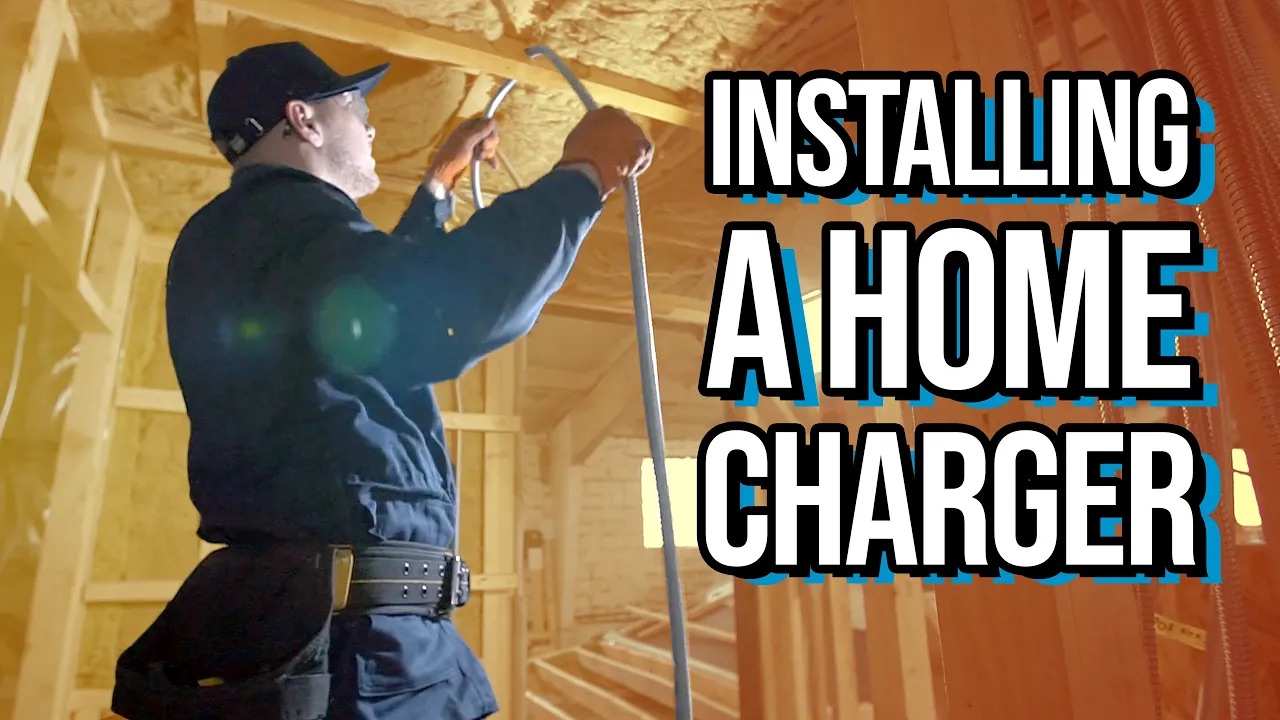
Now that you’re mentally prepared (and possibly a little nervous), let’s talk gear. Installing a Level 2 EV charger isn’t a bare-hands endeavor. You’ll need an arsenal of tools to tackle this beast. Start with the essentials: a stud finder, a drill with a long auger bit, a level, wire strippers, and a torque screwdriver. Don’t forget a fish tape for pulling wires through walls—because no one wants to play a real-life game of Operation with live electricity.
As for materials, your charger kit should include the charger itself, a dedicated 240V circuit breaker, and appropriately sized electrical wire (usually 6 AWG for a 50-amp circuit). Check your charger’s manual for specific requirements, but generally, you’ll need:
- A NEMA 14-50 outlet or a hardwired connection (depending on your charger model).
- Conduit and fittings to protect your wiring.
- Wire nuts, cable clamps, and a junction box if you’re opting for a hardwired setup.
Pro tip: If your garage is unfinished, running conduit is a breeze. But if you’re dealing with drywall, you might need to get creative—or call in a pro to avoid turning your project into a drywall demolition derby.
Mapping the Route: Planning Your Charger’s Grand Entrance
Location, location, location. Where you mount your charger isn’t just about convenience—it’s about safety, accessibility, and future-proofing. Ideally, you want your charger within 15 feet of your parking spot to minimize cord clutter. But don’t just eyeball it; measure twice, drill once. Use a stud finder to ensure your charger is anchored to something solid, not just hollow drywall begging to crumble under the weight.
Consider the elements too. If your garage is prone to moisture (or if you’re the type to forget to close the door during a rainstorm), opt for a charger with a weatherproof rating. And think about the future: Will you be adding an electric vehicle to your fleet? Will your family grow and need more charging spots? Planning ahead can save you from having to reinstall your charger in a year.
Finally, check local building codes. Some areas require permits for electrical work, and ignoring them could land you in hot water—or at least a fine. A quick call to your local building department can save you headaches down the road.
Wiring Wonders: Connecting Your Charger to the Grid
This is where the rubber meets the road—or rather, where the copper meets the current. If you’re hardwiring your charger, you’ll need to run a dedicated circuit from your electrical panel to the charger’s location. Start by turning off the main breaker to avoid any shocking surprises. Then, carefully route your conduit and pull the appropriate gauge wire (usually 6 AWG for a 50-amp circuit) through it. Use a fish tape if you’re threading wires through walls, and avoid sharp bends that could damage the insulation.
Once your wires are in place, connect them to your charger’s terminal block. This is where precision matters. Strip the wires cleanly, twist them securely under the terminals, and tighten them to the manufacturer’s specified torque. Loose connections are a fire hazard waiting to happen. After everything is snug, double-check your work with a multimeter to ensure there are no shorts or open circuits.
If you’re using an outlet instead of a hardwired connection, install a NEMA 14-50 outlet in a weatherproof enclosure. This outlet should be on its own dedicated circuit, just like a hardwired setup. And remember: Never, ever work on live wires. If you’re unsure about any step, stop and consult a professional. Your safety—and your home’s—isn’t worth the gamble.
Testing the Waters: Powering Up Your Charger for the First Time
You’ve drilled, wired, and prayed to the electrical gods. Now comes the moment of truth: flipping the breaker and seeing if your charger springs to life. But before you do that, take a deep breath and perform a final safety check. Ensure all connections are tight, the conduit is secure, and there are no exposed wires. Then, slowly turn the breaker back on and listen for any unusual sounds—buzzing, crackling, or the distinct smell of something burning are all red flags.
If your charger powers up without incident, congratulations! You’ve just joined the ranks of DIY EV charging pioneers. Plug in your vehicle and watch as the charging indicator lights up. Most chargers have an app or display that shows charging status, so you can monitor progress in real time. If something goes wrong, don’t panic. Turn off the breaker immediately and retrace your steps. Common issues include loose connections, incorrect wire sizing, or a tripped breaker.

Maintenance and Upkeep: Keeping Your Charger in Tip-Top Shape
Your Level 2 charger isn’t a set-it-and-forget-it appliance. Like any piece of technology, it requires a little TLC to keep it running smoothly. Start with regular inspections. Check the charger’s casing for cracks or damage, and ensure the cord isn’t frayed or pinched. Clean the charging port on your vehicle and the charger’s plug regularly to prevent corrosion or debris buildup, which can interfere with the connection.
Keep an eye on your electrical panel too. If you notice frequent tripped breakers or flickering lights, it could indicate an issue with your charger’s circuit. And don’t forget to update your charger’s firmware if it’s a smart model. Manufacturers often release updates to improve performance and security.
Finally, consider scheduling an annual electrical inspection. A professional can spot potential issues before they become major problems, ensuring your charger—and your home—stay safe for years to come.
So there you have it. You’ve transformed your garage from a mere parking spot into a high-tech charging hub, all while dodging the pitfalls of DIY electrical work. Sure, it took patience, precision, and a healthy dose of caution, but the payoff is undeniable: faster charging, lower electricity bills, and the satisfaction of knowing you did it yourself. Now, the only thing left to do is plug in, power up, and let the electrons do their thing. Your EV—and your future self—will thank you.
Leave a comment