


The Invisible Architect: How Micro-Habits Build Your Future Self
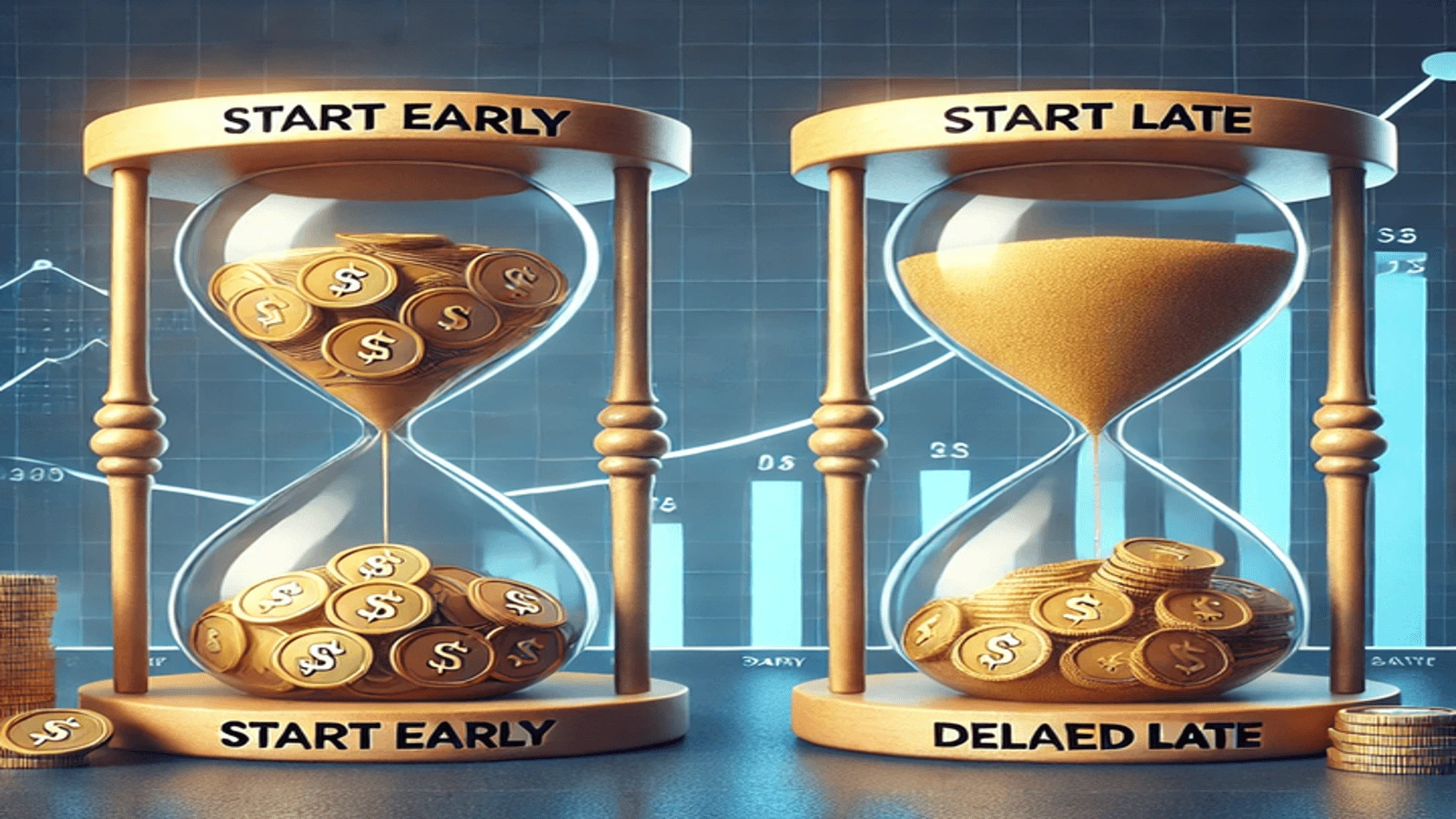
Consider the humble river. It does not carve the Grand Canyon in a single, dramatic flood. It does this through the persistent, almost invisible, drip of water against stone—an act so small over a single second that it seems powerless. Yet, across decades and millennia, that relentless repetition reshapes continents. Your productivity, like that river, is not built on heroic bursts of effort but on the geology of tiny, repeated actions. This is the quiet, magnificent power of compounding habits—an invisible architect that drafts the blueprints of your future self, one brick of behavior at a time.
The conventional wisdom around productivity is a lie dressed in a suit of urgency. It fetishizes the sprint: the all-nighter, the 14-hour workday, the myth of the “deep work marathon.” This approach is spectacularly inefficient. It burns you out, like a rocket that exhausts its fuel in the first hundred feet. Compounding habits invert this logic. They operate like a slow, heavy flywheel. Pushing it once does nothing. Pushing it twice does almost nothing. But push it a thousand times, and that inertia becomes unstoppable. The effort curve is flat; the result curve is exponential.
The First Turn of the Flywheel: The Resistance of Zero

The single greatest obstacle to productivity is not laziness; it is activation energy. Your brain, a biologic energy-conserving engine, views any new habit as a threat to its default state—doing nothing. This is why starting a new project feels like wading through molasses. A compounding habit system defeats this resistance by making the first action so small it is laughable. Want to write a book? Your habit is not “write for two hours.” Your habit is “open the document and write one sentence.” Want to get fit? Your habit is “put on your running shoes.”
This is not coddling; it is strategic calculus. By removing friction, you allow the compounding process to begin. The first turn of the flywheel is the hardest, but it is also the most critical. Once the flywheel moves, the physics of the system takes over. One sentence becomes three. Three becomes a paragraph. A paragraph becomes a page. The momentum generated by the act of having started is a force far more powerful than any wish or declaration of intent. That single sentence has now become the foundation for a manuscript, the “banner” of a much larger landscape of work.
From Identity to Action (and Back Again)
Here lies the deeper magic of the compounding habit. It does not merely produce outputs; it reshapes the architect. Each time you repeat a small action, you cast a vote for the type of person you are becoming. If you write a sentence, you are not just creating text; you are voting for the identity of “a writer.” If you read one page of a difficult book, you are voting for the identity of “an erudite person.” The power of compounding is that these votes accumulate faster than you can perceive.
One vote is meaningless in an election. But a thousand votes? That is an landslide. After three months of your “one-sentence” habit, your identity has shifted. You no longer try to write; you are a writer. The habit becomes frictionless, automatic, and eerily efficient. This is the point where the compound curve sharpens. Early on, a 1% improvement daily is invisible. But after one year, (1.01)^365 equals a 37% improvement. After two years, the effect is not double—it is squared. Your productivity is no longer additive; it is multiplicative. The habits no longer cost energy; they generate it.
The Compounding Benefits of Habits: The Vacuum of Lost Time

Perhaps the most profound benefit of a compounding habit system is what it eliminates: the cognitive cost of decision-making. Every choice—“Should I work now or later?”—drains a finite pool of willpower. A habit circumvents this entirely. It is a pre-made decision. You do not decide to floss; you floss. You do not decide to write; you write. This frees up immense mental bandwidth for what truly matters: the creative and complex work that cannot be automated. The habit becomes the foundation, the preview of your day’s potential, allowing your mind to rest on a secure platform rather than a shaky scaffolding of doubt.
This vacuum of lost time is the most addictive aspect. As the habit consolidates, the gap between intention and action collapses. There is no internal debate, no willpower negotiation. The habit lives in the basement of your mind, humming away quietly while your conscious brain soars. This is the dream state of high productivity: effort without exhaustion, progress without struggle.
Breaking the Plateau: The Myth of Infinite Growth
Of course, no discussion of compounding is complete without acknowledging the plateau. Exponential growth cannot last forever in a finite system. At some point, your “one sentence” habit will plateau. You will hit a ceiling. The flywheel spins effortlessly, but it is no longer accelerating. This is not a failure of the system; it is a signal. At this point, you do not break the habit—you stack it. Add friction by increasing the intensity. Change “one sentence” to “one page.” Change “one page” to “two pages.” The compound interest now applies to a larger principal.
The unique appeal of this system is its infinite scalability. Other productivity methods break under pressure or scale poorly. But a compound habit is modular. You can layer one upon another: a reading habit on top of a writing habit, a meditation habit on top of a reading habit. Each new habit leverages the momentum of the previous ones. The result is not just a more productive life, but a *self-correcting* one. The architecture that builds your future self also learns how to rebuild itself when damaged. That is the ultimate, quiet triumph: not merely doing more, but becoming more capable of doing more, effortlessly, forever.
Leave a comment