


Have you ever stood under a sky so vast it felt like the universe itself was whispering secrets? That’s the same feeling you get when you peer into the intricate dance of Earth’s climate—a system so dynamic, so interconnected, that a whisper in one corner can roar into a tempest halfway across the globe. Welcome to Climate 101 for Everyone, where we’re not just scratching the surface; we’re diving headfirst into the heart of what shapes our planet’s future. This isn’t another dry recitation of facts. It’s an invitation to see the world differently, to feel the urgency and wonder of a system in flux, and to understand how every choice we make ripples through the atmosphere like a stone skipped across a pond.
Imagine, for a moment, that Earth is a living, breathing entity. Not in the mystical sense, but in the way a forest breathes, a river flows, or a storm rages. This entity—our planet—has been in a delicate equilibrium for millennia, but today, it’s running a fever. The symptoms? Melting glaciers that groan like ancient sentinels surrendering to time, oceans that swell with the weight of our discarded plastics, and weather patterns that have traded predictability for chaos. Yet, within this turmoil lies a story of resilience, innovation, and hope. It’s a story that begins with understanding the fundamentals, the invisible threads that weave the tapestry of climate. So, let’s embark on this journey together—where curiosity meets clarity, and where every fact is a stepping stone to a deeper connection with the world around us.
The Alchemy of Atmosphere: How Earth’s Blanket Works
The atmosphere is Earth’s invisible armor, a gossamer-thin layer of gases that cradles life like a parent cradles a child. But this armor isn’t static; it’s a living, breathing entity, constantly adjusting to the whims of the sun, the breath of the oceans, and the pulse of human activity. At its core, the atmosphere is a masterful alchemist, transforming sunlight into warmth, carbon dioxide into the building blocks of life, and nitrogen into the very air we inhale. Yet, this alchemy is under siege.
Picture the atmosphere as a vast, swirling cauldron. The primary ingredients? Nitrogen (78%) and oxygen (21%), with trace amounts of argon, carbon dioxide, and other gases making up the rest. But it’s these trace gases—especially carbon dioxide (CO₂)—that hold the key to the planet’s thermostat. When sunlight reaches Earth, some of it bounces back into space as infrared radiation. CO₂, however, acts like a blanket, trapping this heat and preventing it from escaping. This is the greenhouse effect, a natural process that has kept Earth’s average temperature at a balmy 15°C (59°F). Without it, our planet would be a frozen wasteland, as frigid as Mars.
But here’s where the plot thickens. Human activity—burning fossil fuels, deforestation, industrial agriculture—has pumped unprecedented amounts of CO₂ and other greenhouse gases (like methane and nitrous oxide) into the atmosphere. Since the Industrial Revolution, atmospheric CO₂ levels have skyrocketed from 280 parts per million (ppm) to over 420 ppm today. That might not sound like much, but in the world of climate science, it’s a seismic shift. The result? A thicker blanket, a hotter planet, and a climate system pushed out of its comfort zone.

This isn’t just a story about numbers. It’s about consequences. A warmer atmosphere holds more moisture, fueling storms of unprecedented intensity. It melts ice sheets at a pace that outstrips even the most dire predictions. It shifts weather patterns, turning fertile lands into dust bowls and coastal cities into flood zones. But it’s also a story about agency. Understanding the atmosphere’s alchemy empowers us to rewrite the ending—to reduce emissions, restore ecosystems, and rebalance the scales.
The Ocean’s Pulse: The Silent Giant of Climate Regulation
If the atmosphere is Earth’s armor, then the oceans are its circulatory system—a vast, interconnected network of currents, tides, and marine life that regulates the planet’s climate with a quiet, relentless power. Covering over 70% of Earth’s surface, the oceans absorb more than 90% of the excess heat generated by global warming and store nearly a third of the carbon dioxide we emit. They are, in every sense, the planet’s thermostat and lungs, yet their role in climate change is often overshadowed by the drama of melting ice and raging storms.
Let’s dive deeper. The oceans don’t just sit passively; they’re dynamic players in the climate game. Surface currents, like the Gulf Stream, act as conveyor belts, transporting warm water from the equator toward the poles and cold water back again. This redistribution of heat moderates temperatures, making places like London—situated at the same latitude as frigid Labrador—enjoy a relatively mild climate. But this system is under threat. As polar ice melts, it dilutes the saltiness of seawater, weakening these currents. The Atlantic Meridional Overturning Circulation (AMOC), a critical component of this global conveyor belt, has shown signs of slowing. Some scientists warn that if it collapses entirely, it could plunge Europe into a mini ice age while accelerating warming elsewhere.
Then there’s the ocean’s role as a carbon sink. Phytoplankton—microscopic plants that drift near the surface—photosynthesize just like their terrestrial cousins, absorbing CO₂ and producing oxygen. But their work is being undermined by warming waters, pollution, and overfishing. As the oceans acidify due to excess CO₂, coral reefs—among the most biodiverse ecosystems on Earth—are bleaching and crumbling. The Great Barrier Reef, for instance, has lost half its coral cover since 1995. This isn’t just an ecological tragedy; it’s a climate catastrophe in the making. Healthy oceans are less effective at absorbing heat and CO₂, creating a feedback loop that accelerates global warming.
But here’s the twist: the oceans are also a source of hope. They’re home to renewable energy solutions like offshore wind farms and tidal turbines. They offer pathways to carbon-negative technologies, such as ocean afforestation—growing kelp forests to sequester carbon at scale. And they remind us of nature’s resilience. When given a chance, marine ecosystems can rebound with astonishing speed. The challenge? Giving them that chance before it’s too late.
Weather vs. Climate: Decoding the Chaos
It’s a question that trips up even the most well-meaning among us: What’s the difference between weather and climate? The answer isn’t just academic—it’s the key to understanding why a single cold snap doesn’t disprove global warming, or why a scorching summer doesn’t automatically mean climate change is here. Weather is the mood of the atmosphere, a fleeting snapshot of temperature, humidity, and precipitation that changes by the hour. Climate, on the other hand, is the average of those snapshots over decades, a long-term portrait of a region’s atmospheric personality.
Think of weather as the drama playing out on a stage, while climate is the script that dictates the plot. A heatwave, a hurricane, or a blizzard are all actors in the weather drama, but they’re influenced by the broader script of climate—the backdrop against which all these events unfold. When we talk about climate change, we’re not saying that every day will be hotter or that every storm will be more intense. We’re saying that the script is being rewritten. The stage is heating up, the actors are becoming more unpredictable, and the plot is growing darker.
This distinction is crucial because it helps us make sense of the apparent contradictions in our changing world. For example, while some regions experience record-breaking heatwaves, others are plunged into deep freezes. This isn’t a sign that global warming is a hoax; it’s a symptom of a climate system that’s losing its equilibrium. The polar vortex, a swirling mass of cold air that typically hovers over the Arctic, is being disrupted by warming temperatures. As the Arctic heats up faster than the rest of the planet—a phenomenon known as Arctic amplification—the polar vortex weakens, allowing frigid air to spill southward. Meanwhile, the same warming is intensifying heat domes, where high-pressure systems trap hot air over vast regions for weeks on end.

But the chaos isn’t just about temperature. It’s about the water cycle, too. A warmer atmosphere can hold more moisture, leading to heavier rainfall and flooding in some areas while exacerbating droughts in others. It’s about the jet stream, a high-altitude river of wind that steers weather systems around the globe. As the Arctic warms, the jet stream becomes wavier, meandering like a lazy river and stalling weather patterns in place. This is why a single storm can dump a year’s worth of rain in a day, or why a heatwave can linger for months.
Understanding this distinction empowers us to see the bigger picture. It’s not about blaming every weather event on climate change. It’s about recognizing that our actions are tilting the scales, making extreme events more likely, more intense, and more frequent. And it’s about realizing that even small changes in the script can have monumental consequences.
The Human Footprint: How Our Choices Shape the Climate
If the climate is a symphony, then humanity is the conductor—and the orchestra is playing out of tune. Our choices, from the food we eat to the way we power our homes, are leaving indelible marks on the planet’s climate. But here’s the empowering truth: if we’re the problem, we’re also the solution. The first step is acknowledging our role in the story, not with guilt, but with determination to rewrite the ending.
Let’s start with the obvious: fossil fuels. Coal, oil, and natural gas have fueled human progress for centuries, but they’ve also unleashed a torrent of CO₂ into the atmosphere. The energy sector alone accounts for over 75% of global greenhouse gas emissions. The irony? We’ve known about the dangers of burning fossil fuels for decades. In 1896, Swedish scientist Svante Arrhenius calculated that doubling atmospheric CO₂ would raise Earth’s temperature by 5°C (9°F). Yet, we’ve continued to dig, drill, and burn, as if the warnings were mere suggestions rather than scientific certainties.
But energy isn’t the only culprit. Agriculture, responsible for about a quarter of global emissions, is a silent giant in the climate crisis. Livestock farming, particularly beef and dairy, produces methane—a greenhouse gas 28 times more potent than CO₂ over a 100-year period. Deforestation, driven by the demand for palm oil, soy, and timber, releases stored carbon while eliminating the very ecosystems that could absorb it. Even our waste contributes to the problem. Landfills and wastewater treatment plants emit methane and nitrous oxide, two gases that pack a climate punch far beyond their weight.
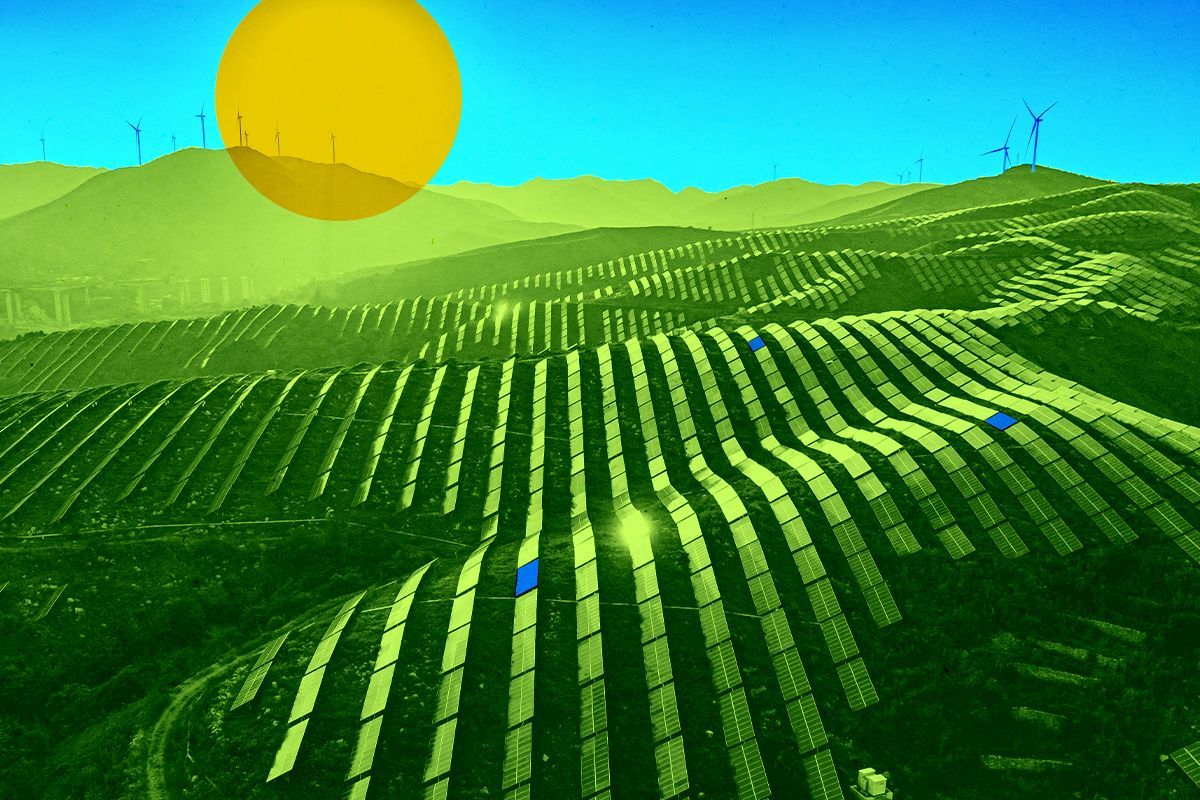
Yet, for every problem, there’s a solution waiting to be discovered. Renewable energy—solar, wind, hydro, and geothermal—is no longer a niche experiment; it’s a global movement. Countries like Costa Rica and Iceland run on nearly 100% renewable electricity, proving that a fossil-free future isn’t just possible; it’s already here. In agriculture, regenerative farming practices—like cover cropping, no-till farming, and agroforestry—can sequester carbon in the soil while boosting biodiversity. Even our waste can be reimagined: composting, anaerobic digestion, and circular economy models are turning trash into treasure.
The key is to see these changes not as sacrifices, but as opportunities. The transition to a low-carbon economy isn’t just about saving the planet; it’s about creating jobs, fostering innovation, and building resilient communities. It’s about reclaiming our role as stewards of the Earth, not as its conquerors. And it starts with the choices we make every day—what we eat, how we travel, where we invest our money, and the policies we support.
As we stand at the crossroads of climate action, it’s easy to feel overwhelmed. The challenges are immense, the stakes are high, and the clock is ticking. But here’s the thing about crossroads: they’re not just places of decision; they’re places of transformation. Every great story has its turning points, its moments where the hero must choose between despair and hope, between resignation and action. This is our turning point.
Climate 101 isn’t just about understanding the science; it’s about embracing the wonder of a planet that’s alive, interconnected, and capable of healing if given the chance. It’s about recognizing that the air we breathe, the water we drink, and the soil that feeds us are not commodities to be exploited, but gifts to be cherished. And it’s about realizing that the future isn’t something that happens to us; it’s something we create, one choice at a time.
So, what will your role be in this story? Will you be a spectator, watching the drama unfold from the sidelines? Or will you be a participant, lending your voice, your actions, and your passion to the chorus of change? The choice is yours—but remember, the stage is already set, and the spotlight is waiting. The question isn’t whether we can afford to act. It’s whether we can afford not to.
Leave a comment