


The Quiet Revolution in Cognitive Partnership
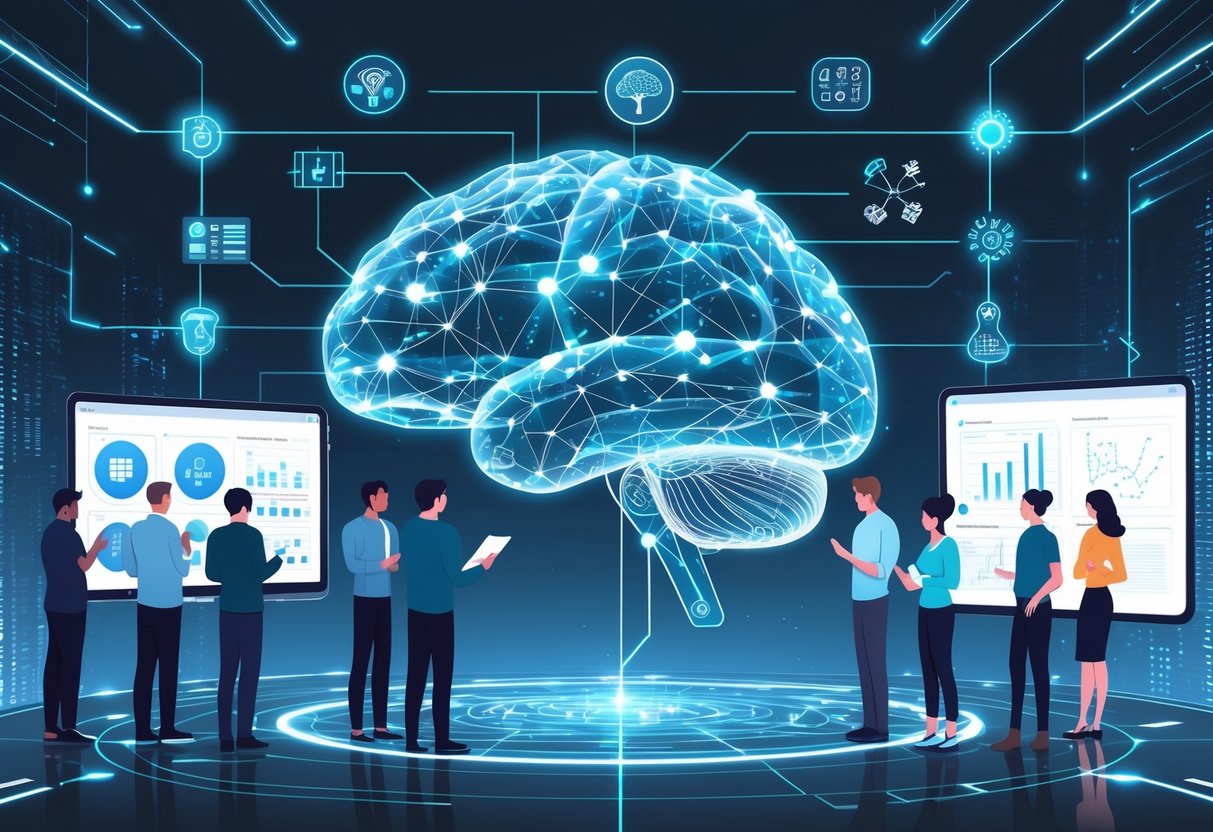
We have all felt it—the slight flicker of hesitation when we confront a complex problem, the almost imperceptible drag of mental fatigue. It is not a lack of intelligence, but a limitation of bandwidth. The human mind, for all its brilliance, is a finite processor, easily overwhelmed by data, distracted by noise, and prone to the subtle biases of intuition. This is the observation that has quietly ushered in a new era of intellectual work. The tools we now hold are not merely faster calculators; they are partners in cognition. They do not replace thought; they extend it, offering a second mind that never tires, never prejudices, and never forgets the file it read three hours ago. The fascination with these systems lies not in their ability to answer, but in their capacity to ask the right questions—to surface connections we would have missed, and to hold a vast context steady while we navigate the treacherous waters of decision-making.
Reframing the Scaffold of Thought
Traditional productivity tools are reactive: they organize what we already know. A spreadsheet stores numbers; a to-do list tracks tasks. But AI-enhanced thinking operates at a fundamentally different level—it is generative and interrogative. When we approach a strategic problem, the most difficult step is often framing the issue correctly. A poorly framed question guarantees a mediocre answer, no matter how brilliant the analysis. This is where the new paradigm reveals its power. An intelligent assistant does not wait for a perfect prompt; it helps construct the scaffolding. It can challenge assumptions, propose alternative framings, and simulate the probable outcomes of different approaches. This is not automation of work; it is automation of insight. The user moves from being a mere operator to a conductor of an orchestra of possibilities. The cognitive load shifts from remembering and calculating to evaluating and synthesizing.
The Quieting of Cognitive Biases
We are all subject to what psychologists call the “confirmation bias”—the tendency to favor information that confirms our pre-existing beliefs. This is not a character flaw; it is a feature of a brain designed for quick survival judgments. But it is disastrous for complex, long-term planning. AI tools, when properly deployed, act as an antidote. They do not possess ego or a need to be right. They will surface contradictory evidence, highlight uncomfortable data points, and force us to consider the third option we had instinctively dismissed. This is much more than a simple fact-check. It is a structural change in how we reason. The writer or manager who uses such a tool finds their arguments becoming more robust, not because the AI wrote them, but because the AI demanded a higher standard of proof. The partnership creates a culture of intellectual rigor that is difficult to achieve alone.
From Information Overload to Information Architecture
The modern workplace is drowning in a sea of data. Emails, reports, meeting transcripts, market analyses—each one contains a thread of value, but the sheer volume makes it impossible to weave them into a coherent tapestry. Here, AI-enhanced thinking offers its most tangible productivity gain: the transformation of information into architecture. Consider the act of research. A human researcher might spend hours skimming documents, highlighting passages, and trying to remember where a key insight appeared. An AI system can ingest an entire corpus of documents, identify thematic clusters, extract key arguments, and even generate a summary that highlights points of disagreement. The benefit is not speed alone; it is the liberation of the mind from the drudgery of sorting. The professional can now spend their energy on the highest-value activity: connecting those thematic clusters into a novel strategy or a compelling narrative. The tool does not think for you; it cleans the lens through which you see the problem.
The Emergence of Iterative Depth
One of the most profound shifts brought by this technology is the democratization of iteration. In traditional creative or analytical work, each revision cycle carries a high cost. Rewriting a report from scratch, re-running a complex model, or rethinking an entire argument takes time and emotional energy. As a result, we often settle for “good enough.” AI-enhanced thinking lowers that barrier dramatically. A user can generate a first draft, a counter-argument draft, and a synthesis draft in the time it once took to produce a single outline. The mental muscles of iteration—exploring alternatives, stress-testing conclusions, refining language—become a fluid, low-stakes game. This leads to a depth of thinking that was previously the exclusive domain of the very rich or the very obsessive. The output is not just faster; it is qualitatively deeper. Each round of feedback from the tool pushes the human mind to a more nuanced position. The process becomes a virtuous cycle of inquiry and refinement, not a linear march toward a deadline.
A New Contract with Intelligence
Ultimately, the productivity power of AI-enhanced thinking rests on a renegotiated contract between the human and the tool. The tool is not a crutch for laziness; it is a gym for the intellect. It demands that we clarify our intent, articulate our assumptions, and engage with the results critically. The lazy user receives shallow outputs; the engaged user receives a mirror that reflects and magnifies their own best thinking. This is why the fascination runs deeper than mere efficiency. It touches on a fundamental human desire: to transcend our biological limits without losing our unique perspective. The most productive individuals of the next decade will not be the ones who can memorize the most facts or type the fastest. They will be the ones who have learned to conduct this silent, rigorous dialogue with a tireless partner. They will have discovered that the greatest productivity gain of all is not doing more work, but thinking better work.

Leave a comment