


The Efficiency Engineering Mindset: The Art of Architecting Flow
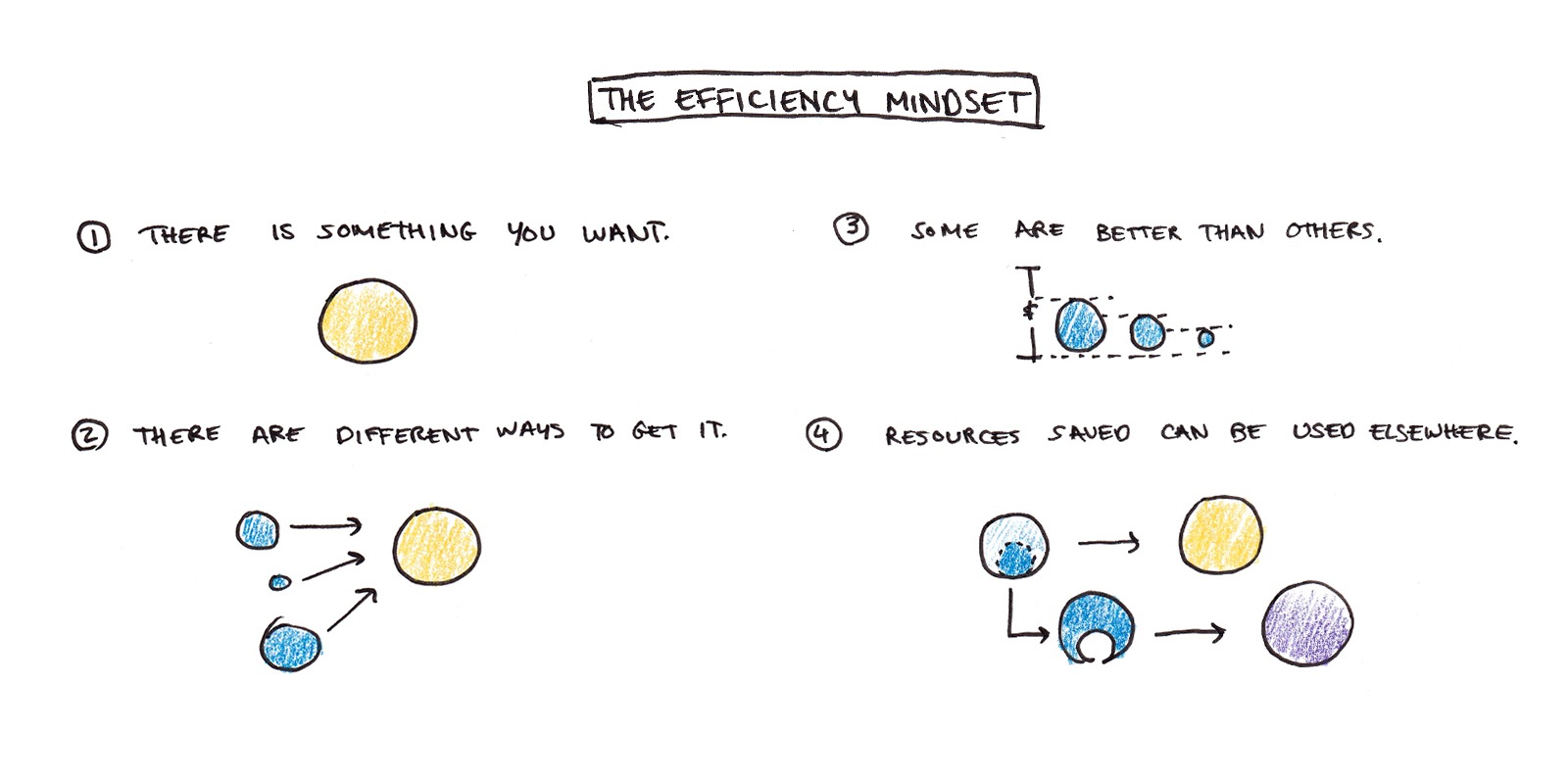
Efficiency is not a speed; it is a direction. Most people mistake it for simply doing things faster, a frantic race against the clock that often leaves them breathless and behind schedule. The Efficiency Engineering Mindset, however, treats efficiency as a material—a malleable substance that can be tested, stressed, and shaped. It is the quiet, deliberate architecture of flow. Imagine a river that does not splash against rocks in a wasteful torrent, but instead finds the path of least resistance with an almost mathematical grace, cutting a perfect valley into the mountain of work ahead. This is the unique appeal: not the brute force of completion, but the elegant intelligence of motion.
The Metaphor of the Water Wheel
Consider the ancient water wheel versus a bucket brigade. The bucket brigade is a frenzy of motion, each person burning energy carrying water from one point to another, with significant spillage and fatigue. It looks busy. It feels urgent. Yet, the water wheel, turning at a steady, unhurried pace, harnesses the river’s own momentum. It introduces gears, levers, and a system of transfer that converts raw flow into controlled power. The Efficiency Engineering Mindset sees your daily tasks as that river. It asks not, “How can I carry more buckets?” but rather, “How can I build a wheel that will turn while I rest?” It is a mindset of leverage, of constructing systems that do the heavy lifting of attention and effort, leaving you to steer the rudder rather than row the boat.
Tolerating Resistance to Find the Current
This is where the mindset proves its mettle—and its counterintuitive nature. An engineer of efficiency does not blindly seek instant speed. They first seek resistance. They see every slow load, every repetitive email, every clunky meeting as a strain gauge, a point of pressure that reveals the system’s weakness. The common approach is to grit one’s teeth and push through the friction. The engineer, however, stops to lubricate the wheel. They might spend two hours automating a task that would only take four hours to do manually, simply because the recurrence of that friction adds up to a monumental waste of cognitive energy. The metaphor here is sharpening the axe instead of attacking the tree with a dull blade. The moment of sharpening feels like a delay; the long arc of cutting is where victory is found. The unique appeal of this mindset is that it demands patience before productivity, precision before power.
The Architecture of Your Attention

The most overlooked resource in the modern world is not time, but attention. The Efficiency Engineering Mindset turns attention into a house with well-defined rooms. Each room has a purpose: a quiet library for deep work, a bright kitchen for administrative chatter, a sealed vault for creative ideation. You do not eat in the library, nor do you sleep in the kitchen. Similarly, you do not check social media in the same cognitive space where you write a report. This requires ruthless segmentation. It means turning off notifications not as a suggestion, but as a structural necessity—like reinforcing a load-bearing wall. When you architect your attention, you protect the integrity of your thinking. You recognize that context-switching is the greatest thief of efficiency, a silent leak that drains your reservoir of focus drop by digital drop.
Measurement as a Mirror, Not a Judge
A fatal flaw of many productivity systems is that they use measurement as a whipping tool. “You only did five tasks today? You must work harder.” The engineer uses measurement as a mirror, a cold, honest reflection of what is actually happening. They track not to shame themselves, but to discover the truth hidden in the log. Why did the task take 45 minutes instead of the expected 20? Was the system broken, or was the estimate flawed? This is a deeply liberating perspective. It removes the moral weight from productivity. You are not a “bad” person for being slow; you are a system with an unoptimized component. By debugging your own day with the calm of a technician looking at a server error, you transform failure from a source of stress into a source of data. The data, in turn, becomes the blueprint for your next iteration.
The Quiet Glory of the Cycle
In an era that worships the heroic sprint—the all-nighter, the last-minute crunch—the Efficiency Engineering Mindset celebrates the sustained cycle. It understands that peak output is not a constant graph; it is a wave. The engineer designs for recovery. They build in off-ramps, deliberate pauses, and structured breaks. This is not laziness; it is intelligent fatigue management. A racecar engine cannot run at full throttle for 24 hours; it must pit, cool down, and refuel. The same applies to the mind. By treating your energy as a finite, cyclical resource, you avoid the burnout that plagues those who try to brute-force their way through life. The unique appeal here is the quiet dignity of longevity. You are not a flash in the pan; you are a slow-burning, high-output furnace, running on a feedback loop that grows stronger with each cycle.
Conclusion: The Art of the Invisible
The Efficiency Engineering Mindset is best seen in its results, not in its actions. A perfectly efficient system is nearly invisible—it hums quietly, without drama, without emergency. The heroics of a firefighter in a burning building are lauded; the genius of the architect who builds a fireproof building is rarely celebrated. This mindset is an act of architectural love for your own life. It is the decision to build a bridge over the chasm of chaos, even though it takes a year of planning, so that you may cross it easily for a hundred years. It appeals to the part of you that loves design, that finds beauty in a clean line of code, a perfectly folded shirt, or a spreadsheet that balances without error. It is not just a way of working; it is a way of seeing the world—as a series of puzzles waiting for a more elegant solution. Embrace the engineer’s eye, and you will find that the greatest efficiency lies not in doing more, but in making the right things flow.
Leave a comment