


Creativity is not a lightning bolt from the heavens—it’s a force, a relentless current that must be harnessed, nurtured, and directed. The most brilliant artists, writers, and innovators don’t wait for inspiration to strike; they build momentum. They understand that creativity thrives in motion, not stagnation. This is the essence of the Creative Momentum Loop—a self-sustaining cycle where action fuels inspiration, and inspiration fuels further action.
But how do you cultivate this loop? How do you turn sporadic bursts of creativity into a steady, unstoppable tide? The answer lies in understanding the mechanics of momentum itself. Just as a spinning top stays upright only when it’s in motion, your creative output remains alive and evolving only when you keep pushing forward. Let’s break down the four pillars of the Creative Momentum Loop and how you can master them.
—
The Engine: Starting Small to Build Unstoppable Force
Every great journey begins with a single step—but not just any step. It must be a deliberate, intentional step. The mistake most creatives make is waiting for the perfect moment, the perfect idea, the perfect conditions. Instead, they should embrace the power of micro-actions—tiny, manageable tasks that ignite the engine of momentum.
Think of it like a snowball rolling downhill. At first, it’s just a few flakes clinging together, but as it gathers speed, it becomes an avalanche. Your first draft doesn’t need to be flawless; your first sketch doesn’t need to be a masterpiece. What it needs is movement. Write for five minutes. Sketch for ten. Record a voice memo of an idea. These small actions create friction, and friction generates heat—heat that warms the engine of creativity.
Consider the routine of a spinning top. It doesn’t start at full speed; it wobbles, teeters, and nearly falls before finding its balance. Your creative process is no different. The key is to start before you’re ready—because readiness is a myth, and momentum is the only true measure of progress.
—
The Fuel: Feeding the Loop with Curiosity and Constraints
Momentum isn’t self-sustaining—it needs fuel. And the best fuel for creativity isn’t just passion; it’s structured curiosity. Constraints, paradoxically, are the accelerants of innovation. They force you to think differently, to bend rules, and to discover new pathways.
Take the example of a startup founder building a product. Without constraints—budget, timeline, market demands—they might never prioritize. But with them, they’re forced to innovate. Similarly, a writer given a 500-word limit doesn’t see it as a cage; they see it as a creative sandbox. Constraints breed ingenuity.
But where does this fuel come from? From deliberate input. Read voraciously, but not passively. Study fields outside your own. Engage with art, music, science, and philosophy. The more you expose yourself to diverse stimuli, the more raw material your brain has to remix into something original. As the saying goes, “Creativity is just connecting things.”
Yet, even the most voracious consumption is useless without output. The Creative Momentum Loop demands a balance: consume to refuel, but always create to burn. The loop only works when both sides are active.
—
The Flywheel: Turning Repetition into Ritual
A flywheel is a massive wheel that, once set in motion, requires less energy to keep spinning. In the same way, your creative process should evolve from a series of disjointed actions into a ritual—a predictable, almost meditative routine that makes momentum automatic.
Rituals remove friction. They turn “I should work on my project” into “It’s 7 AM; I’m at my desk.” They transform the chaotic into the structured. But rituals aren’t rigid—they’re adaptive. What works for a novelist (morning pages) might not work for a designer (evening sketching). The key is consistency, not rigidity.
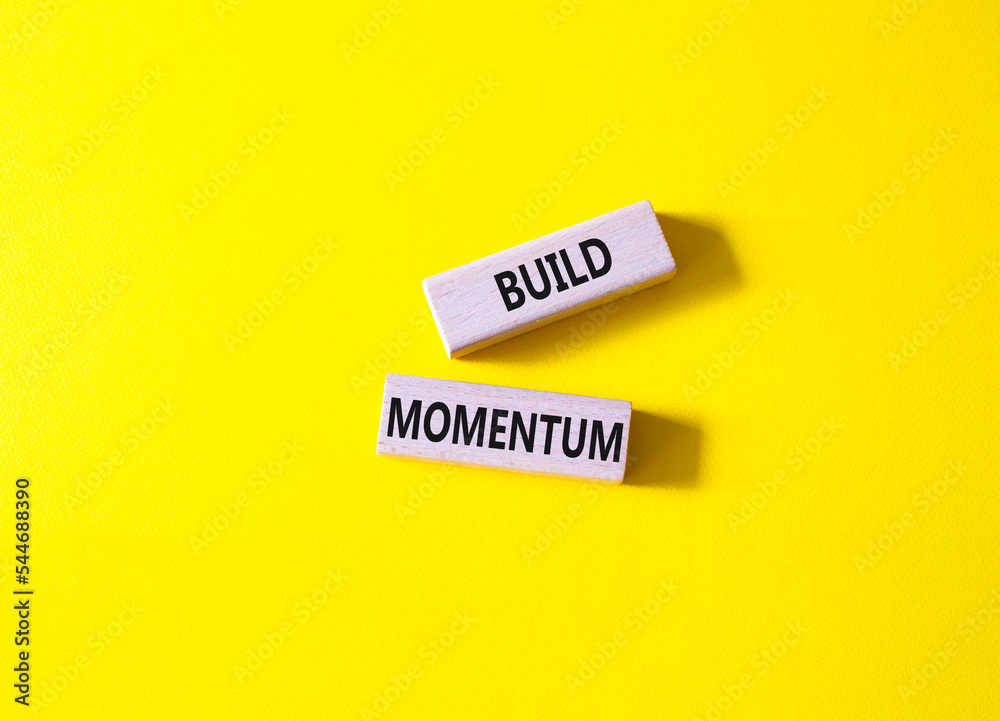
Consider the wooden block structure—each block represents a day of work, a session of practice, a moment of creation. Stack them one by one, and soon, you have an unshakable foundation. The flywheel effect means that each turn makes the next one easier. Miss a day? The wheel slows. Skip a week? It nearly stops. But return, and it begins to spin again—faster, smoother, more powerful.
This is why routines matter. Not because they guarantee perfection, but because they guarantee progress. And progress, in turn, breeds confidence—the silent partner of momentum.
—
The Anchor: Protecting Momentum from the Storms of Doubt
Even the most powerful forces can be disrupted by external pressures. For creatives, those pressures often come in the form of doubt, criticism, or burnout. The Creative Momentum Loop isn’t immune to these storms—but it can be anchored.
An anchor doesn’t stop the wind or the waves; it keeps the ship from drifting. In your creative journey, the anchor is your “why.” Why do you create? Is it for expression? Impact? Legacy? Revisit this reason often. When doubt creeps in, ask: “Does this serve my why?” If not, let it pass. If yes, keep going.
Another anchor is community. Creativity thrives in isolation, but it flourishes in connection. Share your work—not for validation, but for accountability. Join a mastermind group, find a critique partner, or simply post your progress online. The act of sharing creates a subtle pressure to keep moving forward.
Finally, protect your energy. Momentum isn’t built on all-nighters and caffeine binges. It’s built on sustainable rhythms. Sleep, exercise, and breaks aren’t luxuries—they’re the soil in which creativity grows. A tired mind is a stalled engine.
Remember the wooden blocks spelling “Build momentum”. If you pull one block out, the structure weakens. If you neglect sleep, skip meals, or abandon your routine, your momentum weakens too. Anchors aren’t about restriction; they’re about preservation.
—
The Loop in Action: A Real-World Example
Let’s bring this to life with a case study: J.K. Rowling’s journey with Harry Potter. Before the books became a global phenomenon, Rowling was a struggling single mother living on welfare. She wrote in cafés because she couldn’t afford heating at home. Her first draft was rejected by 12 publishers. Yet, she persisted.
How? She built a momentum loop:
- Engine: She wrote in small, consistent bursts—500 words a day—even when exhausted.
- Fuel: She read widely, studied mythology, and drew from her own life experiences.
- Flywheel: Writing became a ritual, a non-negotiable part of her day.
- Anchor: She held onto her vision of the story’s emotional core, even when the world doubted her.
Rowling didn’t wait for inspiration. She created it through action. And that’s the secret of the Creative Momentum Loop: it’s not about waiting for the perfect wave to ride—it’s about building the wave yourself.
—
Your Turn: Start the Loop Today
The Creative Momentum Loop isn’t a one-time achievement; it’s a lifestyle. It’s the difference between a flash of genius and a sustained career of brilliance. It’s the force that turns “I have an idea” into “I built something extraordinary.”
So where do you begin? Not tomorrow. Not when you’re “ready.” Today.
Pick up a pen. Open a blank document. Play a chord on your instrument. Start before you’re ready. Start before you feel inspired. Start because momentum is the only thing that will carry you forward when inspiration fades.
The loop is waiting. All you have to do is push.
Leave a comment