


Ever wondered how your morning coffee’s journey from bean to cup leaves a carbon footprint so vast it could rival a small country’s annual emissions? Welcome to the labyrinthine world of ESG Scope 3 emissions—where logistics isn’t just about getting packages from A to B, but about untangling a web of indirect emissions that could make even the most seasoned supply chain veteran break into a cold sweat.
Calculating Scope 3 emissions in logistics isn’t just a box to tick on a corporate sustainability checklist. It’s a high-stakes game of detective work, where every mile, every warehouse, and every supplier holds a clue to your company’s true environmental impact. So, grab your magnifying glass and let’s dive into the nitty-gritty of turning logistics chaos into carbon clarity.

The Scope 3 Enigma: Why Logistics is the Ultimate Carbon Detective Story
Picture this: Your company proudly slashes its direct emissions (Scope 1 and 2) by 30% in a year. High fives all around! But then, like a magician pulling a rabbit out of a hat, Scope 3 emissions reveal themselves—hidden in the fine print of your suppliers’ emissions, the diesel-guzzling trucks ferrying your goods, and the planes crisscrossing continents to deliver your products. Suddenly, that 30% reduction feels like a drop in the ocean.
Scope 3 emissions in logistics are the indirect emissions that occur in your value chain but aren’t directly controlled by your company. They include everything from the fuel burned by third-party logistics providers to the emissions generated by your customers’ use of your products. It’s the emissions equivalent of a game of telephone—where the message (your carbon footprint) gets distorted with every handoff, making it devilishly hard to pin down.
Why does this matter? Because Scope 3 emissions often account for 60-90% of a company’s total carbon footprint. Ignoring them is like ignoring 90% of your electricity bill—you’re only seeing a fraction of the story. For logistics-heavy industries, Scope 3 isn’t just a side quest; it’s the main event.
Unpacking the Logistics Carbon Footprint: A Layered Cake of Emissions
Let’s slice into the logistics carbon footprint like it’s a decadent layered cake. Each layer represents a different category of Scope 3 emissions, and each one requires a unique approach to unravel.
1. Purchased Goods and Services
This is where your suppliers take center stage. Every raw material, component, or product you buy comes with its own carbon baggage. Did your steel supplier use coal-powered blast furnaces? Did your plastic packaging come from a factory running on natural gas? These upstream emissions are the first layer of your Scope 3 cake, and they’re often the hardest to measure because they rely on data from third parties.
2. Transportation and Distribution
Ah, the open road—the scenic route to carbon chaos. This category includes emissions from moving your goods, whether by truck, ship, plane, or train. But here’s the twist: It’s not just about the distance traveled. It’s about the mode of transport, the fuel efficiency of the vehicle, and even the load factor (how full your trucks or containers are). A half-empty truck spewing diesel fumes is a carbon sinner in disguise.
3. Use of Sold Products
This is where your products get a second life—and a second chance to emit carbon. Think about it: A smartphone’s carbon footprint isn’t just from its manufacturing; it’s also from the energy consumed by the user charging it, streaming on it, and eventually recycling it. For logistics companies, this category is trickier because it involves predicting how customers will use your products over their entire lifespan.
4. End-of-Life Treatment
What happens to your products when they’re no longer useful? Landfills, incineration, or recycling? Each option has a different carbon footprint. Sending a plastic bottle to a landfill releases methane, while recycling it might save energy—but only if the recycling process is efficient. This layer of Scope 3 is all about the circular economy and the afterlife of your products.
5. Leased Assets and Franchises
If your company leases warehouses, trucks, or other assets, their emissions count too. Even franchises—like a logistics company operating under a parent brand—contribute to Scope 3. It’s the emissions equivalent of renting a house and still being responsible for the landlord’s energy bills.
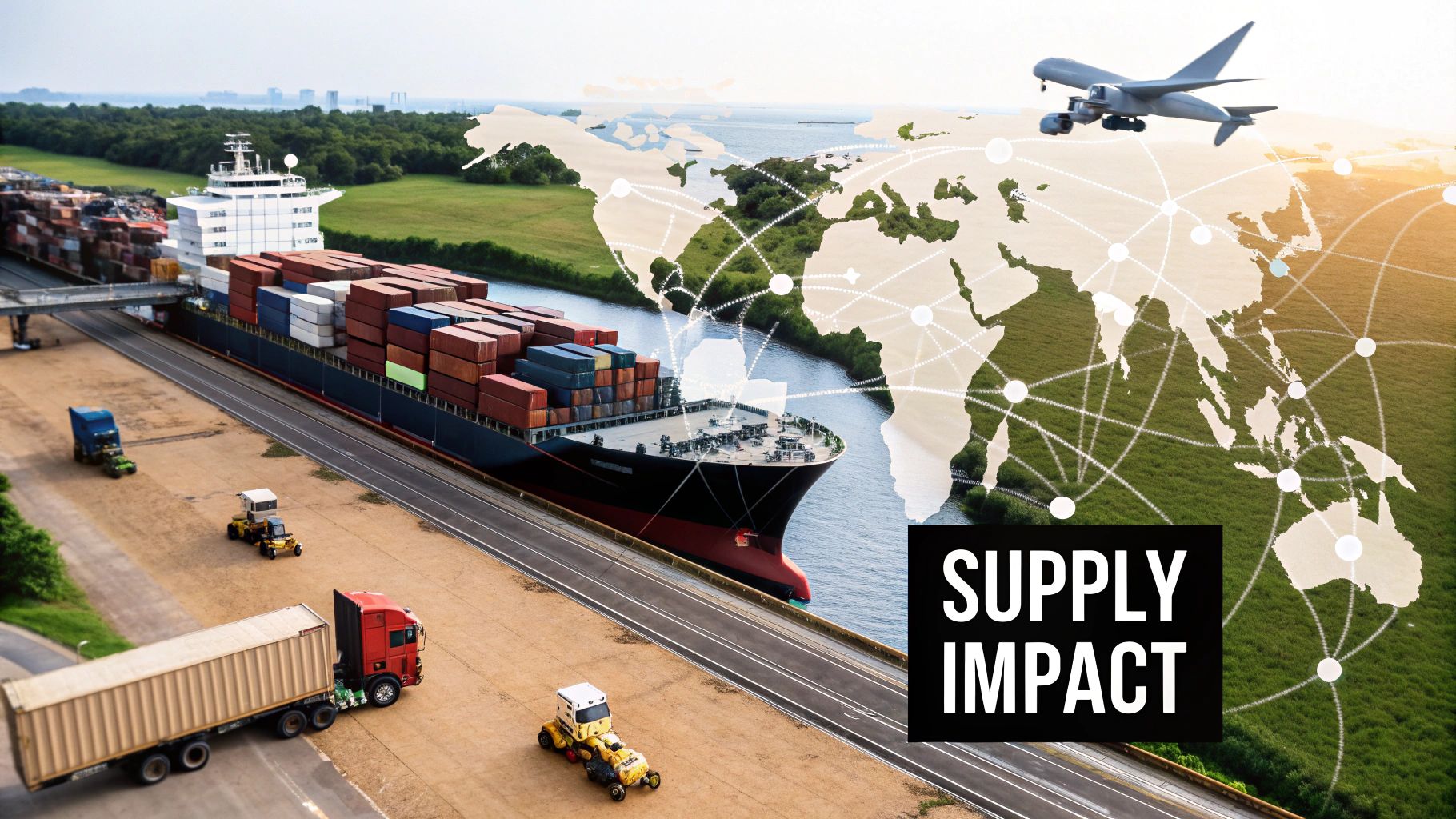
The Data Dilemma: Why Scope 3 Calculations Feel Like Solving a Rubik’s Cube Blindfolded
Now, here’s where the real fun begins. Calculating Scope 3 emissions isn’t just about plugging numbers into a spreadsheet. It’s about navigating a minefield of data gaps, supplier reluctance, and methodological chaos. Let’s break down the biggest challenges:
The Data Black Hole
Many suppliers don’t track their emissions, let alone share them. Even if they do, the data might be inconsistent or outdated. You’re left playing a game of carbon telephone, where the original emissions data gets distorted with every transfer. Without reliable data, your Scope 3 calculations are about as accurate as a fortune teller’s crystal ball.
Methodological Mayhem
There’s no one-size-fits-all method for calculating Scope 3 emissions. Do you use spend-based data (estimating emissions based on how much you spend on a product)? Activity-based data (measuring emissions from specific activities)? Or hybrid models that combine both? Each method has its pros and cons, and choosing the wrong one can lead to wildly inaccurate results.
Supplier Resistance
Not all suppliers are eager to share their emissions data. Some might see it as proprietary information. Others might not have the resources to track it. And let’s not forget the small suppliers who operate on shoestring budgets and see sustainability as a luxury they can’t afford. Convincing them to participate is like herding cats—if the cats were also carbon emitters.
The Dynamic Nature of Logistics
Logistics is anything but static. Routes change, suppliers change, and customer demands change. What was a low-carbon route last month might become a carbon-guzzling detour next month. Keeping your Scope 3 calculations up to date requires constant vigilance—and a crystal ball wouldn’t hurt.
Turning Chaos into Clarity: Strategies for Mastering Scope 3 in Logistics
So, how do you tame the Scope 3 beast? Here are some battle-tested strategies to bring order to the chaos:
1. Collaborate, Don’t Dictate
Instead of demanding emissions data from suppliers, work with them to build a shared understanding of their carbon footprint. Offer incentives for transparency, like preferential contracts or joint sustainability initiatives. Think of it as a carbon partnership—where everyone wins.
2. Leverage Technology and AI
From blockchain to AI-powered carbon accounting tools, technology is your best friend in the Scope 3 fight. Tools like carbon accounting software can automate data collection, analyze emissions hotspots, and even predict future emissions based on historical trends. It’s like having a carbon detective in your pocket.
3. Focus on High-Impact Areas
Not all Scope 3 emissions are created equal. Some categories (like transportation) might contribute 80% of your emissions, while others (like end-of-life treatment) might only contribute 5%. Prioritize the high-impact areas first. It’s the Pareto Principle of carbon reduction—80% of your emissions come from 20% of your activities.
4. Set Science-Based Targets
Don’t just aim for arbitrary reductions. Use science-based targets to guide your Scope 3 strategy. These targets align your emissions reductions with the Paris Agreement’s goal of limiting global warming to 1.5°C. It’s like having a roadmap to net-zero, complete with milestones and checkpoints.
5. Engage Customers in the Journey
Your customers aren’t just passive recipients of your products—they’re active participants in your carbon footprint. Educate them on sustainable practices, like consolidating shipments or choosing eco-friendly delivery options. It’s a win-win: They reduce their emissions, and you reduce yours.
The Road Ahead: Scope 3 as the New Frontier of Logistics Innovation
Scope 3 emissions in logistics aren’t just a challenge—they’re an opportunity. An opportunity to rethink how we move goods, collaborate with suppliers, and engage customers. An opportunity to turn sustainability from a buzzword into a competitive advantage.
Companies that master Scope 3 calculations won’t just reduce their carbon footprint—they’ll future-proof their operations, build resilience against regulatory risks, and appeal to the growing cohort of eco-conscious consumers. They’ll also uncover hidden efficiencies, like optimizing routes to save fuel or switching to low-carbon suppliers to cut costs.
So, the next time you sip your morning coffee, think about the journey it took to reach your cup. And ask yourself: Are you ready to untangle the carbon web of your logistics operations? The clock is ticking, and the planet isn’t getting any cooler.
Leave a comment