


The Idea‑Filtering System That Saves Time
The world is a noisy place. Ideas arrive like uninvited guests—at the wrong hour, in the wrong shape, and often with the wrong pitch. For the modern professional, the line between a brilliant concept and a seductive distraction has never been thinner. We have been taught to treasure every spark, to dignify every half-formed thought with a sticky note. This is a mistake. The most valuable skill is not idea generation; it is idea triage. A well-designed filtering system does not merely sort. It transforms time from a tyrant into an ally. What follows is a shift in perspective: from hoarding possibilities to orchestrating a deliberate, ruthless, and strangely liberating process of elimination.

The Funnel Mindset: From Chaos to Crystallization
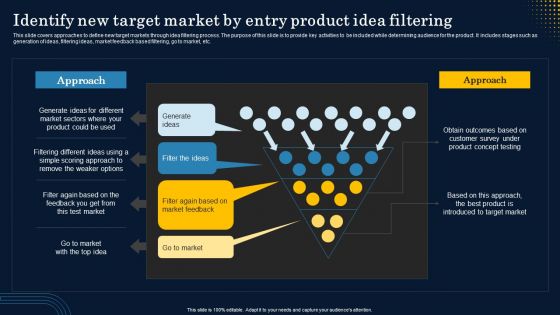
At the heart of an effective filtering system is the funnel. It is not a selection tool; it is a pressure valve. The funnel begins with a wide mouth—the raw, chaotic slurry of every notion, hunch, and fleeting insight. Here, quantity is the only currency. The trap most people fall into is attempting to evaluate ideas too early. They apply logic to a draft that has not yet been drawn. The first stage, therefore, is not judgment but capture. Write it down. Save it. Let the volume accumulate without guilt. But then comes the narrow neck. This is where the real work begins. The funnel compresses by asking a single, uncomfortable question: “What must this idea survive to proceed?” That question is the fulcrum upon which time swings. Without it, every idea is treated as if it already deserves resources. With it, the chaotic cloud begins to crystallize into actionable, focused potential.
The Three Filters That Separate Signal from Noise
Every effective filter system requires distinct stages, each with a unique criterion. The first is relevance. Does the idea align with your current strategic objectives? It is a simple test, yet it is astonishing how many promising concepts die simply because they belong to a different season. The second filter is energy. Not willpower, but the intrinsic pull—the feeling that this idea, even if difficult, excites the people who must execute it. A low-energy idea, no matter how logically sound, will drain resources slowly and silently. The third filter is novelty with edge. It is not enough to be new. The idea must represent a meaningful departure from the status quo—a twist that creates leverage. An idea that is merely “different” is noise. An idea that is different and offers a new vector for value is signal. Applying these three filters sequentially, rather than simultaneously, prevents the most common error: overwhelming the mind with too many criteria at once.

Rating Without Paralysis: The “Yellow Star” Problem
One of the most common pitfalls in any filtering system is the impulse to rate every idea on a scale of one to ten. This creates a false sense of precision. In practice, a five and a six are indistinguishable when you are standing under the weight of twenty other unanswered questions. The solution is a binary checkpoint. At each stage of the funnel, the question is not “How good is this?” but “Does this pass?” The yellow star—the simple click of endorsement or rejection—is far more useful than a complex rubric. It forces a decision. Indecision is not neutral; it is a drain. Every moment spent weighing an idea that will not survive the first filter is a moment stolen from the idea that could. The binary filter reintroduces velocity. It restores the rhythm of progress. The goal is not perfect ranking; it is perfect pruning. A system that allows you to choose “yes” or “not yet” with confidence will save more time than any algorithm ever could.
Presentation as the Final Filter
Once an idea passes through relevance, energy, and novelty, it enters a final, often overlooked stage: presentation. An idea cannot survive if it cannot be communicated. The last filter is a test of clarity. Can you explain this idea in three sentences to someone who does not share your context? If not, it is not ready. This is not a vanity exercise. It is a time-saving mechanism. Ideas that are poorly articulated will inevitably require rounds of clarification, re-explanation, and rescue missions. They suck time from the team. The presentation filter forces the idea to become self-supporting. It compels the originator to refine the core logic, to anticipate objections, and to find the story within the data. By the time an idea reaches this stage, it has been stripped of its fat. It is lean, sharp, and ready for the world. This final gate ensures that what you execute is not only a good idea, but also an idea that can be understood, championed, and sold.
The Liberating Economy of a “No”
Perhaps the most counterintuitive truth of any filtering system is that the real time savings come from learning to say no early and often. A “no” at the top of the funnel costs seconds. A “no” at the bottom, after weeks of investigation and prototyping, costs months. The system is built to surface the “no” as soon as possible. This is not about pessimism. It is about respect—for your own time, for your team’s energy, and for the quality of the ideas that do survive. When you filter aggressively, the ideas that remain are not just survivors; they are thrivers. They arrive with the momentum of having been tested. They carry the implicit trust that they are worth your attention. This is the shift in perspective that matters most: filtering is not about rejection; it is about protection. It protects your calendar, your focus, and your creative stamina. It allows you to say a full, beautiful, unreserved “yes” to the few ideas that truly matter.
In a world that worships the endless stream of input, the idea-filtering system is an act of rebellion. It asserts that not every thought deserves a meeting. Not every hunch deserves a prototype. The time you save is not just time; it is the space to breathe, to think deeply, and to build something that actually works. The system is not a barrier to creativity. It is the very structure that allows creativity to grow.
Leave a comment