


Have you ever stood on a sidewalk, felt the cool concrete beneath your feet, and wondered—what if this very material could help cool the planet instead of warming it? Concrete, the silent skeleton of our modern world, is undergoing a radical transformation. The humble gray blocks beneath skyscrapers, bridges, and sidewalks are getting a green makeover, and the secret lies in low-carbon mixes. But here’s the twist: can we really overhaul an industry that’s been churning out the same recipe for centuries without breaking the bank or the building code?
Welcome to the era of green tech for concrete, where engineers, chemists, and architects are rewriting the playbook. They’re swapping out energy-guzzling clinker for clever alternatives, infusing concrete with captured carbon, and even growing microbial colonies to heal cracks. This isn’t just about slapping a “sustainable” sticker on a product—it’s about reimagining the very essence of construction. So, let’s dive into the alchemy of low-carbon concrete and uncover how it’s reshaping the future of building, one low-emission slab at a time.
The Carbon Conundrum: Why Concrete Needs a Makeover
Concrete is the most consumed material on Earth after water, and for good reason. It’s strong, versatile, and can be poured into any shape imaginable. But here’s the dirty little secret: cement production alone accounts for nearly 8% of global CO₂ emissions. That’s more than the entire aviation industry. The culprit? Clinker, the key ingredient in cement, is produced by heating limestone to extreme temperatures, releasing vast amounts of carbon dioxide in the process.
But the problem doesn’t stop there. Concrete’s carbon footprint extends beyond production. Once poured, it continues to absorb CO₂ from the atmosphere—a process called carbonation—but at a glacial pace. Meanwhile, the demand for concrete is skyrocketing, especially in developing nations where urbanization is booming. If we don’t act now, the concrete jungle of tomorrow could become a climate liability. Enter low-carbon concrete, a suite of innovations designed to slash emissions without sacrificing strength or durability.
Breaking Down the Green Tech Arsenal
Low-carbon concrete isn’t a single product—it’s a toolkit of solutions, each tailored to different needs and budgets. Let’s explore the most promising technologies that are turning concrete from a climate villain into a climate hero.
1. Clinker Replacement: The Substitution Game
The most straightforward way to cut emissions is to reduce the amount of clinker in cement. Enter supplementary cementitious materials (SCMs), such as fly ash (a byproduct of coal power plants), slag (a residue from steel production), and silica fume. These materials can replace up to 50% of clinker in cement, slashing CO₂ emissions proportionally. Fly ash, for example, is already widely used in the U.S., though its availability is tied to the declining coal industry. Meanwhile, natural pozzolans like volcanic ash and calcined clay are gaining traction as sustainable alternatives.
But there’s a catch: SCMs aren’t a one-size-fits-all solution. Fly ash can slow down concrete’s setting time, while slag may affect early strength. Engineers are now experimenting with blends of multiple SCMs to optimize performance. The result? Concrete that’s not just greener, but often stronger and more durable than its traditional counterpart.
2. CarbonCure: Trapping CO₂ in Concrete
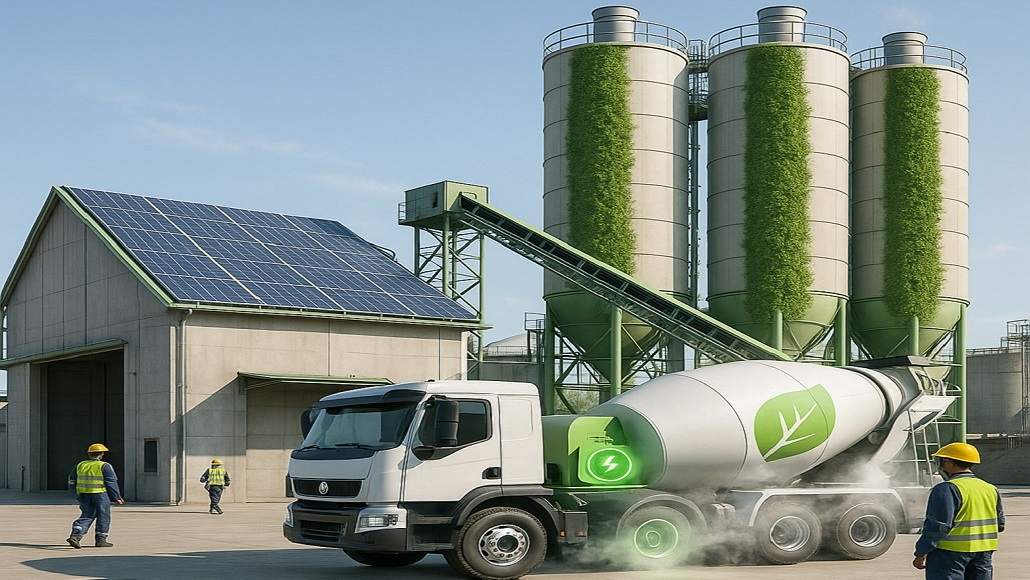
What if we could turn concrete into a carbon sink? CarbonCure Technologies has pioneered a process that injects captured CO₂ into wet concrete, where it reacts with calcium ions to form calcium carbonate. This mineralizes the carbon, locking it away permanently while also enhancing the concrete’s strength. The best part? The technology can be retrofitted into existing concrete plants, making it a scalable solution for the industry.
CarbonCure’s approach is a masterclass in circular economy thinking. By capturing CO₂ from industrial sources—like ethanol plants or natural gas processing—it turns a waste product into a valuable resource. The technology has already been used in over 1,000 projects worldwide, from sidewalks in Canada to skyscrapers in Dubai. But can it scale fast enough to make a dent in global emissions? That’s the million-dollar question.
3. Bio-Concrete: Living, Breathing Concrete
Imagine a concrete that heals itself. That’s the promise of bio-concrete, a revolutionary material embedded with bacteria that produce limestone when exposed to water. These microbes, typically of the genus Bacillus, lie dormant in the concrete until cracks form and water seeps in. The bacteria then spring into action, metabolizing nutrients and precipitating calcium carbonate to fill the gaps. It’s like giving concrete a built-in immune system.
Bio-concrete is still in its infancy, but early trials have shown remarkable results. In one experiment, researchers at Delft University of Technology found that bio-concrete could heal cracks up to 0.8 mm wide within weeks. The potential applications are staggering—imagine bridges that repair themselves or buildings that last centuries with minimal maintenance. The challenge? Scaling up production and ensuring the bacteria remain viable in the harsh environment of concrete. But if successful, bio-concrete could redefine what it means to build sustainably.
The Cost Conundrum: Can Green Concrete Compete?
All this innovation sounds promising, but there’s a elephant in the room: cost. Low-carbon concrete often comes with a premium price tag, thanks to the higher cost of SCMs, carbon capture technology, or specialized additives. For budget-conscious developers, the switch to green concrete can feel like a leap of faith.
However, the long-term savings might just tip the scales. Low-carbon concrete can reduce the need for repairs, extend the lifespan of structures, and even qualify for green building certifications that boost property values. In some cases, the upfront cost is offset by lower energy bills or tax incentives for sustainable construction. The key is to reframe the conversation: green concrete isn’t just an environmental choice—it’s a smart financial one.
But what about the global south, where construction budgets are tight and access to advanced materials is limited? Innovations like rice husk ash (a waste product from rice milling) or agricultural byproducts are proving that low-carbon concrete doesn’t have to be high-tech to make an impact. The future of green concrete may lie in decentralized, low-cost solutions tailored to local resources.
Regulatory Hurdles: The Red Tape of Revolution
Even the most groundbreaking technology can stall if it doesn’t fit within existing regulations. Building codes, which prioritize safety and durability, often lag behind innovation. For example, many codes specify minimum cement content in concrete, which can discourage the use of SCMs. Similarly, standards for carbon-cured concrete are still evolving, leaving some engineers hesitant to adopt new methods.
Governments and industry groups are slowly catching up. The U.S. General Services Administration, for instance, has updated its procurement guidelines to favor low-carbon concrete. The European Union’s Green Deal is pushing for stricter emissions standards in construction. But progress is uneven, and in some regions, outdated regulations remain a major barrier. The challenge? Balancing innovation with safety—without stifling the very technologies that could save the planet.
The Future of Concrete: A Material Reborn
So, what’s next for low-carbon concrete? The possibilities are as vast as the skyline it helps build. Researchers are exploring ultra-high-performance concrete that uses nanotechnology to achieve strength with minimal cement. Others are experimenting with 3D-printed concrete, which reduces waste and allows for complex, lightweight designs. Meanwhile, companies are developing “carbon-negative” concrete that absorbs more CO₂ than it emits over its lifetime.
The transition won’t be easy. It will require collaboration between scientists, policymakers, and industry leaders. It will demand investment in research and infrastructure. And it will challenge our assumptions about what concrete can—and should—be. But if we pull it off, we won’t just build stronger structures. We’ll build a stronger planet.
The concrete of tomorrow won’t just be gray. It will be green—literally and figuratively. It will be a testament to human ingenuity, a bridge between the old and the new, and a foundation for a sustainable future. So the next time you step on a sidewalk, take a moment to appreciate the silent revolution beneath your feet. The future is being poured, one low-carbon mix at a time.
Leave a comment