


Have you ever wondered how your morning coffee, your favorite smartphone, or even the shirt on your back reached your hands without leaving a trail of ecological despair in its wake? The answer lies in the intricate dance of Sustainable Supply Chain Management (SSCM)—a discipline that’s reshaping industries one ethical shipment at a time. But here’s the twist: mastering this art isn’t just about planting trees or recycling cardboard. It’s about orchestrating a symphony of stakeholders, technologies, and policies that harmonize profit with planet. So, buckle up! We’re about to embark on a journey through the labyrinth of SSCM, where every decision echoes across oceans and factory floors, and where the smallest misstep can ripple into a global conundrum.
Imagine, for a moment, that you’re the maestro of a sprawling orchestra. Your instruments? Factories, warehouses, logistics networks, and raw material suppliers. Your sheet music? A score written in the language of sustainability—carbon footprints, ethical labor practices, circular economy principles, and resilience against climate shocks. Now, what happens when one of your musicians decides to play a sour note? A supplier in a distant land opts for cheap, polluting energy. A logistics partner cuts corners on emissions. Suddenly, your symphony isn’t just off-key—it’s a cacophony of environmental and social dissonance. This, dear reader, is the crux of the challenge SSCM professionals grapple with daily: how do you conduct an entire supply chain with the precision of a Swiss watch while ensuring it doesn’t grind the planet into dust?
The Bedrock of SSCM: Transparency as Your North Star
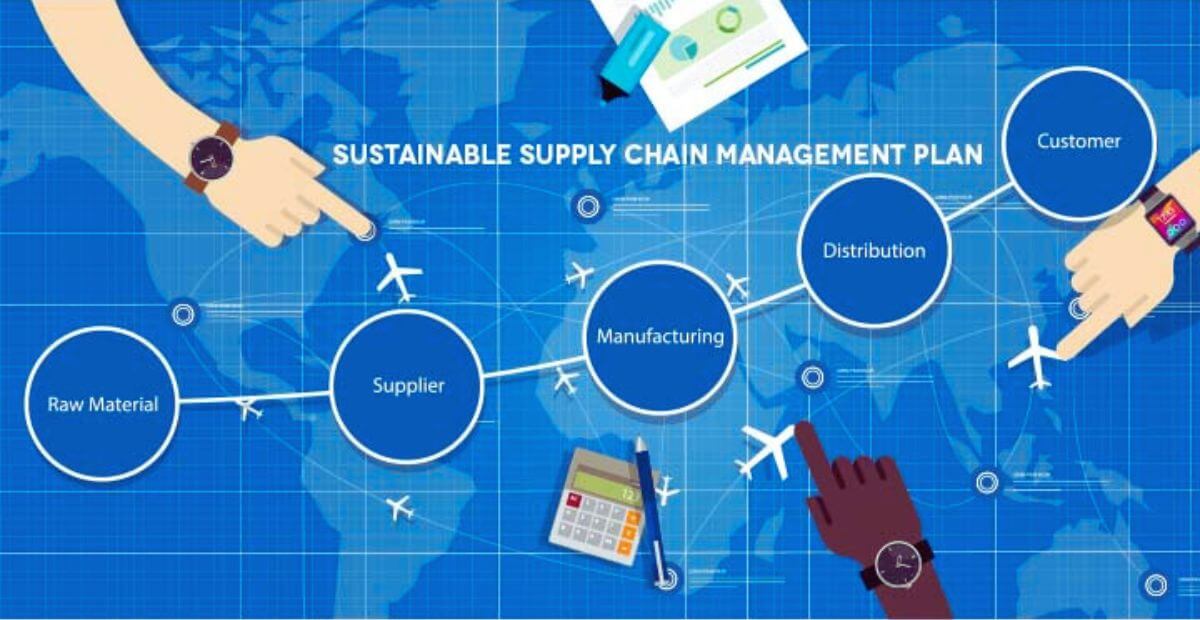
At the heart of every resilient supply chain lies transparency—a virtue as elusive as it is essential. Picture this: a global fashion brand sources cotton from a farm in Uzbekistan, where water scarcity is as dire as the labor conditions are questionable. Without a transparent lens into the supply chain, this brand might unknowingly contribute to ecological collapse and human rights abuses. Enter SSCM, armed with tools like blockchain, IoT sensors, and real-time data analytics to peel back the layers of opacity.
Blockchain, for instance, acts as an immutable ledger, recording every transaction from farm to shelf. IoT devices embedded in shipping containers monitor temperature, humidity, and even the carbon emissions of the vessel carrying your goods. But here’s the kicker: technology alone won’t save the day. It’s the human element—the auditors, the data scientists, the ethical sourcing teams—that transforms raw data into actionable insights. The challenge? Balancing the cost of these technologies with the urgency of sustainability goals. After all, not every small business can afford a blockchain-powered supply chain. This is where micro-credentials come into play, equipping professionals with the skills to leverage affordable, scalable solutions without breaking the bank.
The Triple Bottom Line: Profit, People, Planet
If SSCM were a recipe, the triple bottom line would be its holy trinity: economic viability, social equity, and environmental stewardship. Let’s dissect each ingredient.
Profit: Sustainable supply chains aren’t charity projects. They’re strategic powerhouses. Companies like Patagonia and Unilever have proven that integrating sustainability into supply chains can drive innovation, reduce costs (hello, energy efficiency!), and open new markets. For instance, Unilever’s Sustainable Living Plan has saved the company over €700 million since 2008 by optimizing resource use. But here’s the paradox: short-term profits often clash with long-term sustainability. How do you convince shareholders to invest in a greener future when quarterly earnings are the name of the game? The answer lies in redefining value—not just in dollars, but in resilience, brand loyalty, and risk mitigation.
People: Behind every product is a human story. From the child laborers in cobalt mines powering your smartphone to the warehouse workers inhaling toxic fumes in a fast-fashion factory, the human cost of unsustainable supply chains is staggering. SSCM demands a shift from exploitative labor practices to fair wages, safe working conditions, and community empowerment. Initiatives like the Fair Labor Association and B Corp certification are paving the way, but the road is fraught with obstacles. How do you enforce ethical standards across a global network of suppliers, many of whom operate in jurisdictions with lax labor laws? The answer isn’t just policy—it’s culture. Companies must embed ethical values into their DNA, making sustainability a non-negotiable core competency.
Planet: The environmental stakes couldn’t be higher. Supply chains account for over 50% of global carbon emissions and 90% of biodiversity loss. From deforestation in the Amazon for soy production to the microplastic pollution from fast fashion, the damage is systemic. SSCM tackles this through circular economy models—designing products for longevity, recycling, and reuse. Take IKEA’s commitment to becoming climate-positive by 2030, or Apple’s goal to use 100% recycled materials in its products. Yet, the challenge remains: how do you decouple economic growth from environmental degradation? The answer lies in regenerative practices—restoring ecosystems rather than just reducing harm.
The Micro-Credential Revolution: Skills for the SSCM Trailblazer
Enter the micro-credential—a compact, stackable credential designed to equip professionals with the tools to navigate the SSCM landscape. Unlike traditional degrees, micro-credentials are laser-focused, often taking weeks or months to complete, and are tailored to industry demands. For aspiring SSCM practitioners, these credentials offer a lifeline in a rapidly evolving field.
What does a typical SSCM micro-credential cover? Imagine a curriculum that blends the art of negotiation with the science of life cycle assessment. Modules might include:
- Ethical Sourcing: How to audit suppliers for compliance with labor and environmental standards.
- Carbon Accounting: Measuring and reducing Scope 1, 2, and 3 emissions across the supply chain.
- Circular Design: Principles for creating products that can be reused, repaired, or recycled.
- Risk Management: Strategies for mitigating disruptions from climate change, geopolitical tensions, or pandemics.
- Stakeholder Engagement: Techniques for collaborating with NGOs, governments, and local communities.
The beauty of micro-credentials is their flexibility. A logistics manager might earn a credential in carbon accounting, while a procurement specialist dives into ethical sourcing. The challenge? Ensuring these credentials are recognized by employers and integrated into career pathways. This is where partnerships between educational institutions, industry bodies, and certification organizations become critical. The goal? To create a workforce that’s not just knowledgeable, but agile—ready to pivot as new sustainability challenges emerge.
The Future: AI, Automation, and the SSCM Singularity
Fast-forward to 2035. Artificial intelligence isn’t just a buzzword; it’s the backbone of supply chain decision-making. AI-driven platforms predict disruptions before they happen, optimizing routes to slash emissions, and even negotiating contracts with suppliers in real time. But here’s the twist: AI is only as good as the data it’s fed. If the underlying supply chain is riddled with unethical practices or environmental harm, AI will merely amplify those flaws at machine speed.
This is where the human element becomes irreplaceable. SSCM professionals of the future won’t just crunch numbers—they’ll curate data, challenge algorithms, and advocate for systemic change. They’ll be the guardians of a new era, where technology and ethics coexist in harmony. The challenge? Ensuring that automation doesn’t widen the gap between large corporations and small businesses. How do you democratize access to AI-powered SSCM tools so that even the local artisan or family-owned farm can compete on a level playing field?
Another frontier? The rise of bio-based supply chains. Imagine a world where plastics are made from algae, textiles from mushroom mycelium, and fuels from captured carbon. Companies like Notpla and Bolt Threads are already pioneering these innovations. But scaling these solutions requires a complete overhaul of existing infrastructure—a Herculean task that demands collaboration across industries, governments, and academia.
The Call to Action: Your Role in the SSCM Revolution
So, where do you fit into this grand narrative? Whether you’re a student, a mid-career professional, or a seasoned executive, the SSCM revolution needs your unique talents. Here’s how you can contribute:
- Educate Yourself: Pursue micro-credentials, attend workshops, or dive into case studies from companies leading the charge. Knowledge is the first step toward change.
- Advocate for Change: Within your organization, push for sustainability initiatives. Whether it’s switching to renewable energy suppliers or redesigning packaging, every small action counts.
- Collaborate: Sustainability isn’t a solo sport. Partner with NGOs, industry peers, and even competitors to share best practices and drive collective impact.
- Innovate: If you’re in product design, engineering, or logistics, think outside the box. How can you redesign processes to minimize waste and maximize value?
- Hold Businesses Accountable: As a consumer, your purchasing power is a force to be reckoned with. Support brands that prioritize sustainability and call out those that don’t.
Remember, the supply chain isn’t just a series of transactions—it’s a story. A story of interconnected lives, economies, and ecosystems. And like any great story, it’s yours to shape. Will you be the villain who turns a blind eye to exploitation and pollution? Or will you be the hero who rewrites the narrative, one sustainable decision at a time?
The choice is yours. The time to act is now.
Leave a comment