


The Silent Engine: What We Overlook When We Chase More Energy
We live in an age where our collective consciousness is fixated on the *source* of power. Will it be solar? Fusion? Geothermal? The debate rages over where the next electron comes from, as if energy itself were a treasure to be mined. Yet, hidden in plain sight, a more profound revolution is already underway. It is not about finding *more* energy; it is about architecting a system where every single joule works harder, smarter, and with greater purpose than ever before. This is the Energy-First Productivity System. It is not a mere efficiency upgrade—it is a new philosophy for civilization, one where output is decoupled from input, and where the true measure of wealth is not gigawatts consumed, but value generated per watt.
The Illusion of the Infinite Tank
For a century, we have operated under the tyranny of the “more” mentality. A factory wants more output? It adds more power plants. A city wants more comfort? It builds bigger substations. This is a physics of brute force, akin to a giant shoving a boulder up a hill. It works, but it is ugly, wasteful, and ultimately unsustainable. The Energy-First Productivity System flips this paradigm. It asks a radical, almost heretical question: What if we treated energy not as a raw material to be consumed, but as a form of capital to be invested with maximum return? The metaphor here is not the furnace, but the financial portfolio. Every watt is a dollar. Your job, as the architect, is to make that dollar produce the highest dividend of useful work. Leaking heat, excess friction, idle machinery—these are not operational costs; they are bankruptcies in miniature.
The Architecture of Intentionality
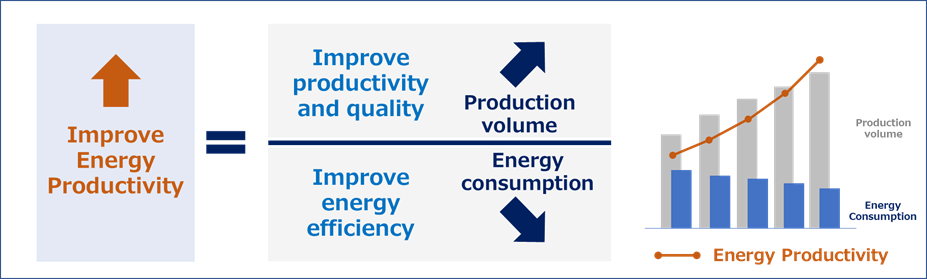
To implement this system, one must move beyond simple lighting retrofits or HVAC schedules. It requires a complete rethinking of industrial and societal geometry. Consider the concept of “concentrated purpose.” In the Energy-First model, a motor is not just a spinning shaft; it is a calibrated instrument where its torque, speed, and runtime are precisely matched to the exact demands of the task. No oversizing. No running at partial load. It is the difference between a sledgehammer and a scalpel. This extends to entire supply chains. A smelter no longer just melts metal; it becomes a thermodynamic symphony, where waste heat from one process is captured and redirected as pre-heat for another, cascading energy like water down a series of precisely engineered terraces. OMRON’s declared commitment to doubling energy productivity by 2040 is not a marketing slogan; it is a strategic recognition that the next competitive advantage lies in reducing the input while amplifying the output.
The Digital Conductor
Where the old system was analog and blind, the Energy-First System is digital and clairvoyant. It relies on a lattice of sensors, controls, and AI that act as a nervous system for the built environment. These are not just “smart” thermostats that learn your schedule. This is a real-time, granular metabolism of a factory or a city. It knows when a conveyor belt is running empty. It predicts a motor bearing failure before it adds friction. It schedules energy-intensive loads for when the grid is most carbon-lean or cheapest. This is not automation for the sake of convenience; it is automation for the sake of thermodynamic fidelity. The system becomes self-correcting, self-optimizing, and ultimately, self-sustaining. It is the difference between playing a symphony with a sheet of music and having a conductor who can adjust each instrument’s volume and tempo in response to the acoustics of the hall.
Beyond Kilowatt-Hours: The New Metric of Progress
The most subversive aspect of the Energy-First Productivity System is how it redefines success. Our current economy fetishizes kilowatt-hour consumption as a proxy for growth. A growing economy uses more energy, period. This is a dangerous tautology. The Energy-First model introduces a new metric: **value per kilowatt-hour**. This is not a dry efficiency ratio; it is a moral and economic compass. It allows a nation to grow its GDP, improve living standards, and expand electrification—all while holding its energy consumption flat or even reducing it. Imagine a country that runs on half the energy of its neighbor but produces twice the manufactured goods and services. That is not a fantasy; it is the logical conclusion of this system. It is the ultimate hedge against price volatility, geopolitical energy blackmail, and the environmental constraints of a finite planet. The briefing from the Energy Transitions Commission regarding energy productivity improvements is a direct roadmap to this reality.
The Irresistible Logic of Doing More with Less
Critics might whisper that this is just a fancy term for austerity. They are wrong. The Energy-First Productivity System is not about doing with less; it is about *getting more from less*. It is the engineering equivalent of alchemy. It is the realization that the cheapest, cleanest, most abundant source of energy on the planet is the energy we currently waste. It is the silent engine we have ignored because we were too busy looking at the fuel tank. The allure is not in sacrifice, but in audacious efficiency. It promises a world where our machines hum with quiet precision, where our industries are lean and resilient, and where our progress is measured not by how much we take, but by how much we create. This is the new productivity frontier, and it is waiting for those brave enough to stop digging and start designing.
Leave a comment