


The Architecture of Uninterrupted Flow
Imagine a river system engineered not for maximum volume, but for perfect, unimpeded velocity. Every channel is precisely graded; every sediment trap is placed at the exact point where debris tends to accumulate. This is the aspirational state of a team workflow—a system where force is not exerted against resistance, but channeled through it. The primary adversary in this endeavor is the bottleneck, a point of congestion so acute that it throttles the entire operation. To eliminate bottlenecks is not merely to speed up a process; it is to redesign the process itself so that speed is a natural byproduct of structure. The most effective teams do not react to delays; they pre-empt them by constructing workflows that are inherently self-correcting and fluid.
Visualizing the Constraint: The Diagnostic Power of Flowcharts
Before a bottleneck can be eliminated, it must first be seen. Many teams operate on a shared but unspoken mental model of how work moves, a model that is often romanticized and inaccurate. The flowchart is the cold, clarifying mirror. A well-constructed workflow diagram is not a bureaucratic artifact; it is a diagnostic tool that reveals where queues form. Consider the classic visual representation of an approval process, such as the one often depicted in risk management and project lifecycle maps. One common image shows a maze of decision diamonds and process boxes, where a single approval node becomes a pinch point as multiple requests converge on a single person. This is a visual admission of a systemic flaw.
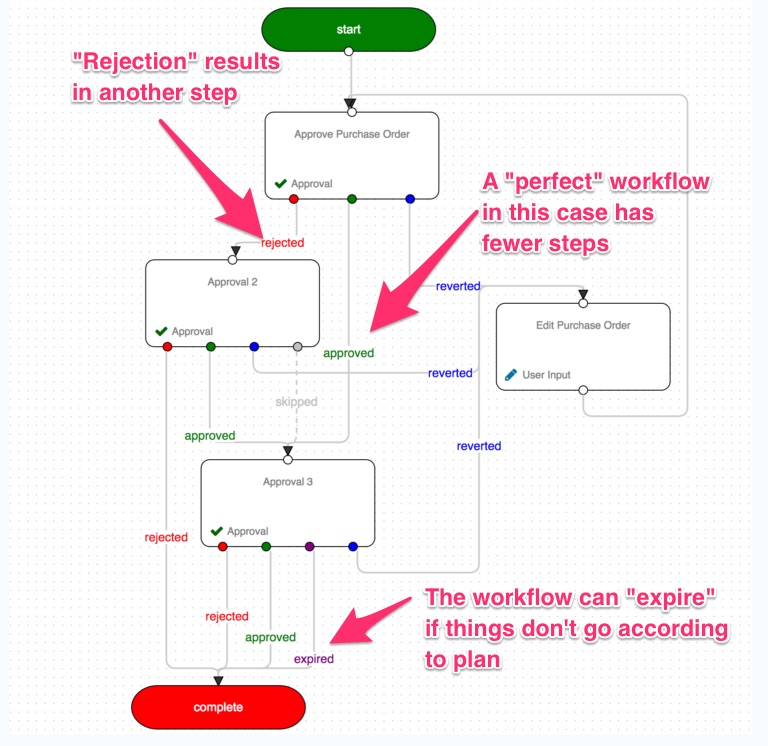
When a team sees this diagram, the question shifts from “Why is this person slow?” to “Why is this person the only gate?” The answer often lies in the diagram’s structure, not the individual’s work ethic. A flowchart that avoids bottlenecks introduces parallel lanes—parallel approval gates, automated conditional routing, or clearly defined delegation thresholds. The visual language of the workflow itself must dictate that no single resource is the sole path to completion. The act of mapping thus becomes the first act of liberation.
Lean Principles as a Dynamic Operating System
Eliminating bottlenecks is fundamentally a lean exercise, but not the sterile, spreadsheet-driven lean of cost-cutting. The lean workflow is a dynamic operating system based on two core tenets: respect for the worker and relentless attention to flow. The famous five lean principles—Value, Value Stream, Flow, Pull, and Perfection—are not sequential steps but concurrent habits. A team that has internalized “flow” understands that work should move smoothly from one value-creating step to the next without interruption, rework, or waiting.
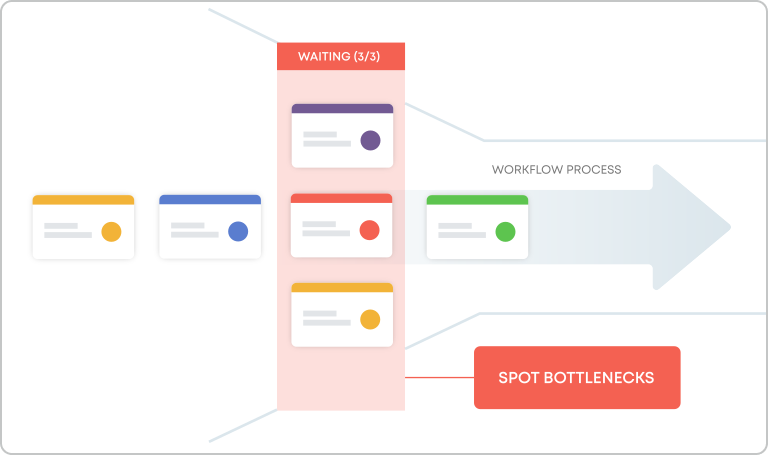
This is where the concept of “pull” becomes revolutionary. Instead of a top-down push of work (which inevitably creates piles of unfinished tasks at the next station), a lean workflow uses a pull system. Downstream workers signal upstream workers exactly what they are ready to receive, and only when they are ready. This prevents the most common form of bottleneck: the overproduction of work-in-progress (WIP). When every team member has a strict WIP limit, the system naturally decelerates in the right places to prevent catastrophic pile-ups. The bottleneck is not removed through brute force but through intelligent starvation—starving the system of the thing that chokes it: too much work happening at once.
The Six-Step Blueprint: Building the Workflow Infrastructure
To translate these principles into daily reality, a team must adopt a structured, repeatable framework. The most effective one mirrors the six-step approach used by high-functioning project managers: Define, Map, Assign, Standardize, Measure, and Optimize. This is not a linear process but a continuous cycle. The first step, definition, requires brutal clarity on the output—what does “done” actually look like? The second, mapping, creates the visual artifact discussed earlier.
The third step—assignment—is where many bottlenecks are born. It is not enough to assign a task; the workflow must assign responsibility for handoffs. A frequent bottleneck is the “waiting for reply” state, which is invisible on most task lists. The solution is to embed explicit service level agreements (SLAs) for every handoff. The fourth step, standardization, creates a repeatable pattern. The fifth, measurement, tracks cycle time (from start to finish) and wait time. The final step, optimization, is the deliberate, weekly adjustment based on that data.
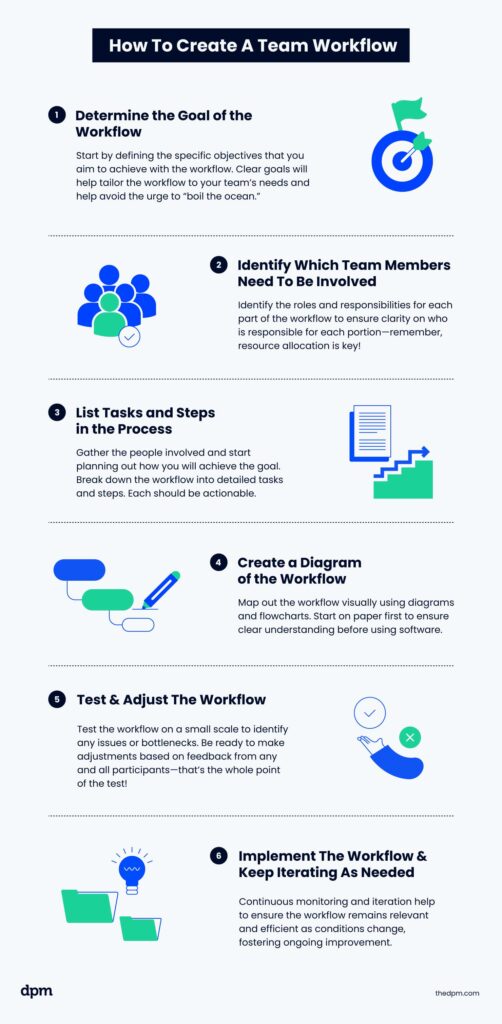
This six-step structure is explicitly designed to convert a reactive, firefighting culture into a proactive, engineering culture. It turns the workflow into a living machine that the team tunes, rather than a rigid track they are forced to ride. The bottleneck is not a permanent feature of the landscape; it is a temporary inefficiency that the team has the tools and permission to fix.
From Removal to Prevention: The Perpetual Loop
The ultimate goal is not to achieve a bottleneck-free state—such a state is utopian and probably undesirable, as it implies zero friction (which often means zero innovation). The goal is to achieve a state of anticipatory correction. The best teams do not celebrate removing a bottleneck; they celebrate shortening the time between the bottleneck’s appearance and its resolution. They build a workflow that includes a meta-layer: a process for improving the process.
This is the final, crucial shift in perspective. A team workflow that eliminates bottlenecks is not a fixed diagram on a wall. It is a dynamic contract between the team and its work. It is a visual language (the flowchart), a philosophical commitment (lean flow), a practical infrastructure (the six-step build), and a feedback loop (continuous optimization). When these four elements are in harmony, the river runs. And the only thing that can stop it is a shift in the terrain—which the team is already watching for, ready to dig a new channel before the water even begins to rise.
Leave a comment