


Imagine standing at the edge of a decision so complex it feels like staring into a fog of uncertainty. Every path forward is shrouded in ambiguity—until now. Artificial Intelligence isn’t just another tool in the decision-maker’s toolkit; it’s a transformative force that can illuminate pathways previously hidden in the shadows of data, bias, and cognitive overload. Whether you’re a business leader charting the future of your company, a healthcare professional diagnosing a patient, or an individual navigating life’s pivotal choices, AI offers a new lens through which to see, analyze, and decide. This isn’t about replacing human judgment—it’s about enhancing it. Let’s explore how AI can become your most trusted advisor in the art of decision-making.
The Promise of AI in Decision-Making: Beyond Gut Feeling and Guesswork
For centuries, decision-making has relied on intuition, experience, and limited data. But human cognition is fallible. We’re prone to biases, overwhelmed by information, and constrained by time. AI changes the game by processing vast datasets in real time, identifying patterns invisible to the naked eye, and simulating outcomes before they unfold. It doesn’t just crunch numbers—it learns from them, adapts, and predicts with increasing accuracy.
Consider the work of Cassie Kozyrkov, Google’s Chief Decision Scientist, who argues that AI enables “decision intelligence”—a fusion of data science, behavioral science, and systems thinking. By integrating AI into decision workflows, organizations can move from reactive to predictive, from subjective to objective, and from fragmented to integrated. The result? Decisions that are faster, more accurate, and aligned with strategic goals.
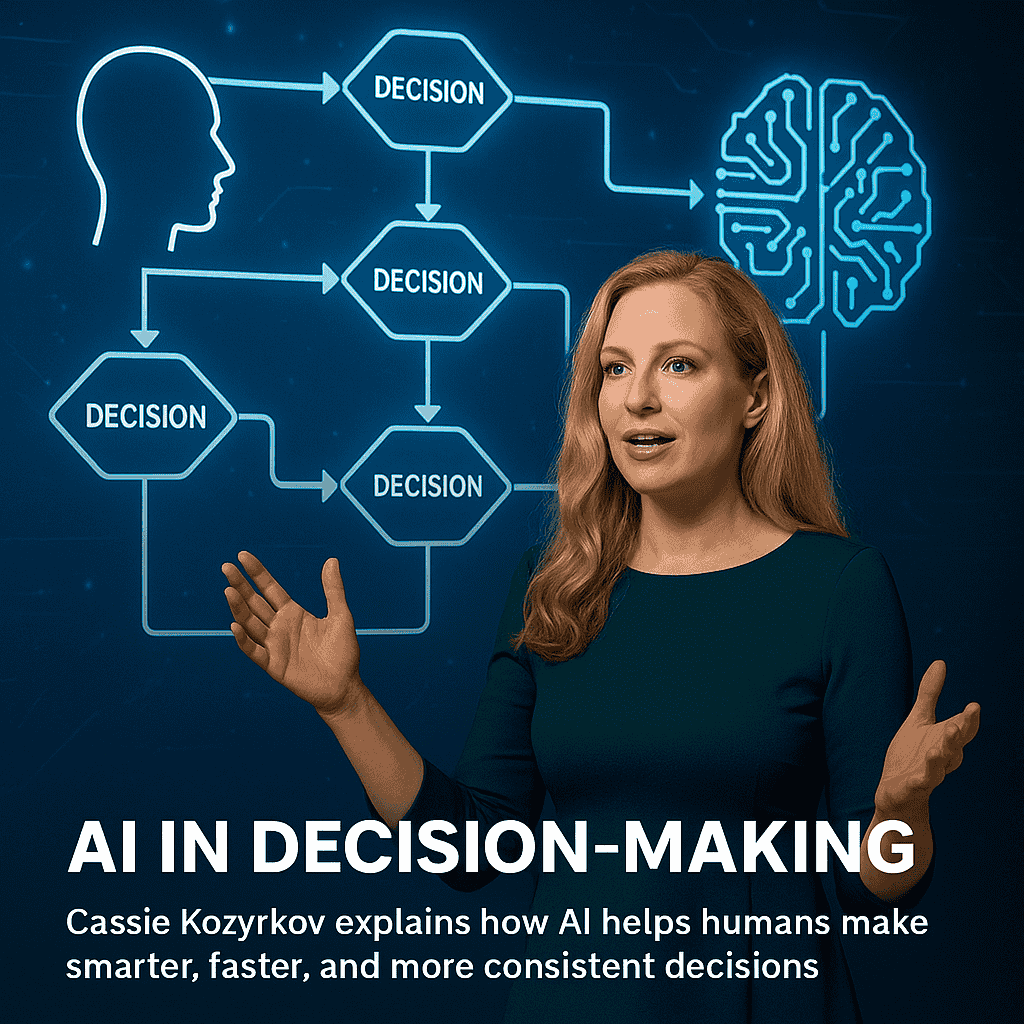
This shift isn’t theoretical. Companies using AI-driven decision support systems report up to a 30% improvement in operational efficiency and a 25% reduction in costly errors. In healthcare, AI models have matched or exceeded human experts in diagnosing diseases like breast cancer and diabetic retinopathy. The message is clear: AI doesn’t just assist decision-making—it redefines what’s possible.
From Data Overload to Decision Clarity: How AI Filters the Noise
We live in an age of data abundance. Every click, transaction, and interaction generates a digital footprint. But more data doesn’t mean better decisions—it often means more confusion. AI acts as a filter, distilling vast oceans of information into actionable insights. It identifies correlations, detects anomalies, and highlights trends that matter.
For example, in supply chain management, AI systems analyze real-time data from sensors, weather forecasts, and market trends to predict disruptions before they occur. Retailers use AI to optimize pricing, inventory, and promotions based on consumer behavior patterns. Even in personal finance, AI-powered tools like robo-advisors assess risk tolerance and market conditions to recommend investment strategies tailored to individual goals.
This isn’t about replacing human oversight—it’s about augmenting it. AI surfaces the most relevant information, ranks potential outcomes, and even suggests optimal courses of action. The human decision-maker remains in control, but now with a clearer, more informed perspective.
Bias, Fairness, and the Human-AI Partnership: Navigating the Ethical Landscape
With great power comes great responsibility. AI’s ability to shape decisions raises critical questions about bias, transparency, and accountability. Algorithmic bias—where AI systems perpetuate or amplify existing inequalities—has been documented in hiring, lending, and criminal justice systems. The danger isn’t in the technology itself, but in how it’s designed and deployed.
To mitigate these risks, organizations must prioritize ethical AI frameworks. This includes diverse training datasets, regular bias audits, and explainable AI models that allow users to understand how decisions are made. Cassie Kozyrkov emphasizes the importance of “decision documentation”—a practice where every AI-driven recommendation is accompanied by a clear rationale, enabling stakeholders to interrogate and trust the process.

Transparency isn’t just a moral imperative—it’s a competitive advantage. Consumers and employees alike are increasingly demanding accountability from the organizations they engage with. By embracing ethical AI, businesses not only reduce legal and reputational risks but also build trust and loyalty.
When to Use AI—and When to Trust Your Instincts
AI excels in environments where data is abundant, patterns are complex, and stakes are high. But it’s not a universal solution. There are moments when human intuition, emotional intelligence, and ethical judgment are irreplaceable. The key is knowing when to leverage AI and when to rely on human insight.
For instance, AI is invaluable in fraud detection, where it can analyze millions of transactions in milliseconds to flag suspicious activity. But when it comes to negotiating a merger or resolving a conflict, human empathy and negotiation skills are essential. Similarly, AI can optimize a marketing campaign by analyzing consumer behavior, but the creative vision and storytelling that drive brand connection remain human domains.
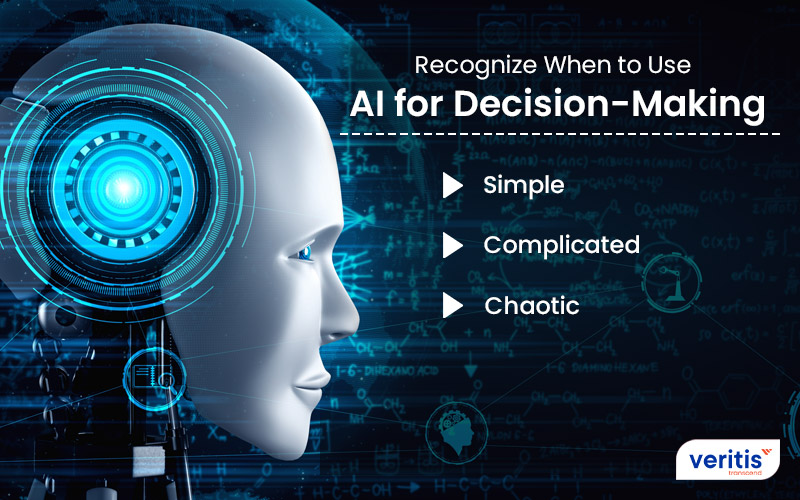
The most effective decision-makers don’t see AI as a replacement for human judgment but as a collaborator. They use AI to handle the heavy lifting of data analysis while focusing their energy on interpretation, creativity, and ethical considerations. This hybrid approach—where AI augments human capabilities—is the future of decision-making.
Building an AI-Ready Decision-Making Framework
Adopting AI for decision-making isn’t a plug-and-play process. It requires a structured approach that aligns technology with organizational goals, culture, and capabilities. Here’s a step-by-step framework to get started:
1. Define the Decision Problem
Begin by clearly articulating the decision you need to make. What are the objectives? What are the constraints? What constitutes a “good” outcome? Without a well-defined problem, even the most advanced AI will struggle to deliver meaningful insights.
2. Assess Data Readiness
AI thrives on high-quality data. Evaluate whether your organization has the necessary data infrastructure, governance policies, and data literacy to support AI-driven decisions. If gaps exist, prioritize data collection, cleaning, and integration before deploying AI models.
3. Select the Right AI Tools
Not all AI solutions are created equal. Choose tools that align with your decision-making needs—whether it’s predictive analytics, natural language processing, or reinforcement learning. Consider factors like scalability, ease of integration, and user-friendliness.
4. Foster a Culture of Data-Driven Decisions
Technology alone won’t drive change. Leadership must champion a culture where decisions are grounded in data and AI insights. This includes training employees, encouraging experimentation, and rewarding evidence-based choices.
5. Monitor, Evaluate, and Iterate
AI models degrade over time as data and environments evolve. Establish ongoing monitoring to track performance, identify biases, and refine models. Use feedback loops to continuously improve decision outcomes.
By following this framework, organizations can transition from ad-hoc decision-making to a systematic, AI-augmented approach that delivers consistent, high-quality results.
The Future of Decision-Making: AI as Your Co-Pilot
We’re on the cusp of a new era in decision-making—one where AI doesn’t just support our choices but elevates them. As AI becomes more sophisticated, it will move beyond analysis to prescribe actions, simulate scenarios, and even negotiate on our behalf. Imagine an AI assistant that not only predicts market trends but also drafts strategic plans, or one that helps clinicians design personalized treatment protocols in real time.
The possibilities are as limitless as our imagination. But the most exciting frontier isn’t technological—it’s human. AI will enable us to make decisions that are faster, fairer, and more informed than ever before. It will free us from the shackles of cognitive overload and bias, allowing us to focus on what truly matters: creativity, empathy, and strategic vision.
In this new landscape, the most successful decision-makers won’t be those who rely solely on AI or human intuition—but those who know how to harness the best of both. The future isn’t about choosing between man and machine. It’s about forging a partnership that unlocks the full potential of human and artificial intelligence.
So the next time you face a decision that feels overwhelming, remember: AI isn’t here to make the choice for you. It’s here to help you see the path forward with clarity, confidence, and conviction.
Leave a comment