


The Quiet Architecture of the Extraordinary Day
There is a pervasive myth that high performance is born from sheer willpower—a grueling, daily grind that burns through energy reserves like a wildfire. Yet, observe the truly ultra-productive, and you will not find frantic motion or heroic bouts of self-flagellation. Instead, you discover a stillness. A quiet, deliberate architecture of habit that transforms the chaotic drift of ordinary time into a vessel of profound output. The secret is not in doing more, but in configuring the doing itself. This is a shift from effort to design, from motoring to sailing.

The Pre-Dawn Neutral: Why Resistance is Futile
The calendar of the ultra-productive begins not with a frantic check of notifications, but with a ritual of *non-doing*. Before the world awakens with its demands, they secure a pocket of psychological sovereignty. This might be a ten-minute meditation, a silent walk, or simply sitting with a cup of water, eyes closed. The goal is not productivity; it is the deliberate suspension of reactivity. By denying the brain its customary dose of external stimulation—news, social media, email—they starve the amygdala of its triggers for anxiety. This small act of resistance against the digital tide creates a delta of calm that determines the river’s entire course. The promise here is radical: you do not chase the day; you let the day arrive on *your* neurological terms.
The Second Brain: Outsourcing the Mundane
Astonishingly, the most productive people trust themselves the least. They know that memory is a leaky vessel, and willpower is a finite resource drawn from a shallow well. The second ritual, therefore, is the systematic unloading of cognitive load. This is not merely a to-do list; it is an act of ontological clarity. Every task, idea, or commitment is immediately captured in a trusted external system—a notebook, a digital app, or a physical board. The psychological weight of “I must remember this” is instantaneously lifted. This frees the prefrontal cortex from its janitorial duties and allows it to engage in what it does best: creative synthesis, strategic thinking, and deep focus. The perspective shifts from the anxiety of managing chaos to the calm satisfaction of simply running a system.
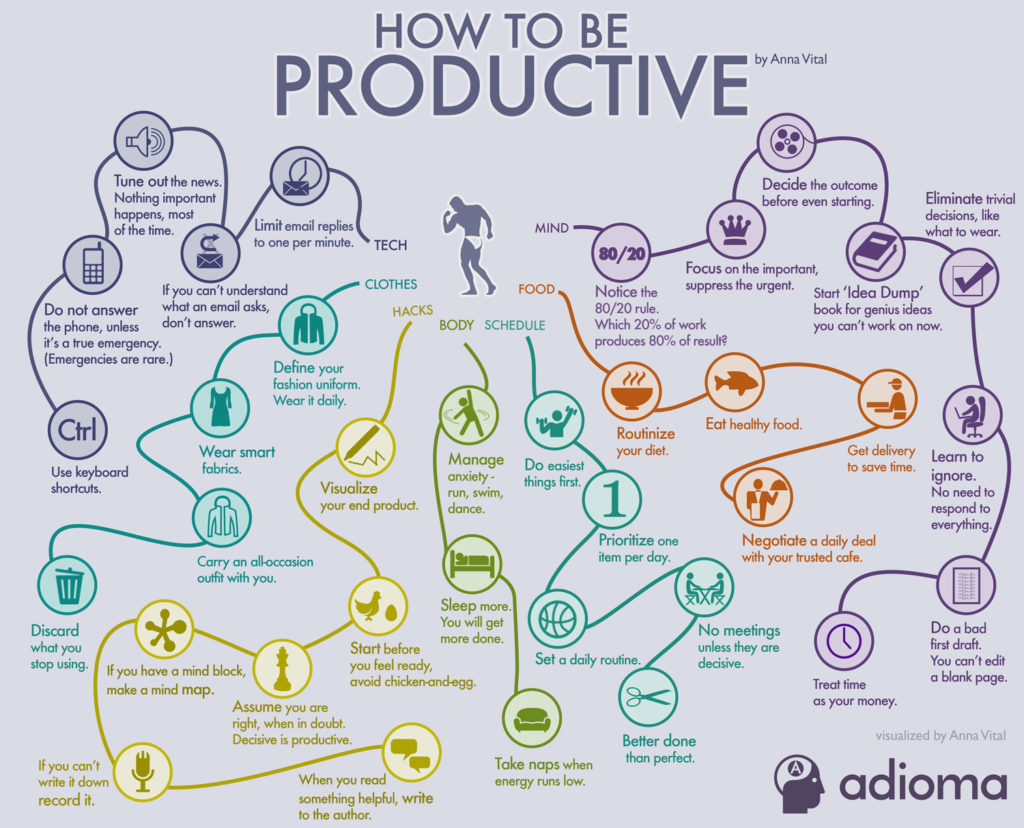
The Forge of Two Hours: Deep Work as a Sacred Geometry
We often mistake motion for progress. The ultra-productive know that the most potent work is invisible. It is the single, uninterrupted, cognitively demanding task done for ninety to one hundred and twenty minutes. This is the forge. The ritual involves a brutal, almost monastic, curation of the environment. Phone is silenced or locked away. The browser is closed. The room is dimmed. There is no multitasking, no glancing at emails, no listening to podcasts with lyrics. This is a state of flow, described by psychologist Mihaly Csikszentmihalyi as the optimal experience—a state so absorbing that self-consciousness, time, and distraction dissolve. The promise here is the antidote to the endless, shallow busy-ness of the modern worker. In two hours of deep work, you can create more value than in eight hours of fractured attention.
The Deliberate Pause: The Most Counter-Intuitive Ritual of All
Perhaps the most shocking secret is the ritual of doing nothing. After the forge session, the ultra-productive person does not jump into the next task. They take a genuine, tech-free break. They walk. They stretch. They stare out a window. This is not laziness; it is the biological reset required for sustained cognitive performance. The brain’s default mode network—the network responsible for creativity, memory consolidation, and problem-solving—activates *only* when we are not focusing. By defending these breaks, they are not losing time; they are mining it. The shift in perspective is profound: rest is not the opposite of productivity; it is the battery for it.

The Closing Ceremony: The Ritual of Completion
Just as the day begins with a ritual, it ends with one. The ultra-productive do not simply stop working. They perform a closing ceremony. This involves reviewing what was accomplished, writing down the single most important task for the next day, and physically shutting down—closing the laptop, turning off the desk light, or putting away the notebook. This act of closure signals to the nervous system that the workday is over. It prevents the dreaded “Zeigarnik effect”—the intrusive thoughts about unfinished tasks that hijack our sleep and recovery. By intentionally ending the day, they protect the sacred boundary between work and life, ensuring they arrive at the next morning not exhausted, but replenished.
The Final Reframe: From Time Management to Energy Architecture
These rituals, taken together, constitute a profound redefinition of productivity. It is not about squeezing more into your calendar. It is about designing the conditions under which your best work can emerge, almost effortlessly. The ritual is the vessel; the work is the water. The ultra-productive person knows that you cannot force the water to flow faster; you can only ensure the vessel is clean, stable, and aligned with the current. The promise, then, is not just more output. It is a life where work feels less like a struggle and more like a craft. A life where the day does not consume you, but where you become the quiet engineer of your own time. The shift is subtle, but once you see it, you cannot unsee it. And that is the most productive thing of all.
Leave a comment