


The dawn of artificial intelligence has cast a long shadow over the hallowed halls of academia, where the sanctity of original thought once reigned supreme. Now, as ChatGPT-5 and its successors loom on the horizon, the very fabric of academic integrity trembles under the weight of possibility. Students and educators alike find themselves at a precipice, gazing into the abyss of an era where the line between inspiration and transgression blurs with each keystroke. The fascination with this technological marvel is not merely about its capabilities—it’s about the existential questions it forces us to confront: What does it mean to learn, to create, to be human, when machines can mimic our intellect with unsettling precision?
At the heart of this revolution lies a paradox. On one hand, AI tools like ChatGPT-5 promise to democratize knowledge, offering personalized tutoring, instant feedback, and a lifeline to those struggling with comprehension. On the other, they threaten to erode the bedrock of academic honesty, turning essays into mosaics of borrowed brilliance stitched together by algorithms. The tension between these two forces is palpable, a digital tug-of-war where the stakes are nothing less than the future of education itself.
The Erosion of Originality: When Words Become a Commodity
Consider the student who, faced with a daunting assignment, turns to ChatGPT-5 for a head start. The tool delivers a polished, coherent response—flawless in grammar, rich in vocabulary, and tailored to the assignment’s requirements. Yet, where is the student’s voice in this? The spark of individuality, the messy, beautiful struggle of grappling with ideas, is often lost in the efficiency of the machine. Originality, once the gold standard of academic work, now feels like a relic of a bygone era.
This commodification of thought is not confined to students. Educators, too, are grappling with the implications. How do you grade an essay when you suspect it was generated by an AI trained on the collective works of humanity? The traditional rubrics of analysis, creativity, and critical thinking suddenly seem inadequate. The very metrics we’ve relied on to measure intellectual growth are being called into question, leaving us to wonder if we’re measuring mastery—or mimicry.
The Cat-and-Mouse Game: Detection Tools and the Illusion of Security
In response to the rise of AI-generated content, a new industry has emerged: AI detection tools. Companies promise educators the ability to sniff out machine-written prose with the precision of a bloodhound. Yet, these tools are not infallible. They are, at best, a temporary Band-Aid on a gaping wound. As AI models grow more sophisticated, so too do the methods to evade detection. Paraphrasing tools, human-like rewrites, and even adversarial attacks on detection algorithms are becoming commonplace.
The cat-and-mouse dynamic extends beyond detection. Students who once relied on plagiarism to cut corners now turn to AI to craft assignments that bypass traditional checks. The result? A arms race where educators are perpetually one step behind, scrambling to adapt their assessments to a landscape that shifts with each algorithmic update. The illusion of security provided by these tools is just that—an illusion. True academic integrity cannot be enforced by software alone; it must be cultivated through a deeper understanding of the ethical implications of AI.
The Psychological Underpinnings: Why We’re Fascinated by the AI Mirage
There’s something deeply alluring about the idea of an AI that can produce flawless work at the touch of a button. It taps into a primal desire: the wish to transcend our limitations. For students, it’s the promise of effortless excellence. For educators, it’s the hope of streamlining a system bogged down by administrative burdens. But this fascination is also tinged with unease—a gnawing suspicion that we’re outsourcing not just labor, but the very essence of what it means to think, to create, to be.
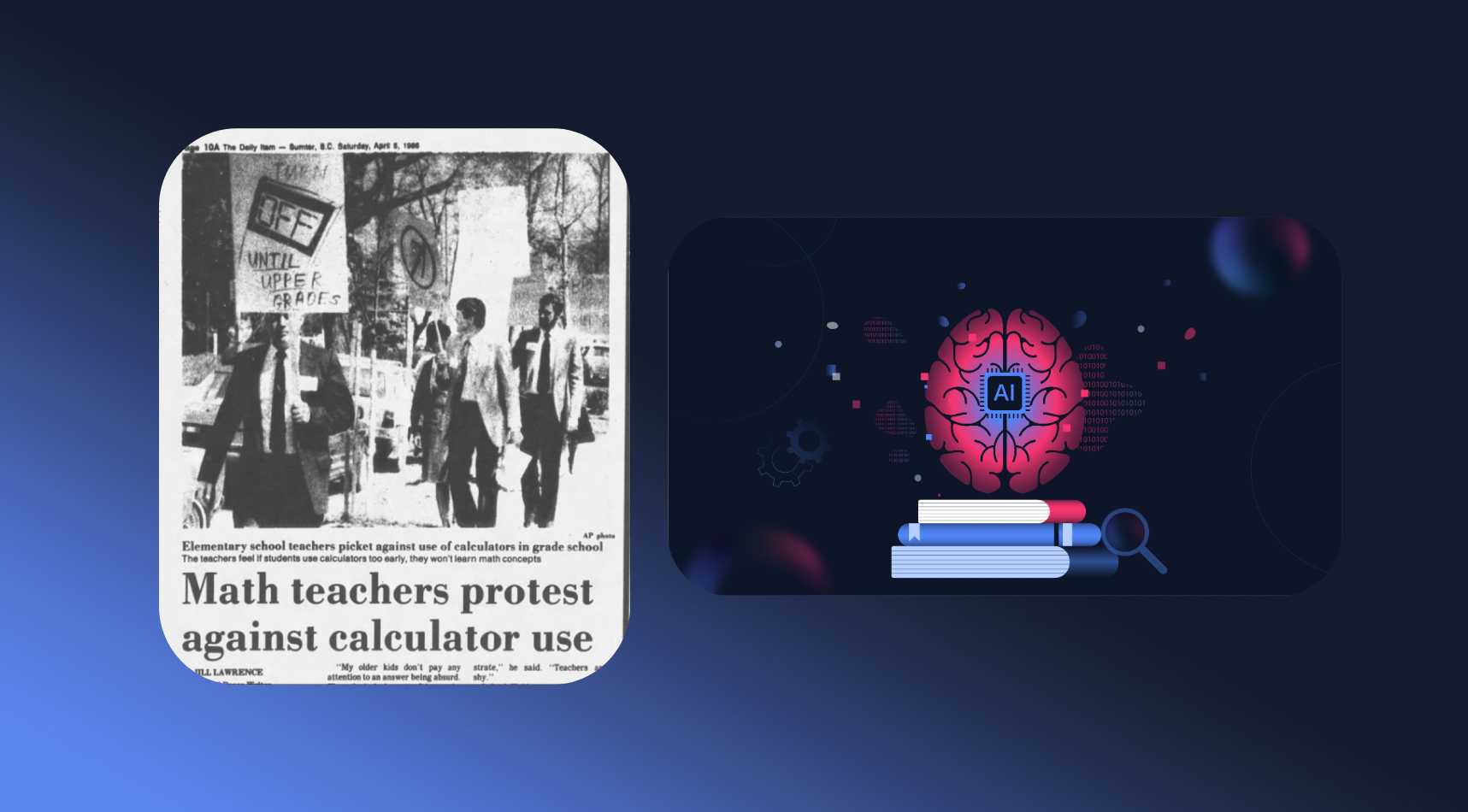
This duality is not new. Throughout history, humanity has oscillated between awe and apprehension when faced with technological leaps. The printing press, the calculator, the internet—each innovation sparked fears of erosion, even as it expanded possibilities. Yet, the speed at which AI is evolving feels qualitatively different. It’s not just a tool; it’s a collaborator, a competitor, a mirror reflecting our own capabilities back at us. The fascination with ChatGPT-5 is, in part, a fascination with ourselves—a chance to see what we might become if we merge with the machines we’ve created.
Redefining Integrity: Beyond the Binary of Cheating and Honesty
Perhaps the most profound challenge posed by AI is the need to redefine academic integrity itself. The traditional binary of cheating versus honesty is no longer sufficient. Instead, we must ask: What does it mean to engage ethically with AI in an educational context? Is it cheating to use an AI tool to brainstorm ideas, so long as the final work is your own? What about using AI to translate complex concepts into simpler terms—is that a form of assistance or a crutch?
These questions force us to confront the fluidity of integrity. It’s no longer a static concept but a dynamic one, shaped by context, intent, and the evolving capabilities of technology. Educators are beginning to experiment with AI-integrated assessments—projects that require students to critique AI-generated content, or assignments that blend human and machine collaboration. The goal is not to ban AI but to harness its potential while preserving the core values of learning: curiosity, critical thinking, and the courage to fail.

The Role of Institutions: From Policies to Pedagogy
Universities and schools are at a crossroads. They can double down on punitive measures, erecting digital fences to keep AI at bay. Or they can embrace a more nuanced approach, one that acknowledges the inevitability of AI while guiding students toward responsible use. The latter requires a fundamental shift in pedagogy—not just teaching *what* to think, but *how* to think in an age of AI.
This means redesigning curricula to emphasize skills that machines cannot replicate: emotional intelligence, ethical reasoning, and the ability to synthesize disparate ideas into something uniquely human. It means fostering environments where students feel empowered to experiment with AI tools, knowing that their use is guided by principles rather than prohibitions. And it means equipping educators with the training to navigate this new landscape, ensuring they’re not just gatekeepers of integrity, but mentors in a world where AI is an ever-present collaborator.
The Human Element: Why We Must Never Outsource Our Minds
At its core, the debate over academic integrity in the age of AI is a debate about humanity. What do we value in education? Is it the output—the polished essay, the high grade—or the process—the struggle, the growth, the messy, glorious journey of learning? AI can produce the output, but it cannot replicate the process. It cannot feel the thrill of a breakthrough, the frustration of a dead end, or the quiet satisfaction of a problem finally solved.
This is not to say that AI has no place in education. Far from it. When used thoughtfully, it can be a powerful ally—democratizing access to knowledge, personalizing learning experiences, and freeing educators to focus on what truly matters: nurturing the next generation of critical thinkers. But we must never mistake the tool for the craftsman. The goal is not to create students who can outsource their thinking to a machine, but to cultivate minds that can wield AI as a supplement to their own intellect, not a substitute for it.
The age of ChatGPT-5 is not a threat to academic integrity—it’s an invitation to reimagine it. An invitation to ask not just what we’re teaching, but why. Not just how we’re assessing, but what we’re valuing. And perhaps, most importantly, to remember that the most profound learning happens not when we outsource our minds, but when we engage with them fully, fiercely, and without apology.
As we stand on the precipice of this new era, let us choose not to fear the machine, but to master it. Let us use its power to elevate human potential, not diminish it. And let us never forget that the most irreplaceable element in any classroom is not the algorithm, but the human spirit—the spark of curiosity, the drive to create, and the unshakable belief that our minds are worth more than the sum of their inputs.
Leave a comment