


What if I told you that the biggest obstacle standing between you and your dreams isn’t lack of talent, resources, or even motivation—but something far sneakier? Something that whispers, “Just one more episode,” or “I’ll start tomorrow,” while quietly sabotaging your goals? That’s right: procrastination. It’s the silent thief of time, the master of excuses, and the arch-nemesis of every student who’s ever stared at a blank page, wondering why the laundry suddenly feels so urgent.
But here’s the twist: procrastination isn’t your enemy—it’s a puzzle. And like any good puzzle, it rewards those who approach it with strategy, creativity, and a dash of mischief. So, if you’re ready to outwit your future self (who, let’s be honest, is *terrible* at self-discipline), let’s dive into the science and art of beating procrastination—before it beats you.
—
The Procrastination Trap: Why Your Brain Loves to Sabotage You
Before you can defeat procrastination, you need to understand its sneaky tactics. Your brain is wired to seek immediate rewards and avoid discomfort—a survival mechanism that served our ancestors well but now works against us in the modern world. When faced with a daunting task, your brain sounds the alarm: “This is hard! Let’s do something easier instead!” Enter the dopamine hit of scrolling, snacking, or reorganizing your desk.
Psychologists call this the “present bias”—the tendency to prioritize short-term pleasure over long-term gains. It’s why you’d rather binge-watch a series than write a 10-page paper due in a week. The kicker? Your brain isn’t just lazy; it’s predictably lazy. It thrives on patterns, which means once you fall into the procrastination cycle, it becomes your default mode.
But here’s the good news: if your brain can be tricked into procrastination, it can also be tricked into productivity. The key? Hacking its reward system.
—
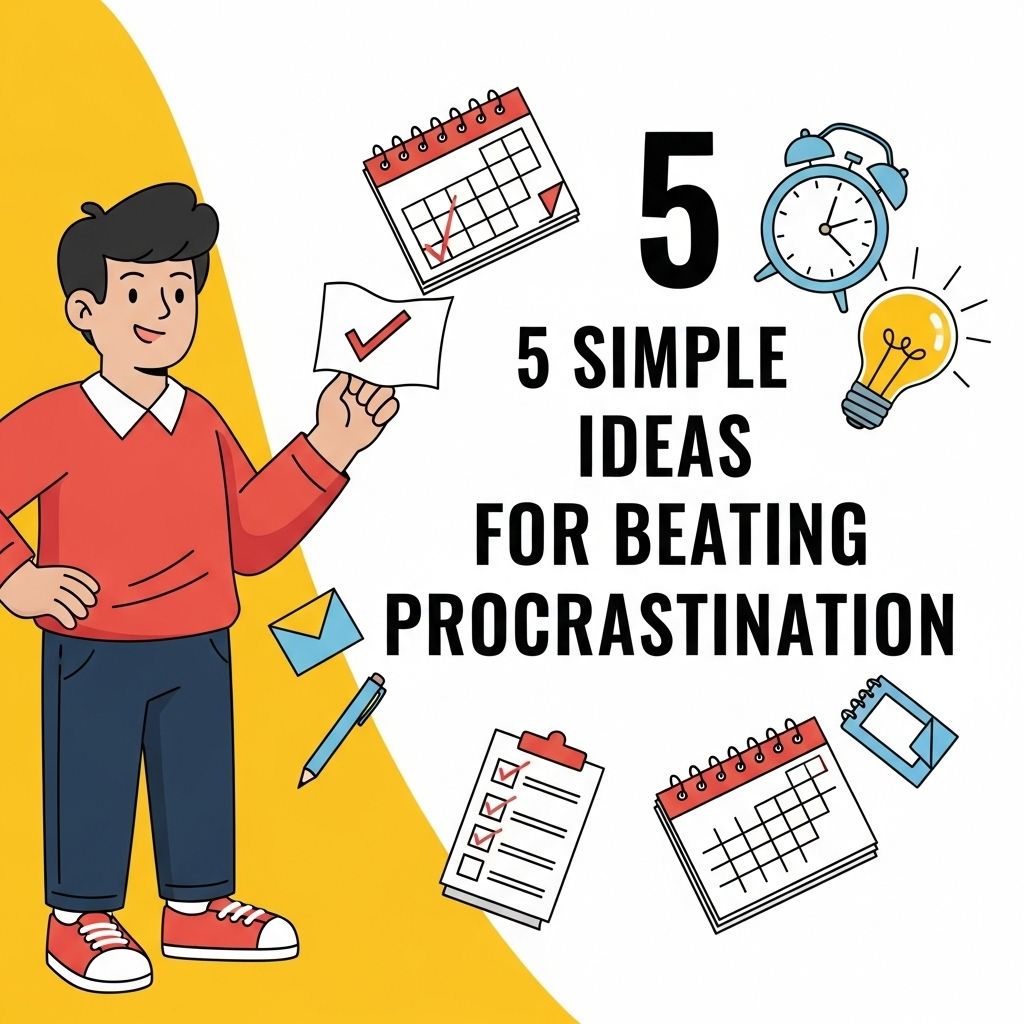
5 Playful (But Powerful) Ways to Outsmart Procrastination
Ready to turn the tables on procrastination? These strategies aren’t just effective—they’re fun. Think of them as cheat codes for your brain.
1. The “5-Minute Rule”: Trick Your Brain into Starting
Procrastination thrives on the illusion of effort. The moment a task feels overwhelming, your brain hits the panic button. The solution? Convince it that the task is tiny. Commit to just five minutes. Set a timer. Write one sentence. Open your textbook. More often than not, you’ll keep going once you’ve started. Why? Because momentum is a procrastination-killer.
Bonus hack: Pair the task with something enjoyable. Listen to your favorite playlist while studying, or reward yourself with a piece of chocolate after those five minutes. Your brain will associate work with pleasure—and suddenly, procrastination loses its grip.
2. The “Future You” Intervention: Make It Personal
Procrastination is easier when you’re thinking in abstract terms (“I’ll do it later”). So, make it concrete. Ask yourself: What will Future You regret not doing today? Visualize the stress of last-minute cramming, the missed deadlines, the guilt. Now, flip the script: What will Future You thank Present You for?
Write a letter from Future You, thanking Present You for starting early. Or use a vision board to remind yourself why you’re hustling. When you connect your actions to your future self, procrastination loses its power.
3. The “Body Doubling” Hack: Turn Work into a Social Affair
Humans are social creatures, and sometimes, the presence of others—even virtually—can boost productivity. Enter body doubling: study or work alongside a friend (in person or via video call), or join a virtual study group. The accountability alone can reduce the urge to procrastinate.
No one around? Try apps like Focusmate, which pairs you with a random accountability partner for a 50-minute work session. Knowing someone is waiting for you to show up can be the nudge you need.
4. The “Ugly First Draft” Method: Embrace Imperfection
Perfectionism is procrastination in disguise. If you’re waiting for the “perfect” moment to start, you’ll be waiting forever. Instead, give yourself permission to create a terrible first draft. No editing. No overthinking. Just get the ideas out of your head and onto the page.
This works because it removes the pressure to be flawless. Once you have something—anything—on paper, editing becomes easier. And often, your “ugly” draft will surprise you with hidden gems.
5. The “Two-Minute Escape” for Urgent Tasks
When a deadline looms and panic sets in, procrastination can feel like the only escape. But here’s a trick: Instead of avoiding the task, give yourself a two-minute escape hatch. Set a timer for two minutes and work on the task only for that time. No more, no less.
Often, you’ll find that once you’ve started, you’ll keep going. But if not, at least you’ve made progress. The key is to make the escape route so small that your brain doesn’t resist.
—
The Procrastination-Proof Study Plan: Design Your Ideal Routine
Now that you’ve got the tools to outsmart procrastination, it’s time to build a system that keeps it at bay. A routine isn’t about rigid schedules—it’s about creating habits that align with your natural rhythms and energy levels.
Step 1: Audit Your Energy
Are you a morning lark or a night owl? Track your energy levels for a week. When do you feel most alert? Use those peak hours for your hardest tasks. Save mindless chores (like organizing notes) for low-energy times.
Step 2: Batch Your Tasks
Multitasking is a myth—your brain can’t focus on two things at once. Instead, group similar tasks together. For example:
- Deep Work: Writing, problem-solving, or studying complex material.
- Shallow Work: Reading emails, organizing files, or reviewing flashcards.
- Admin: Scheduling, planning, or errands.
This prevents decision fatigue and keeps your focus sharp.
Step 3: Use the “Eat the Frog” Technique
Mark Twain once said, “Eat a live frog first thing in the morning, and nothing worse will happen to you the rest of the day.” In modern terms: tackle your hardest task first. Once it’s done, everything else feels easier.
Pro tip: Pair your “frog” with a reward. After finishing, treat yourself to a walk, a favorite snack, or an episode of your favorite show. Your brain will start associating hard work with positive outcomes.
Step 4: Schedule Breaks (Yes, Really)
Burnout is a procrastination trigger. The Pomodoro Technique—25 minutes of work, followed by a 5-minute break—works wonders. Use breaks to stretch, hydrate, or do something unrelated to work. This resets your focus and prevents mental fatigue.
—
When Procrastination Becomes a Habit: Breaking the Cycle
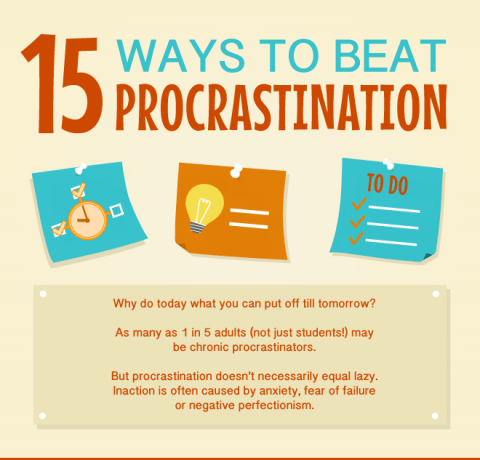
What if you’ve tried everything, and procrastination still feels like an unshakable habit? That’s okay. Habits aren’t broken overnight—they’re rewired. Here’s how to chip away at them:
1. Identify Your Triggers
Procrastination isn’t random. It’s often tied to specific emotions or situations. Do you avoid tasks when you’re stressed? Bored? Overwhelmed? Keep a procrastination journal for a week. Note when, where, and why you procrastinate. You’ll start seeing patterns—and once you recognize them, you can disrupt them.
2. Replace, Don’t Just Resist
Willpower is a finite resource. Instead of white-knuckling your way through a task, replace the procrastination habit with a better one. For example:
- Instead of scrolling when bored → Open your textbook.
- Instead of cleaning when overwhelmed → Write one sentence of your essay.
- Instead of napping when tired → Take a 10-minute walk to recharge.
Small swaps add up.
3. Forgive Yourself (Yes, Really)
Guilt is a procrastination amplifier. If you’ve fallen off the wagon, don’t beat yourself up. Studies show that self-compassion—rather than self-criticism—leads to better long-term results. Acknowledge the slip-up, then refocus. Progress isn’t linear.
4. Seek Accountability
Sometimes, you need an external push. Share your goals with a friend, join a study group, or hire a tutor. Accountability partners can provide the gentle (or not-so-gentle) nudge you need to stay on track.
—
The Big Picture: Why Beating Procrastination Is About More Than Grades
At its core, procrastination isn’t just about avoiding work—it’s about avoiding discomfort. But here’s the truth: growth happens outside your comfort zone. Every time you choose to start early, to push through resistance, or to outsmart your brain’s lazy tendencies, you’re building resilience, discipline, and confidence.
Procrastination will always be there, lurking in the background like a mischievous gremlin. But now you’ve got the tools to keep it in check. So go ahead—start that project today. Write that first draft. Take the first step. Your future self will thank you.
And who knows? You might even discover that the best reward isn’t just the finished task—it’s the pride of knowing you outsmarted the gremlin.
Leave a comment