


Are You the Pickpocket of Your Own Potential?
Imagine, if you will, a grand, invisible faucet attached to the back of your head. With every email you check at 10 p.m., with every half-hearted sandwich you inhale over a keyboard, with every time you say “yes” when every fiber of your being screams “no”—that faucet drips. It doesn’t gush; a deluge would be too obvious. Instead, it leaks a steady, maddening trickle of your most precious resource: your cognitive energy. You wake up, you feel the tank is full, and yet by 11 a.m., you are running on fumes, wondering if someone has secretly picked the lock of your motivation. The challenge is not about finding more hours in the day; it is about plugging the holes in the bucket. The question is not *if* you are bleeding energy, but how many of these silent drains you are currently ignoring.
The science of productivity has long moved past the simple “work harder” mantra. Neuroscience tells us that willpower and focus are finite, depletable supplies. The modern workplace, however, treats them as though they are infinite. The result is a chronic state of low-grade exhaustion that feels normal because everyone around you is suffering from the same leak. We do not notice the drip because we are swimming in the puddle. To reclaim your output, you must first become a ruthless detective of your own habits. You must identify the specific, often laughably mundane, mistakes that are siphoning your power.
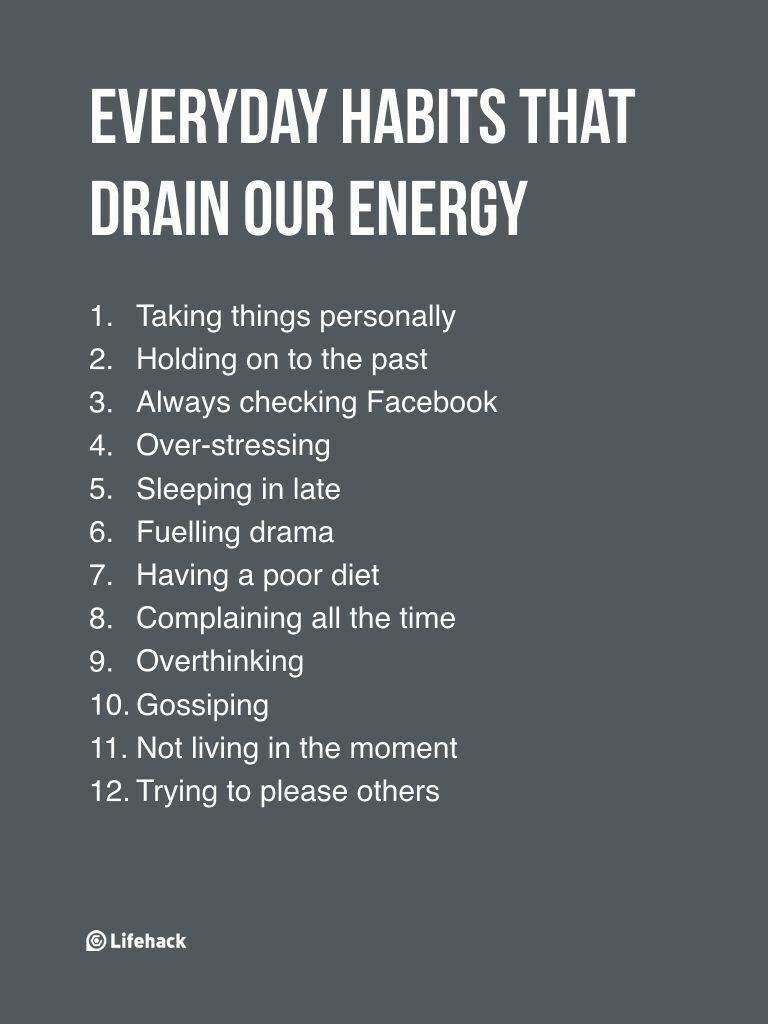
The Tyranny of the “Quick Check”
The first and most insidious mistake is the “quick check.” You tell yourself you are just going to glance at your inbox for a second. You are not starting a task; you are just “looking.” This is a lie your brain tells you to avoid the discomfort of deep work. Every time you toggle to Slack, Twitter, or an email notification, you are performing a “context switch.” Research suggests that after a distraction, it can take over twenty minutes to return to full cognitive flow. You are not losing ten seconds; you are losing twenty minutes. Multiply that by the dozen “quick checks” you perform daily, and you have vaporized two to three hours of prime thinking time. The fix is brutally simple: batch your digital interactions. Set specific times for email and messaging (e.g., 10 a.m., 1 p.m., 4 p.m.). Let the world wait. The world will survive. Your deep focus, however, will not.
The Myth of the “Lunch Hustle”
There is a peculiar pride in eating lunch at your desk. It feels like a badge of honor, a sign of dedication. In reality, it is an admission that you do not understand the biology of your own brain. Your prefrontal cortex—the CEO of your brain responsible for decision-making and impulse control—runs on glucose. When you eat a sad sandwich while scanning a spreadsheet, you are not refueling. You are adding cognitive load. Your brain is splitting its limited blood supply between digestion and analysis. The result? Poor digestion *and* poor analysis. You feel sluggish by 2 p.m. not because you ate, but because you refused to take a mental recess.
The energy mistake here is treating your body like a machine that can run perpetually on willpower alone. A true reset requires a physical break. Step away. Walk outside for ten minutes. Look at a tree. Let your brain enter its “default mode network”—the state where creativity and problem-solving occur subconsciously. This is not laziness; it is maintenance. As the adage goes, a dull axe is nothing to brag about, no matter how fast you swing it. The break is the whetstone.

The Decision Fatigue Trap
Every single choice you make, no matter how small, depletes a tiny bit of your decision-making fuel. Should I wear the blue shirt or the grey one? Should I answer this email now or later? Should I start this report or organize my files? By the time you arrive at a critical business decision, your tank is on reserve. This is why you will often make amazing, strategic decisions in the morning, and terrible, impulsive ones by evening. The mistake is believing that you have infinite decision-making capacity.
The solution is to ruthlessly automate the trivial. Wear a uniform (even if it is just a consistent color palette). Use a template for your daily schedule. Set a rule: the first ninety minutes of your day are for your most important, non-negotiable task. Do not decide *what* to do when you sit down; decide the night before. By removing the small choices, you preserve your cognitive horsepower for the ones that actually matter. You stop spending a dollar to make a dime.
The Fog of Emotional Contagion
You might not realize it, but your environment is a vampire. Specifically, the emotional state of the people around you is contagious. A quick chat with a chronically negative colleague, a passive-aggressive email, or a tense meeting can trigger your amygdala into a state of low-grade threat response. Your body floods with cortisol, the stress hormone. When cortisol is high, your ability to think clearly and feel energetic plummets. You confuse this hormonal dump with “mental fatigue.”
To combat this, you must curate your input. This is not about being antisocial; it is about being strategic. Set a “no negative chatter” rule for the first hour of your day. Protect your mental sanctuary. If a conversation feels draining before it even starts, gracefully excuse yourself. You are not responsible for everyone else’s emotional state. You are, however, responsible for your own energy budget. Treat it like the finite capital that it is.

Reclaiming the Tap
The ultimate mistake is believing that energy is a static thing that happens *to* you. It is not. It is a dynamic, maliable resource that you manage. You are not a victim of your 3 p.m. slump. You are the architect of it. By eliminating the “quick check,” taking a real lunch, automating decisions, and guarding your emotional space, you stop leaking. The faucet slows. The tank refills. You get back not more time, but meaningful, *usable* time. The energy that was once draining onto the floor is now powering the work that actually moves the needle. So, the next time you feel that familiar fog rolling in, stop and ask: Which drain did I just open? Then, walk over and turn it off.
Leave a comment