


In the bustling corridors of academia, where the clatter of lockers and the hum of young voices create a symphony of learning, there exists a silent struggle. Beneath the polished exteriors of report cards and extracurricular accolades, students grapple with a complex tapestry of emotions, pressures, and unspoken challenges. The traditional metrics of success—grades, attendance, participation—often fail to capture the nuanced landscape of a student’s well-being. What if there were a tool to bridge this gap? A simple, yet profound, mechanism to peel back the layers of a student’s daily experience, revealing insights that could transform their educational journey? Enter the student well-being check-in form, a deceptively straightforward resource that promises to revolutionize how we perceive and nurture the holistic growth of our learners.
Imagine a world where educators no longer rely solely on intuition or sporadic observations to gauge a student’s emotional state. Picture a classroom where every child feels seen—not just for their academic prowess, but for their struggles, their triumphs, and their unspoken needs. This is not a utopian fantasy; it is the tangible potential of well-being check-in forms. These tools are more than just paperwork. They are lifelines, gateways to deeper connections, and catalysts for meaningful change. By integrating them into the fabric of daily school life, we unlock the power to address issues before they escalate, foster resilience, and cultivate an environment where every student can thrive.
But how do these forms work their magic? What makes them so transformative? The answer lies in their simplicity and their depth. At their core, well-being check-in forms are a blend of art and science—a carefully crafted blend of open-ended questions, emoji-based scales, and thoughtful prompts designed to elicit honest reflection. They are not interrogations; they are invitations. Invitations for students to articulate their feelings, identify their stressors, and communicate their needs in a safe, structured space. For educators, these forms serve as a compass, guiding them toward interventions that are timely, targeted, and empathetic. For parents, they offer a window into their child’s emotional world, fostering collaboration and understanding. And for students themselves, they provide a voice—a tool to advocate for their own well-being in a system that often prioritizes performance over presence.
The Silent Epidemic: Why Well-Being Check-Ins Are Non-Negotiable
Consider the staggering statistics: one in five adolescents experiences a mental health disorder, yet fewer than half receive the support they need. The reasons are manifold—stigma, lack of resources, and the pervasive myth that resilience means enduring silence. Schools, often the first line of defense, are uniquely positioned to address this crisis. Yet, traditional systems are ill-equipped to handle the subtleties of emotional distress. Grades can’t measure anxiety. Attendance records can’t capture burnout. And report cards? They’re silent on the sleepless nights, the social isolation, or the crushing weight of perfectionism.
Well-being check-in forms shatter this silence. They transform vague concerns into actionable data. A student who consistently marks “feeling overwhelmed” on a Monday morning might be signaling a need for academic support or a conversation about workload. Another who selects “lonely” on a Friday afternoon could be hinting at social struggles that, if unaddressed, might fester into deeper issues. These forms don’t just quantify emotions; they humanize them. They remind us that behind every statistic is a story—a student who is more than their struggles, more than their successes, and deserving of a system that sees them in full.
Moreover, these tools democratize well-being. They ensure that no student’s voice is drowned out by the noise of a crowded classroom or the pressure to conform. Whether a student is a straight-A achiever or a quiet observer, their emotional state is given equal weight. This inclusivity is revolutionary. It dismantles the hierarchy of suffering, where some struggles are deemed “worthy” of attention while others are dismissed as mere “teenage drama.” In doing so, well-being check-ins foster a culture of empathy, where every student’s experience is validated and addressed with the urgency it deserves.
Designing the Perfect Check-In: A Blueprint for Impact
The magic of a well-being check-in form lies in its design. It is not a one-size-fits-all document but a dynamic tool, tailored to the unique needs of its users. The most effective forms strike a delicate balance between structure and flexibility, ensuring that they are both easy to complete and rich in insight. Let’s dissect the elements that make these forms so powerful.
Visual Cues: The Language of Emotions
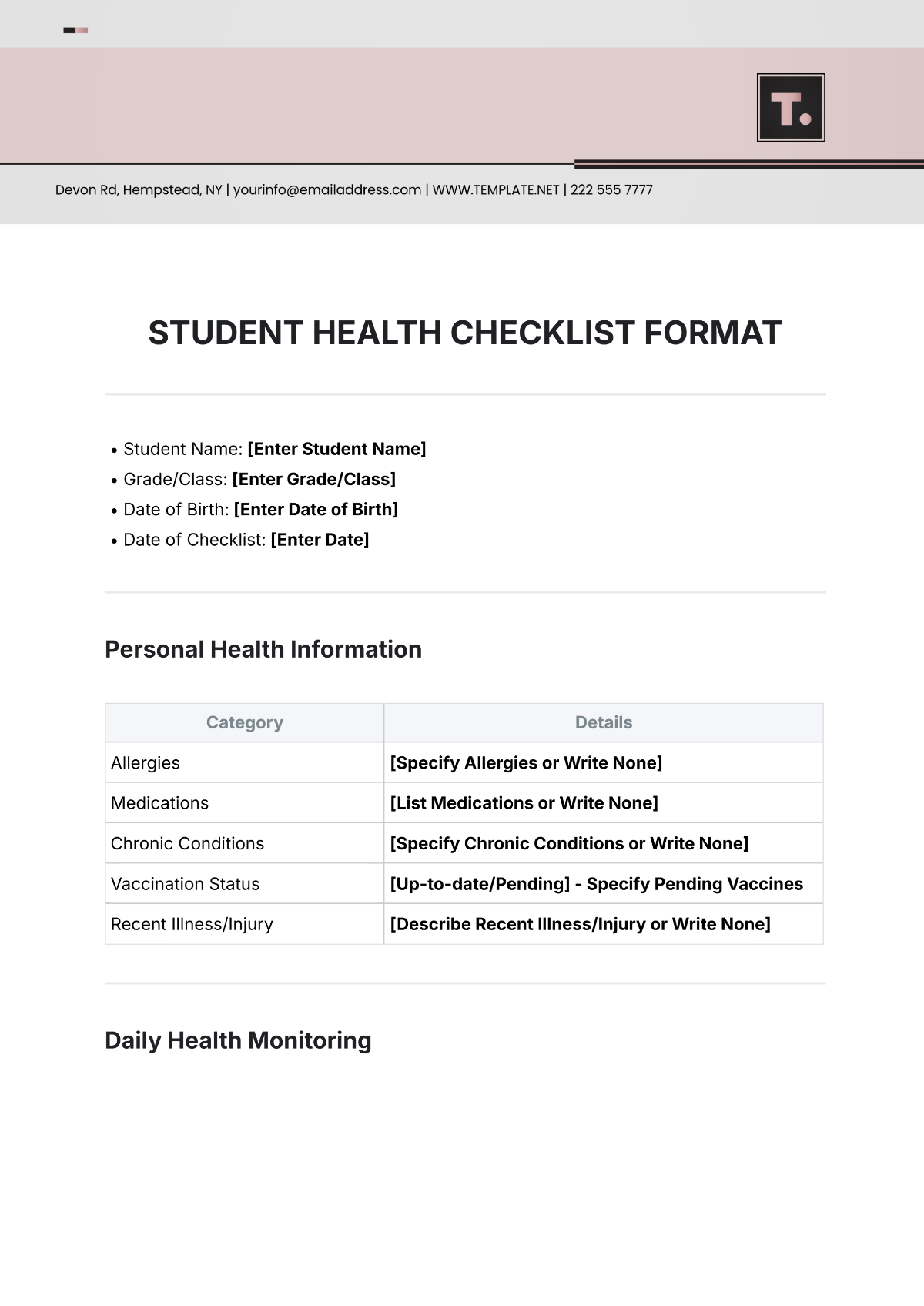
Words can be limiting, especially for students who struggle to articulate their feelings. This is where visual cues come into play. Emoji scales, color gradients, and mood trackers transform abstract emotions into tangible, relatable concepts. A student might not know how to describe their anxiety, but they can easily select a frowning face or a red “stressed” button. These visuals serve as a bridge between confusion and clarity, allowing students to communicate their state of mind at a glance.
Open-Ended Prompts: The Power of Narrative
While visuals capture the immediate, open-ended questions delve into the why. Prompts like “What’s one thing that made you smile today?” or “Is there something weighing on your mind?” invite students to share their stories. These questions are not just about gathering data; they are about fostering self-reflection. They encourage students to pause, assess, and articulate their experiences, a practice that builds emotional intelligence and resilience. For educators, the responses provide a roadmap for personalized support, whether it’s a pep talk, a referral to counseling, or a simple acknowledgment of their feelings.
Frequency and Timing: The Rhythm of Reflection
The cadence of check-ins is crucial. Daily or weekly forms ensure that emotions are tracked in real-time, preventing minor issues from snowballing into crises. However, the timing must be thoughtful. A form administered at the start of the day might reveal morning anxieties, while an end-of-week check-in could highlight cumulative stressors. Schools can experiment with different frequencies—perhaps a quick mood scale on Mondays and a deeper reflection on Fridays—to capture the ebb and flow of student well-being. Consistency is key, but rigidity is not. The goal is to create a rhythm that feels natural, not punitive.
Accessibility and Inclusivity: Breaking Down Barriers
A well-designed check-in form is accessible to all students, regardless of their language proficiency, cognitive abilities, or cultural background. This means offering multilingual options, using simple language, and providing alternative formats like audio recordings or tactile responses for students with disabilities. It also means being mindful of cultural nuances—what one student considers “stressed” might mean something entirely different to another. Inclusivity isn’t just a checkbox; it’s a commitment to ensuring that every student, no matter their circumstances, feels seen and heard.
From Data to Action: Turning Insights into Impact
Collecting well-being data is only half the battle. The true power of these forms lies in how the insights are used. Data without action is noise; data with purpose is transformation. Here’s how schools can leverage check-in forms to create meaningful change.
Early Intervention: Nipping Issues in the Bud
The most compelling advantage of well-being check-ins is their ability to flag issues before they escalate. A student who consistently reports feeling “anxious” or “sad” can be connected with a counselor, a mentor, or a peer support group before their struggles impact their academic performance or social relationships. Early intervention doesn’t just prevent crises; it builds resilience. It teaches students that their well-being matters and that asking for help is a sign of strength, not weakness.
Personalized Support: Meeting Students Where They Are
No two students are alike, and neither are their needs. Well-being data allows educators to tailor their support strategies. A student struggling with time management might benefit from a planner workshop, while another dealing with social isolation could thrive in a collaborative group project. For students with diagnosed mental health conditions, check-in forms can serve as a communication tool between school and home, ensuring that accommodations are consistently implemented. This personalized approach shifts the focus from a one-size-fits-all education system to one that celebrates individuality and meets students where they are.
Fostering a Culture of Openness
When well-being check-ins become a routine part of school life, they normalize conversations about mental health. Students begin to see that their emotions are not taboo subjects but valid aspects of their identity. This cultural shift is profound. It dismantles the stigma surrounding mental health, encourages peer support, and empowers students to advocate for their own needs. In classrooms where check-ins are the norm, students are more likely to reach out to trusted adults, form support networks, and develop healthy coping mechanisms. They learn that well-being is not a luxury; it is a fundamental right.
Data-Driven Decision Making
On a macro level, well-being data can inform school-wide policies and initiatives. If multiple students report feeling “unsupported” in a particular subject, it might signal a need for teacher training or curriculum adjustments. If a significant number of students express feelings of loneliness, it could prompt the creation of social-emotional learning programs or mentorship opportunities. This data-driven approach ensures that resources are allocated where they are needed most, creating a school environment that is not just academically rigorous but emotionally nurturing.
Overcoming Challenges: The Road to Implementation
Of course, integrating well-being check-ins into a school’s routine is not without its hurdles. Resistance to change, lack of training, and concerns about privacy are just a few of the obstacles educators might face. But these challenges are not insurmountable. With thoughtful planning and a commitment to student-centered practices, schools can navigate these roadblocks and unlock the full potential of well-being check-ins.
Addressing Privacy and Trust
Students must feel confident that their responses will be handled with care and confidentiality. Schools can address this by clearly communicating how data will be used, who will have access to it, and how their privacy will be protected. Anonymizing responses where possible and involving students in the design of the forms can also build trust. When students know that their honesty won’t lead to judgment or punishment, they are more likely to engage authentically.
Training Educators and Staff
Well-being check-ins are only as effective as the adults who interpret and act on the data. Teachers, counselors, and administrators need training to recognize signs of distress, respond with empathy, and connect students with appropriate resources. This training should go beyond surface-level awareness, delving into topics like trauma-informed care, cultural competency, and de-escalation techniques. When educators are equipped with the skills to support students’ emotional needs, the impact of check-ins is magnified.
Balancing Structure and Flexibility
While consistency is important, schools must also allow room for adaptation. Not every student will engage with the same prompts or respond to the same interventions. Schools should regularly review the effectiveness of their check-in forms, gathering feedback from students and staff to refine the process. This iterative approach ensures that the tools remain relevant and impactful, evolving alongside the needs of the school community.
The Ripple Effect: How Well-Being Check-Ins Transform Lives
The true magic of well-being check-ins lies in their ripple effect. When a student feels seen, their confidence soars. When an educator gains insight into a student’s struggles, their teaching becomes more compassionate. When a school prioritizes emotional well-being, its culture shifts from one of performance to one of growth. These changes don’t just benefit individual students; they transform entire communities.
Consider the student who, for the first time, voices their anxiety about an upcoming exam. With the support of a counselor and a modified study plan, they not only pass the test but also discover a newfound sense of agency. Or the quiet student who, through a check-in form, reveals their struggle with bullying, leading to interventions that foster a safer school environment. These are not isolated incidents; they are the building blocks of a more empathetic, resilient, and connected world.
Well-being check-ins remind us that education is not just about filling minds with knowledge but about nurturing hearts with understanding. They challenge the notion that success is measured solely by grades or accolades, instead championing a holistic definition of achievement—one that includes emotional intelligence, self-awareness, and the courage to ask for help. In a world where students are often told to “toughen up” or “push through,” these forms offer a radical alternative: a system that listens, that cares, and that acts.
So, as you reflect on the potential of well-being check-ins, ask yourself this: What if the key to unlocking every student’s potential has been hiding in plain sight all along? What if the solution to the silent struggles in our schools is not more resources or stricter policies, but a simple, consistent, and compassionate tool? The answer is within reach. All it takes is the courage to listen—and the willingness to act.
Leave a comment