


Generative AI is quietly reshaping the way we approach agriculture, turning what was once a guessing game into a precision science. Farmers have long relied on intuition and experience to predict crop yields, but the margin for error has always been wide. Seasons shift unpredictably. Pests emerge without warning. Soil, once a reliable partner, now behaves like a capricious ally. Yet beneath this uncertainty lies a deeper truth: the data needed to forecast yields has always existed—buried in weather patterns, soil chemistry, satellite imagery, and historical harvests. What was missing was the ability to extract meaning from that chaos. That’s where generative AI steps in, not just as a tool, but as a transformative force rewriting the rules of agricultural prediction.
Imagine a world where every seed planted carries the potential for maximum yield, where droughts and floods are anticipated months in advance, and where the soil itself whispers its secrets to those who know how to listen. This isn’t science fiction. It’s the promise of generative AI—a technology that doesn’t just analyze data, but creates new possibilities from it. By simulating countless scenarios, it allows farmers to test strategies before ever stepping into the field. It turns uncertainty into opportunity, and guesswork into strategy. The result? Higher yields, lower costs, and a farming future that’s not just sustainable, but thriving.
The Hidden Language of Soil and Sky
At the heart of generative AI’s power is its ability to decode the silent conversations happening beneath our feet and above our heads. Soil isn’t just dirt—it’s a living archive of microbial activity, mineral composition, and moisture retention. Weather isn’t just temperature and rain—it’s a dynamic system of pressure gradients, solar radiation, and atmospheric currents. Generative AI doesn’t just observe these elements; it learns their dialects. Through deep learning models trained on decades of agricultural data, it begins to understand how a slight dip in soil pH today might trigger a fungal outbreak in three weeks, or how a subtle shift in wind patterns could delay pollination by a critical day.
This isn’t about correlation anymore. It’s about causation. Generative AI doesn’t just say, “Fields with high nitrogen tend to yield more.” It says, “If soil nitrogen drops below 0.3% during the vegetative stage, and humidity exceeds 75%, then the risk of aphid infestation rises by 42% within 10 days—unless treated with neem extract within 72 hours.” That level of precision transforms farming from reactive to proactive. It turns farmers from observers into orchestrators of their own destiny.
From Data Lakes to Digital Twins
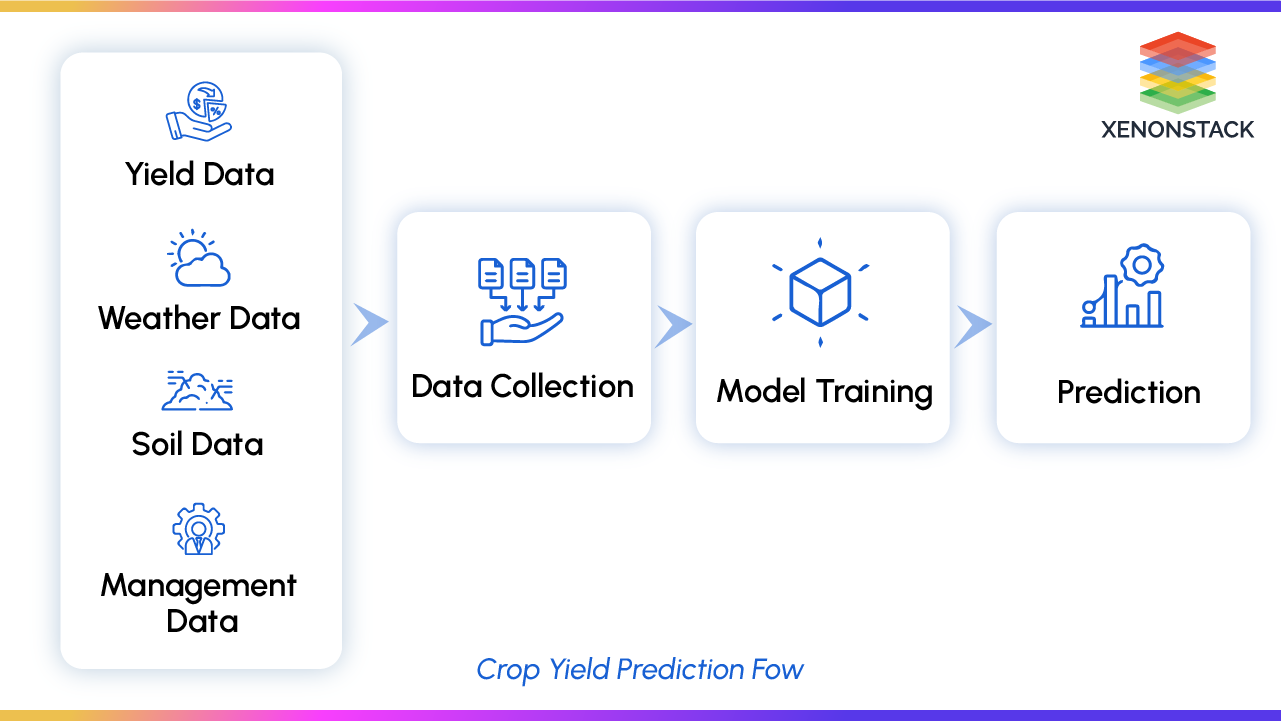
The journey from raw data to predictive insight begins in what’s known as a data lake—a vast, unstructured reservoir of information collected from drones, IoT sensors, satellite feeds, and farm management systems. But data alone is like seeds in a bag: inert, unorganized, full of potential but useless until planted. Generative AI acts as the cultivator. It ingests this data, cleans it, structures it, and then—most importantly—generates synthetic data to fill gaps where real data is missing or incomplete.
This is where the magic happens. Generative models, particularly those based on diffusion or transformer architectures, can create realistic simulations of crop growth under conditions that have never occurred before. Need to know how a new hybrid wheat variety will perform in a climate that’s 2°C warmer? Generative AI can simulate decades of growth in seconds. Want to test the impact of a late-season frost on a mango orchard? It can generate thousands of virtual frost events and model their effects on yield, fruit quality, and tree health.
These simulations are then used to build digital twins—virtual replicas of entire farms or regions. A digital twin isn’t just a map. It’s a living model that evolves in real time, integrating new data as it arrives. It allows farmers to run “what-if” scenarios: What if I delay planting by two weeks? What if I switch to drip irrigation? What if a heatwave hits during flowering? The answers aren’t hypothetical. They’re data-driven forecasts with measurable probabilities.
The Alchemy of Multimodal Learning
Generative AI doesn’t just work with numbers—it thrives on diversity. It ingests images from multispectral drones that detect chlorophyll levels in leaves. It processes hyperspectral satellite data that reveals soil moisture and nutrient deficiencies. It listens to acoustic sensors that pick up the subtle vibrations of pest activity in crops. It even incorporates farmer notes, weather station logs, and market price trends. This multimodal approach is like giving the AI a full sensory experience of the farm.
Consider the case of a vineyard owner trying to predict grape yield. Traditional methods rely on visual inspection and historical averages. But generative AI can combine drone imagery showing canopy density, soil moisture maps from satellites, weather forecasts predicting heat stress, and even social media chatter about regional pest outbreaks. It then generates a probabilistic yield map that highlights not just expected output, but also the confidence level of that prediction. Areas with high uncertainty might be flagged for additional monitoring or early intervention.
This isn’t just prediction—it’s prescriptive intelligence. It doesn’t just tell you what will happen. It tells you what to do about it.
Ethics, Equity, and the Future of Farming
Yet for all its promise, generative AI in agriculture raises critical questions. Who owns the data? How do smallholder farmers access these tools without being locked into expensive proprietary systems? Can AI models trained in temperate climates accurately predict outcomes in tropical regions? These aren’t technical challenges—they’re ethical ones.
The democratization of AI in farming is essential. Open-source models, community-driven data sharing, and government-supported digital infrastructure can ensure that the benefits of generative AI aren’t confined to large agribusinesses. The goal isn’t to replace farmers with algorithms, but to empower them with insights that were once the domain of fortune tellers and elders. The future of farming isn’t about machines taking over—it’s about humans making smarter decisions, faster, and with greater confidence.
The Unseen Harvest
What’s truly fascinating about generative AI in agriculture isn’t just its accuracy or speed—it’s the way it reveals the hidden connections in nature. It shows us that a drought in one continent can affect grain prices globally. It reveals how soil biodiversity influences pest resistance. It uncovers the delicate balance between water use and crop quality. In doing so, it doesn’t just predict yields—it deepens our understanding of the earth itself.
We’re entering an era where farming is no longer a gamble against nature, but a collaboration with it. Generative AI is the translator in this partnership, turning the whispers of the soil and sky into actionable wisdom. The fields of tomorrow won’t be tilled by hands alone—they’ll be co-cultivated by human intuition and machine intelligence, each enhancing the other.
And perhaps, in this new age of agricultural enlightenment, we’ll finally learn to listen—not just to the weather forecast, but to the earth itself.
Leave a comment