


The Unseen Engine of Efficient Work
There is a peculiar magnetism to leaders who seem to know exactly where they are going. We observe their teams moving with an uncanny synchronicity, a collective hum of purpose that makes the typical workplace chaos seem almost primitive. The common observation is that such teams are simply more productive, but the deeper reason for our fascination lies in the subtle mechanics of how that productivity is achieved. It is not merely about working harder; it is about the elimination of cognitive friction. When a leader possesses and communicates a compelling vision, they effectively install a silent operating system within the organization—one that prioritizes decisions, reduces debate, and energizes action without constant managerial oversight.
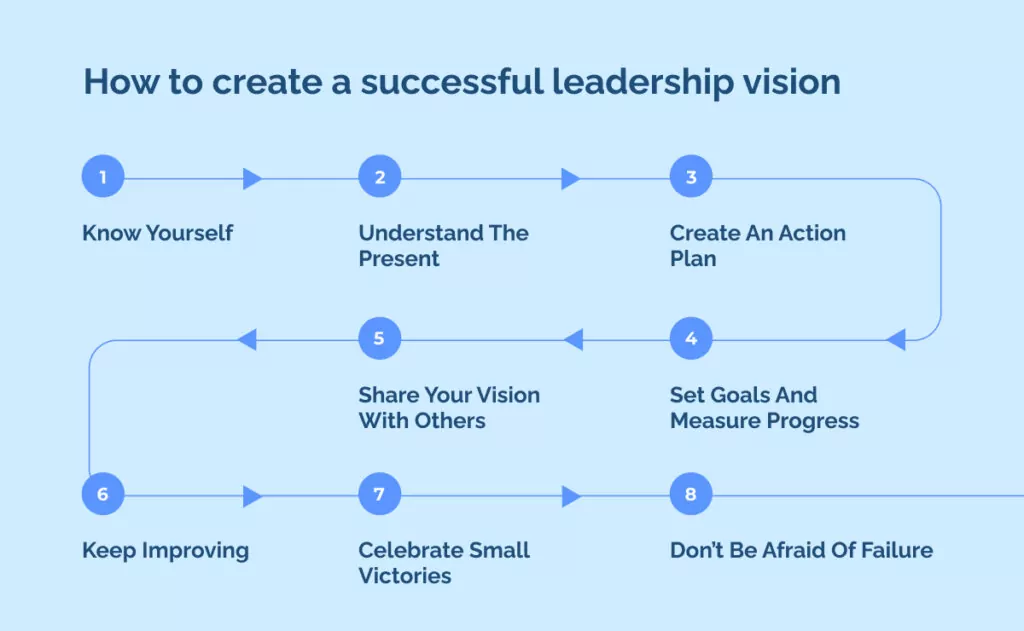
Decision Velocity: The Clarity Dividend
The most immediate benefit of vision-driven leadership is a dramatic increase in decision velocity. In organizations where the “why” is murky, every choice becomes a mini-crisis. Teams must escalate, speculate, and negotiate, burning hours on questions that a clear vision would answer in seconds. A well-articulated vision acts as a decision-making heuristic. When an employee knows the long-term destination—be it becoming the most sustainable manufacturer or the most empathetic service provider—they can instantly filter options. This does not just save time; it saves mental energy. The brain’s executive function, which is famously finite, is preserved for creative problem-solving rather than administrative dithering. The result is a workforce that moves with the precision of a seasoned crew, where the first mate does not need to ask the captain which way the wind is blowing.
Intrinsic Motivation: The Fuel of Sustained Output
Productivity metrics often focus on external motivators—bonuses, deadlines, and surveillance. Yet these tools frequently yield diminishing returns, generating compliance rather than commitment. Vision-driven leadership taps into a far more potent fuel: intrinsic motivation. When a leader paints a vivid picture of a future that matters, work ceases to be a transaction and becomes a mission. This transformation has profound productivity implications. A person who believes their daily data entry is contributing to curing a disease will produce work of a different quality than someone who sees it as a paycheck. The vision bridges the gap between the mundane task and the magnificent outcome, reducing the psychological cost of effort. Studies in organizational psychology confirm that autonomous motivation correlates with deeper information processing and higher creativity—both critical for complex, knowledge-based work.
Strategic Alignment: The Unity of Effort
Perhaps the most pernicious drain on productivity is misalignment. When different departments pursue conflicting priorities, the organization becomes a system of friction, where energy is lost to internal competition and redundant work. A vision-driven leadership model acts as a universal translator. It ensures that the marketing team’s campaign, the engineering team’s roadmap, and the sales team’s targets all orbit the same gravitational center. This alignment eliminates the “silos” that plague modern enterprises. Instead of spending weeks negotiating handoffs, teams can autonomously coordinate around a shared understanding of the goal. The productivity gain here is not additive; it is exponential. By removing the drag of interdepartmental conflict, the organization can focus its full weight on external challenges rather than internal ones.

Resilience and the Logic of Persistence
Every productive endeavor encounters obstacles. The difference between a team that stalls and one that persists often comes down to the presence of a compelling vision. Vision-driven leadership provides a unique form of productivity insurance: resilience. When the immediate payoff is uncertain, or when a project hits a wall, the vision acts as a cognitive anchor. It answers the question, “Why are we still doing this?” without requiring a pep talk. This prevents the costly cycle of starting and stopping, of pivoting without reason, of abandoning projects just before they yield results. The vision gives workers a framework for interpreting failure as feedback rather than as a signal to quit. The productivity saved by maintaining momentum through difficult periods is often the difference between market leadership and obsolescence.
Reducing the Tax of Ambiguity
Ambiguity is a hidden tax on productivity that few organizations measure. It manifests as rework, misunderstandings, and the quiet anxiety of not knowing if one is doing the right thing. Vision-driven leadership removes this tax. When a leader consistently communicates a clear, vivid vision, they are essentially providing a map of the terrain. Employees spend less time trying to guess what is expected and more time executing. The psychological safety that arises from this clarity is not just a feel-good metric; it is a direct productivity driver. Nervous brains are inefficient brains. By answering the fundamental question of “where are we going,” the leader frees up neural bandwidth for the work itself. The result is a team that works with a quiet confidence, an efficiency that comes from knowing exactly which hill to take.

The Compound Effect of Collective Purpose
Ultimately, the productivity benefits of vision-driven leadership compound over time. A team that operates with a shared vision develops a unique fluency. They anticipate each other’s moves, innovate within clear boundaries, and require less explicit instruction with each passing month. This is the deep reason we are fascinated by such leaders: they do not merely manage tasks; they architect a system where productivity becomes an emergent property of purpose. The quantitative output—the revenue, the speed, the market share—is simply the surface wave. The true engine is the qualitative transformation of work from a series of burdens into a coherent narrative. When a leader masters this, the productivity is not forced; it flows. And that is the most efficient form of work there is.
Leave a comment