


In a world where algorithms hum with eerie precision and machines learn faster than we can blink, one question lingers like a ghost in the server room: What happens when the managers become the managed? The rise of artificial intelligence isn’t just reshaping the workforce—it’s redefining leadership itself. But here’s the twist: the most effective AI managers aren’t the ones replacing humans. They’re the ones empowering them. So, how do you lead in an era where your team might include both flesh-and-blood professionals and silicon-based prodigies? The answer lies not in outsmarting the machines, but in mastering the power skills that make humans indispensable—skills that no algorithm can replicate.
Imagine walking into a boardroom where the CEO is a sleek, chrome-plated AI assistant, its voice a soothing baritone synthesized from a thousand corporate podcasts. It presents a quarterly report with the precision of a Swiss watch, its recommendations backed by data that would take a human analyst weeks to compile. The room falls silent. The humans exchange glances. The AI waits, patient as a glacier. Now, ask yourself: Would you trust this AI to lead your team—or would you trust a human who knows how to inspire, adapt, and connect? The future of management isn’t about being the smartest entity in the room. It’s about being the most human.
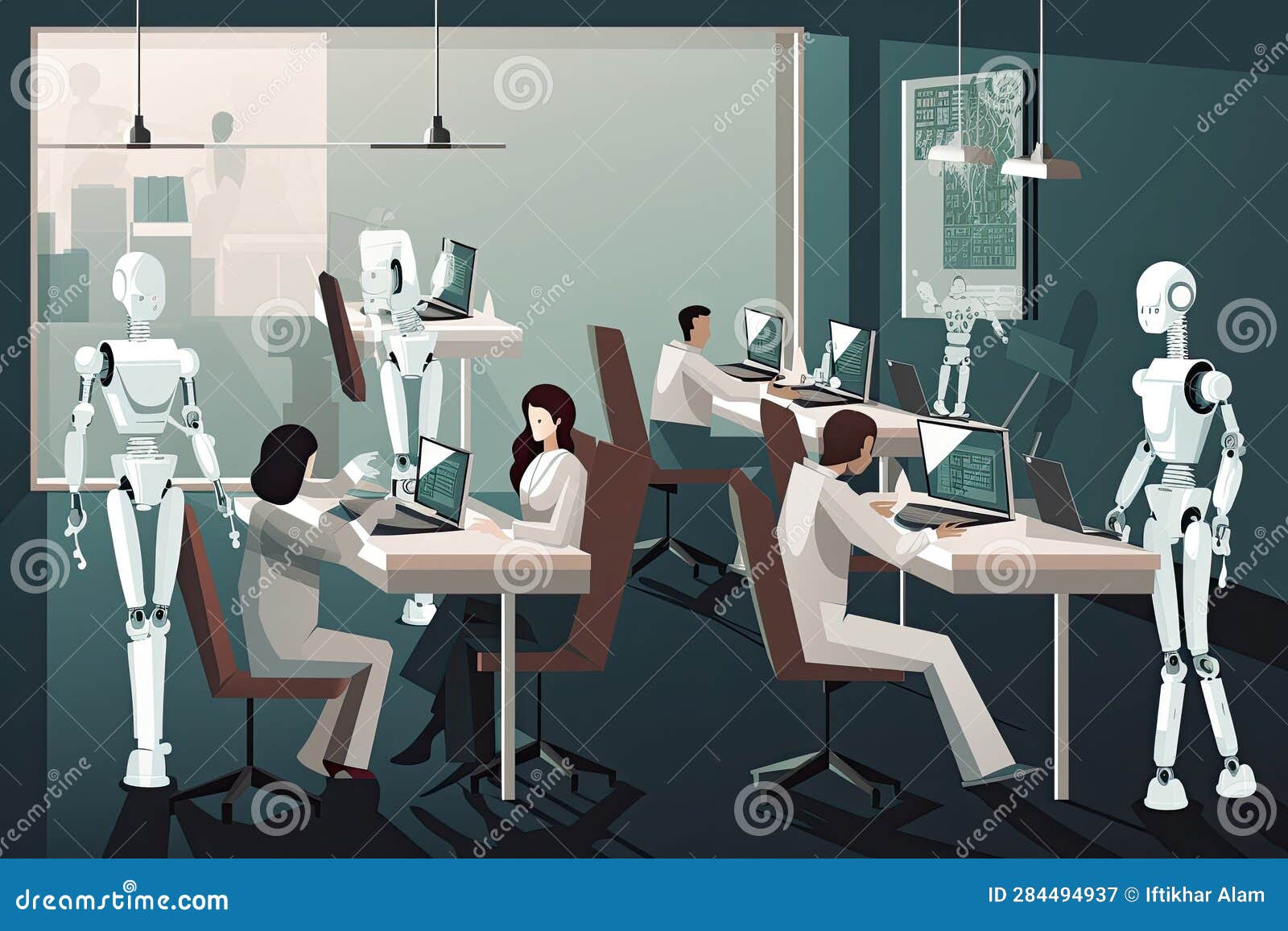
The Art of Symbiotic Leadership: When AI Meets Human Ingenuity
Picture this: an AI system tasked with optimizing a company’s supply chain. It crunches numbers, predicts bottlenecks, and suggests cost-saving measures with the ruthless efficiency of a spreadsheet on steroids. But here’s the catch—when it recommends laying off 20% of the warehouse staff to cut costs, who makes the final call? The AI, of course, lacks the moral compass to weigh the human impact. That’s where the human manager steps in—not to compete with the AI’s analytical prowess, but to contextualize its findings with empathy, ethics, and strategic foresight.
Symbiotic leadership is the dance between human intuition and machine intelligence. It’s about recognizing that AI excels at pattern recognition, but humans excel at meaning-making. A manager who oversees AI doesn’t just delegate tasks; they curate the environment where both humans and machines thrive. This means fostering a culture of transparency, where AI’s decisions are explainable and subject to human review. It means asking not just what the AI recommends, but why it recommends it—and whether that aligns with the company’s values.
Consider the case of a healthcare startup using AI to triage patient symptoms. The algorithm can flag high-risk cases in milliseconds, but it’s the human doctor who interprets those flags through the lens of a patient’s history, emotional state, and personal circumstances. The manager’s role? To ensure the AI’s insights are used as a tool, not a replacement—to remind the team that behind every data point is a person whose life could be changed by their decisions.
Emotional Alchemy: The Unquantifiable Edge of Human Managers
Algorithms may analyze emotions, but they can’t feel them. They can predict burnout by tracking keystrokes and meeting fatigue, but they can’t deliver the kind of motivational pep talk that turns a disheartened employee into a high-performing rockstar. Emotional intelligence isn’t just a soft skill—it’s the hard currency of modern leadership. For AI managers, this means developing the ability to read between the lines of data and recognize when a team member needs a break, a challenge, or a heart-to-heart conversation.
Take the example of a project manager overseeing a team of developers, some of whom are working alongside AI coding assistants. The AI can generate lines of code in seconds, but it can’t sense the frustration of a junior developer staring at a screen full of red error messages. A human manager, however, can step in with encouragement, offer a fresh perspective, or even pair the developer with a mentor. This isn’t just about morale—it’s about retention. In a world where talent is the ultimate competitive advantage, the managers who prioritize emotional connection will be the ones who build teams that stick around for the long haul.
But emotional alchemy goes beyond individual interactions. It’s about creating a workplace where vulnerability is celebrated, not stigmatized. Where managers admit when they’re unsure, where failures are treated as learning opportunities, and where success is measured not just in KPIs but in the well-being of the team. AI can optimize workflows, but it can’t cultivate the kind of psychological safety that turns a group of individuals into a cohesive, high-functioning unit.

Ethical Acumen: Navigating the Moral Labyrinth of AI-Driven Decisions
The ethical dilemmas of AI aren’t just hypothetical—they’re happening right now. Should an AI hiring tool prioritize candidates based on their likelihood to stay with the company, even if that inadvertently discriminates against certain demographics? Should an AI-driven performance review system dock an employee’s score for taking mental health days, despite company policies encouraging self-care? These aren’t questions a machine can answer. They require ethical acumen—the ability to weigh the consequences of AI-driven decisions against the values of fairness, equity, and human dignity.
For AI managers, this means developing a moral imagination. It’s not enough to ask, “Is this AI solution efficient?” You must also ask, “Is it just?” This might involve establishing an AI ethics board within your organization, where human managers, ethicists, and even employees from diverse backgrounds collaborate to audit AI systems for bias and unintended consequences. It might mean pushing back against AI recommendations that prioritize short-term gains over long-term sustainability. And it definitely means being transparent with stakeholders about how AI is being used—and who is ultimately accountable when things go wrong.
Consider the case of a financial services firm using AI to approve loans. The algorithm might flag certain neighborhoods as “high-risk” based on historical data, but a human manager recognizes that this perpetuates systemic inequality. By overriding the AI’s decision and approving loans in those areas, the manager doesn’t just make a ethical choice—they also open up new markets and build trust with communities that have been underserved by traditional lending practices. In this way, ethical acumen isn’t just a moral obligation; it’s a strategic advantage.
Adaptive Agility: Thriving in a World of Constant Change
The only constant in the age of AI is change—and the managers who thrive will be the ones who can pivot faster than a quantum computer. Adaptive agility isn’t about being the most flexible person in the room; it’s about creating a team that can bend without breaking. This means fostering a culture of continuous learning, where both humans and AI systems are encouraged to evolve. It means embracing experimental failure as a necessary step toward innovation, rather than a sign of incompetence.
For AI managers, this might look like implementing agile frameworks that allow teams to iterate quickly in response to AI-driven insights. It might mean encouraging cross-functional collaboration, where engineers, designers, and ethicists work side by side to refine AI tools. And it definitely means staying ahead of the curve by investing in upskilling programs that prepare employees for roles that don’t even exist yet.
But adaptive agility isn’t just about technical skills—it’s about mindset. It’s about being comfortable with uncertainty, about seeing challenges as opportunities, and about leading with curiosity rather than control. In a world where AI can automate routine tasks, the most valuable managers will be the ones who can ask the right questions, challenge the status quo, and inspire their teams to do the same. They’ll be the ones who turn disruption into differentiation.
The Human Touch: Why No Algorithm Can Replace Inspiration
At the end of the day, leadership is about more than just efficiency—it’s about inspiration. It’s about painting a vision so compelling that people are willing to follow you into the unknown. It’s about celebrating small wins, recognizing big contributions, and making people feel like they’re part of something bigger than themselves. AI can optimize processes, but it can’t tell a story that makes someone’s heart race with excitement. It can’t look someone in the eye and say, “I believe in you,” and mean it.
This is the power of the human touch—the intangible quality that turns a group of people into a movement. For AI managers, this means carving out space for creativity, for spontaneity, and for the kind of serendipitous connections that lead to breakthroughs. It means hosting brainstorming sessions where the wildest ideas are encouraged, even if they seem impractical. It means recognizing that the best ideas often come from the most unexpected places—and that sometimes, the most valuable contribution a manager can make is to get out of the way.
Consider the story of a tech company that used AI to design its product roadmap. The algorithm suggested focusing on incremental improvements to existing features, but the human CEO insisted on investing in a risky, unproven technology that could disrupt the industry. The result? A product that not only outperformed competitors but also redefined the market. The lesson? AI is a powerful tool, but it’s not a substitute for vision. And vision? That’s uniquely human.

As we stand on the precipice of an AI-driven future, the managers who will lead with confidence are not the ones who fear replacement by machines. They’re the ones who embrace the synergy of human and artificial intelligence. They’re the ones who understand that their role isn’t to compete with AI, but to complement it—to bring the empathy, creativity, and ethical reasoning that no algorithm can replicate.
So, the next time you’re tempted to ask, “Can AI do this better?” pause and ask instead, “How can AI help me do this more humanly?” Because in the end, the most powerful managers won’t be the ones who outsmart the machines. They’ll be the ones who remind us all what it means to be human in the first place.
Leave a comment