


What if Your To-Do List is a Trap?
Every morning, millions of people wake up to a list. Not a gentle suggestion of tasks, but a demanding tyrant of bullet points that claims to hold the keys to success. You scratch off three items, add five more, and by noon, you are running on the hamster wheel of urgency. The trick feels obvious: do more, faster. But what if the productivity gospel you have been sold—the one promising that crushing your daily checklist will lead to lifelong achievement—is actually a cleverly disguised trap? The question sounds playful, but the implication is serious. If speed and volume alone were the path to sustained success, every overwhelmed worker would be a titan of industry by now. The real challenge isn’t doing more; it is doing the right things in the right order, across the span of an entire lifetime. This requires a framework that does not just optimize your Tuesday afternoon but aligns your decades.
The Fatal Flaw of Sprinting Through Life
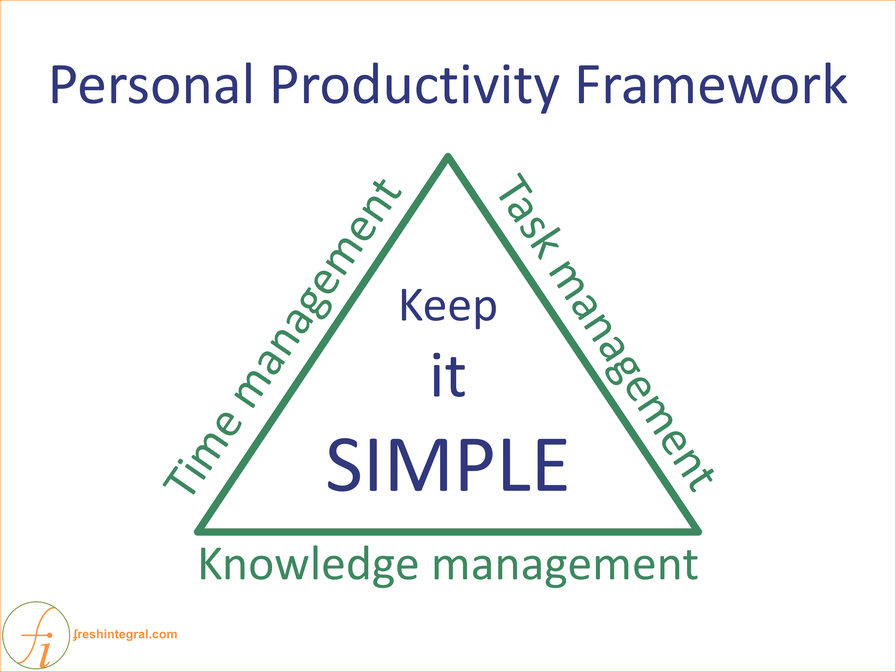
Consider the classic productivity advice: wake up at 5 AM, batch your emails, use the Pomodoro technique. These tactics work beautifully for a single project or a busy quarter. They turn you into a human efficiency engine. Yet, they share a hidden weakness: they are designed for short-distance races. A framework built exclusively on tactical speed ignores the long game—the cycles of learning, rest, pivot, and deep reflection that separate a fleeting burst of output from a legacy of meaningful work. When you spend ten years sprinting from task to task without a map, you will cover a lot of ground, but likely in circles. You might become the most productive person in a room that is going nowhere. The missing piece is a strategic lens that filters every action through the question: “Does this move me toward the person I want to be in ten years?” Without that filter, productivity becomes a glorified form of busywork.
The Three Pillars: Energy, Direction, and Resilience
A sustainable framework must rest on three foundational pillars that do not burn out. The first is Energy Management, not time management. Time is fixed; energy is renewable. This means scheduling high-cognitive-load work when your biology peaks—for most, that is late morning—and reserving low-energy periods for automatic tasks or deliberate rest. The second pillar is Directional Clarity. Without a North Star, any path feels productive. This requires periodic, honest reviews of your mission: Are your daily actions building equity in a skill, a relationship, or a venture that compounds? The third pillar is Resilience Through Systems. The most productive people do not rely on willpower; they build systems that function when motivation evaporates. A simple habit tracker, a weekly review ritual, and a commitment to “pre-deciding” what matters most protect you from the chaos of a bad day. Together, these pillars transform productivity from a frantic scramble into a calm, deliberate progression.
The Meta-Skill of Strategic Reflection
Here is the counterintuitive twist: the single most productive action you can take each week is to stop producing. Carve out thirty minutes for Strategic Reflection. This is not journaling for its own sake; it is a structured audit. Ask yourself three harsh questions: (1) What did I do this week that will still matter in a year? (2) What did I say yes to that I should have said no to? (3) What assumptions about my work or life might be outdated? These questions break the spell of velocity. They force you to see the difference between progress and motion. Successful people—from scientists to executives—routinely credit their ability to pause and recalibrate as the secret ingredient. The airplane traveling from New York to Los Angeles is off course ninety percent of the time; constant small corrections keep it on track. Without a feedback loop, your productivity plane drifts far from the destination you intended.
Designing Your Personal Framework
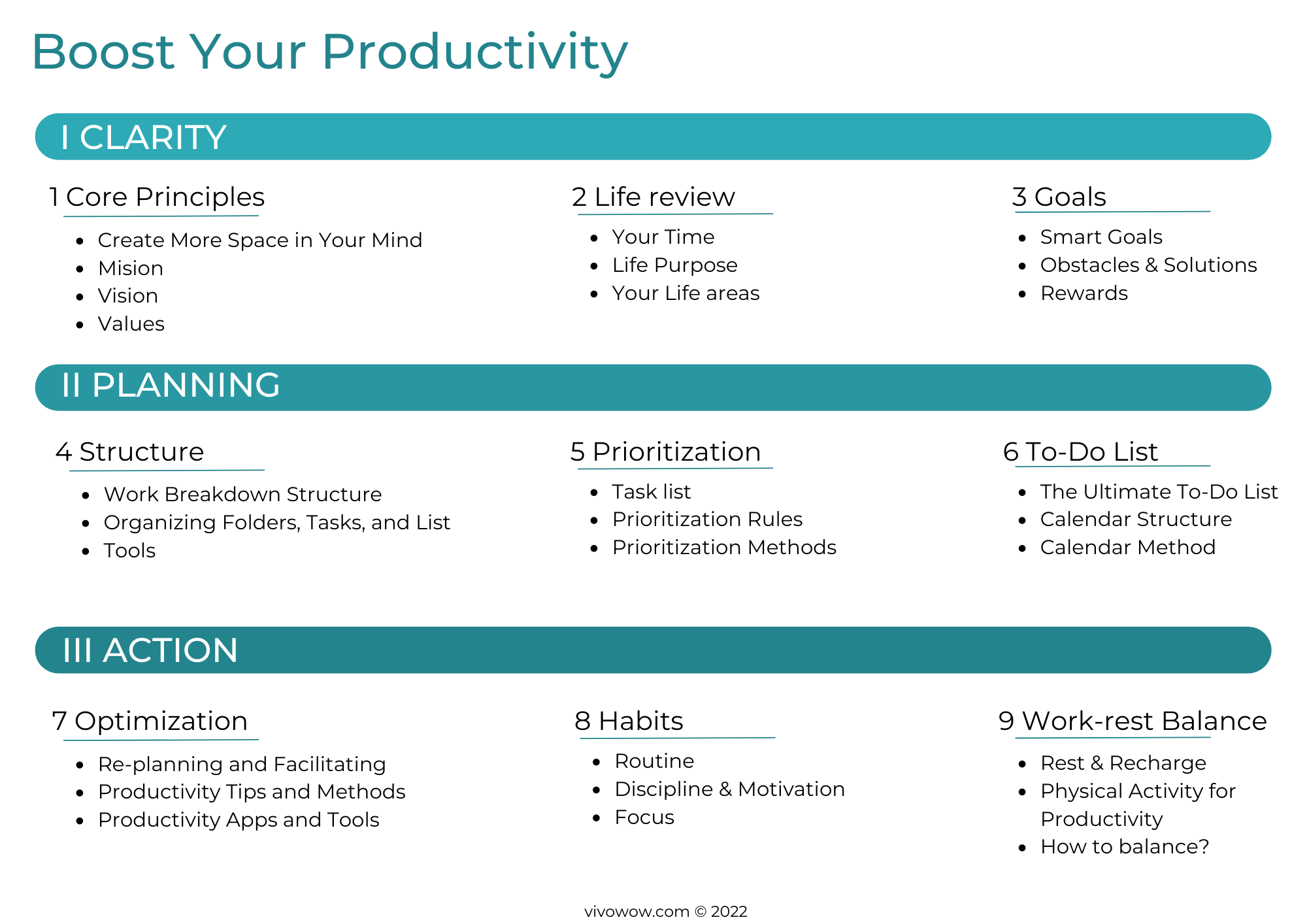
No single rigid system works for a decade. A lifelong framework must be modular and adaptable. Start with a Quarterly Compass: one major outcome you want to achieve in the next ninety days. Break that into monthly milestones, then into weekly “big rocks”—the three tasks that, if completed, make the week a success. Ignore the rest. Each day, protect two uninterrupted hours for deep work on your big rocks, ideally in the morning. Afternoons are for meetings, email, and reactive tasks. End each day with a five-minute close-out: note what you accomplished and what you will address tomorrow. The brilliance of this structure is its forgiveness. A bad week does not derail the quarter. A missed day does not destroy the habit. The framework bends without breaking, because its core metric is not how many boxes you checked, but whether you are moving closer to your defined vision for a life well-lived.
The Challenge: Will You Choose Mastery or Motion?
So here is the playful question that demands a serious answer: Is the productivity framework you currently use making you faster, or making you better? If the answer is merely “faster,” you have been sold a seductive lie. The path to lifelong success is paved not with ever-expanding to-do lists but with ruthless prioritization, energy awareness, and the courage to stop doing what works in the short term so you can do what matters in the long run. The challenge is not to adopt another app, another morning routine, or another hack. The challenge is to design a personal productivity philosophy that treats your life as an integrated whole—where the work you do at twenty-five builds the foundation for the impact you make at fifty. Choose mastery over motion, and the framework will follow.
Leave a comment