


The Cartographer’s Error: Why Productivity Maps Fail
We are raised on the mythology of the straight line. From the moment we color inside the lines of a kindergarten worksheet, we are taught that progress is linear, from point A to point B, with the shortest distance being the most virtuous. The modern productivity industry worships this myth. It sells us planners, apps, and systems that promise a perfectly paved road from intention to completion. But life is not a straight line. It is a delta. It meanders, floods its banks, carves new channels, and sometimes dries up entirely. The great failure of most productivity frameworks is that they attempt to map a river onto a grid. The “Life Design Framework” does something fundamentally different: it hands you a shovel and teaches you to read the current. It is not a map of the territory; it is a compass for navigating the wilderness.
The Five Dials: Designing Your Energy, Not Your Time
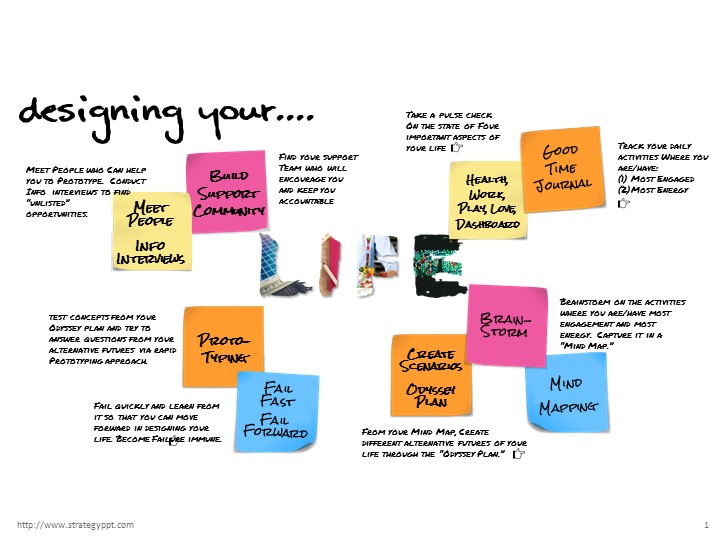
The core innovation of the Life Design Framework is its radical reframing of the resource at hand. Productivity gurus obsess over time—its allocation, its block scheduling, its “saving.” But time is a fixed, indifferent variable. You get twenty-four hours, no negotiation. The Life Design Framework, however, identifies five dynamic and malleable dials that you can actually turn: Work, Play, Health, Love, and Spirit (or Purpose). Imagine a control panel, much like a sound engineer’s mixing board. Time is the master clock that keeps running, but the volume, the timbre, the *quality* of that time is determined by how you adjust these five dials.
When your “Work” dial is at 11 while “Health” and “Love” are muted, you are not productive; you are a machine running on fumes, producing noise, not signal. The framework insists that genuine, sustainable productivity—the kind that creates a masterpiece, not just a checklist—emerges only when the mix is balanced. It is not about doing more; it is about designing the *conditions* that make deep, resonant work possible. This is an intellectual and emotional pivot of the highest order. You stop being a passive agent reacting to the day’s demands and start being the architect of your own ecosystem. The unique appeal lies in its permission to treat “Play” as a serious component of output, and “Love” as a driver of cognitive efficiency.
The Odyssey Plan: Escape Velocity from the Default Future
One of the framework’s most potent, and initially terrifying, tools is the “Odyssey Plan.” The metaphor here is ancient and profound. Like Odysseus, you are not aiming for a single, pre-ordained destination. You are facing headwinds, sirens, and cyclopes. The Life Design Framework asks you to draft **five** different versions of your life over the next five years. Not one perfect career trajectory, but five distinct, plausible narratives. Version one is your “default future”—the path of least resistance. Version two imagines a dramatic pivot—what if you quit your job and opened a bakery? Version three asks: what if money were no object, but nor is shame? What would you do if you had to survive but not perform?
This technique shatters the single-point failure mindset. It transforms productivity from a fear-based engine (“I must do this, or I will fail”) into an exploration-based engine (“Let me prototype which of these lives feels most alive”). When you have an Odyssey Plan, your daily tasks are no longer chores; they are *experiments* gathering data for a more interesting journey. The pressure to be “productive” dissolves because you are no longer trying to optimize a single path; you are trying to discern the direction of the current that carries your energy forward. This is why the framework feels so liberating. It replaces the tyranny of the to-do list with the curiosity of the explorer.

Failure as a Design Vector: The Prototype Mindset
Traditional productivity measures failure as a bug—a flaw in the system that must be eliminated. The Life Design Framework, borrowing from its engineering namesake, treats failure as a *design vector*. Failure is not the opposite of productivity; it is a crucial iteration in the process of creation. This is where the “Prototype” concept shines. Instead of committing to a massive, life-altering goal, you build small, low-stakes versions of it. Want to write a novel? Don’t set a goal of 80,000 words in a year. Prototype it: write 500 words a day for one week, paying attention to how you feel. Does the morning light fuel you, or does it drain you? Does fiction energize or exhaust?
This approach is intellectually rigorous and emotionally intelligent. It acknowledges that our brains are terrible at predicting what will make us happy and productive. We have to gather empirical data. A failed prototype is not a personal indictment; it is a datum point. “I thought I wanted to work in finance, but the prototype of a financial analyst’s daily life gave me a headache and a sense of meaninglessness. Data point: avoid finance.” This reframes productivity entirely. You are no longer a soldier marching forward; you are a scientist in a lab, testing hypotheses. The result is a system that is infinitely more resilient, because it is built on reality, not on aspiration.
The Ship of Theseus: Redesigning Work in Real Time
Finally, the Life Design Framework acknowledges a profound metaphysical problem: “You” are not a static entity. The Ship of Theseus question—if you replace every plank of a ship, is it still the same ship?—is the daily reality of anyone trying to be productive. Your values shift. Your health changes. A pandemic rewires your sense of risk. The framework does not pretend you are a fixed point. Instead, it provides a system for ongoing “redesign.” It encourages a weekly “energy audit” where you ask not “What did I do?” but “What *charged* me and what *drained* me?” This is a strategic intelligence gathering session.
This constant recalibration is the ultimate productivity hack. Most people waste enormous energy pushing against the natural grain of their own evolving psychology. The Life Design Framework stops the push. It says, “Your energy is your currency. Spend it where the current flows.” The result is a productivity that is not brittle, but fluid; not forced, but emergent. It is the productivity of a river carving a canyon—patient, powerful, and unstoppable over time, not because it pushes, but because it follows the path of least resistance and maximum flow. That is the quiet, magnetic secret at its heart.
Leave a comment