


The Modern Productivity Stack You Need
There is a peculiar magic in watching a master chef work. They don’t move faster than anyone else; they move with a quiet, deliberate rhythm. Their knife finds the cutting board with a familiar thwack, the pan meets the flame at precisely the right moment, and the mise en place—everything in its place—is a silent orchestra of intention. This is not speed. This is leverage. The right tools, arranged in the right order, create a force that multiplies effort.
Your mind, for all its raw horsepower, is like that chef’s kitchen. Without a proper stack—a layered system of instruments designed to amplify focus, capture ideas, and prune chaos—you are left chopping vegetables with a dull blade. The modern world does not demand more hours. It demands a better stack. Let’s build yours.
The Capture Layer: The Backpack of the Mind
Every productivity system begins with a leak. A brilliant thought arrives in the shower, a crucial action item surfaces during a commute, a name you need to remember flashes at 2 AM. If you do not capture it immediately, it vanishes into the ether, leaving a faint ghost of anxiety that you are forgetting something important. This is not a failure of memory; it is a failure of architecture.
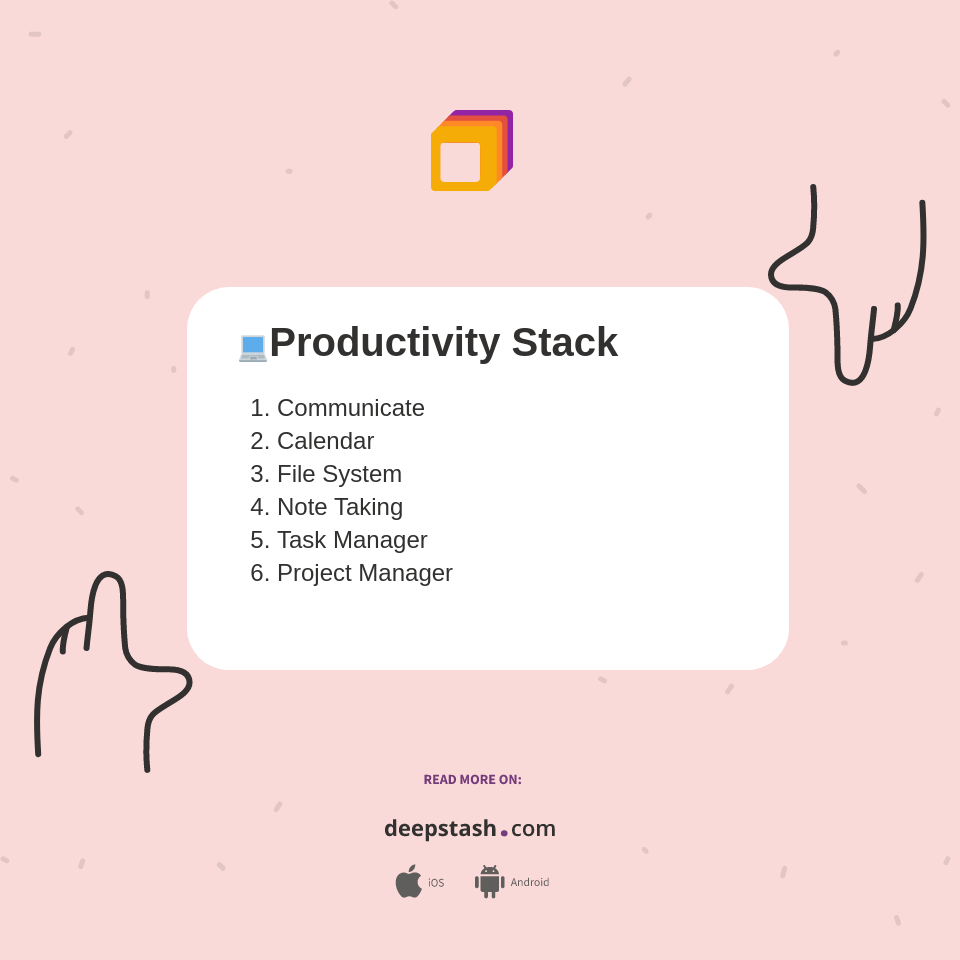
The first layer of your stack is a frictionless capture tool. It must be universal, immediate, and portable. This is not your calendar. This is not your project management suite. This is the rough clay of raw input. Think of it as the backpack you never take off. When an idea strikes, you don’t need to find the right folder, tag, or list. You just toss it into the backpack. Later, in the quiet sanctuary of your next working block, you open that backpack and sort the gems from the gravel. The key metric here is speed, not categorization. Apps like Drafts, Apple Notes, or a simple text file all work, provided the barrier to entry is zero seconds. The act of capture itself is the first act of control.
The Organization Engine: Where Chaos Becomes Cadence
Raw capture is only half the battle. A backpack filled with unprocessed notes is just a heavy burden. The second layer is the engine that transforms entropy into order. This is where you move items from “someday” to “Tuesday at 3 PM.” This layer requires a structure that is rigid enough to be trustworthy but flexible enough to accommodate the unexpected.
The modern stack demands a system of triage. You need a trusted system—think of it as your digital butler’s pantry—where each captured item is assigned a home. A task management tool like Todoist or Things becomes the central nervous system. Every task enters here, tagged with context (energy level, location, project) and a specific next action. But the real magic lies in the “weekly review.” This ritual is the beating heart of the organization engine. Once a week, you sit down, empty the capture backpack, and re-sort the drawers. You decide what dies, what marinates, and what demands attention now. Without this cadence, the stack becomes a museum of good intentions.
The Deep Work Vessel: The Distraction-Proof Container
Most productivity advice fails because it assumes the environment is neutral. It is not. Your attention is a finite resource, and every tab, every notification chime, every buzzing pocket is a tax collector demanding a payment you cannot afford. The third layer of your stack is a dedicated vessel for deep, concentrated work.
This is not a tool you download; it is a space you construct. It might be a physical room with a closed door. It might be a digital environment—a full-screen writing app like iA Writer or a focus-timer app like Forest that gamifies the act of staying put. The critical element is that this vessel has walls. Inside this container, context-switching is forbidden. You do not check email. You do not glance at Slack. The world outside this vessel must be told, “I am unavailable until the timer ends.” The tool you use here is less important than the boundary you erect. A deep work vessel is an act of defiance against a culture that mistakes busyness for productivity. Within its walls, you don’t just do more; you become more.
The Knowledge Repository: Your Second Brain
What happens to the ideas you process? The research you discover? The insights you earn? If they live only in your head or in scattered bookmarks, they are wasted. The fourth layer is a personal knowledge management system—a second brain where information is not merely stored, but fermented into wisdom.
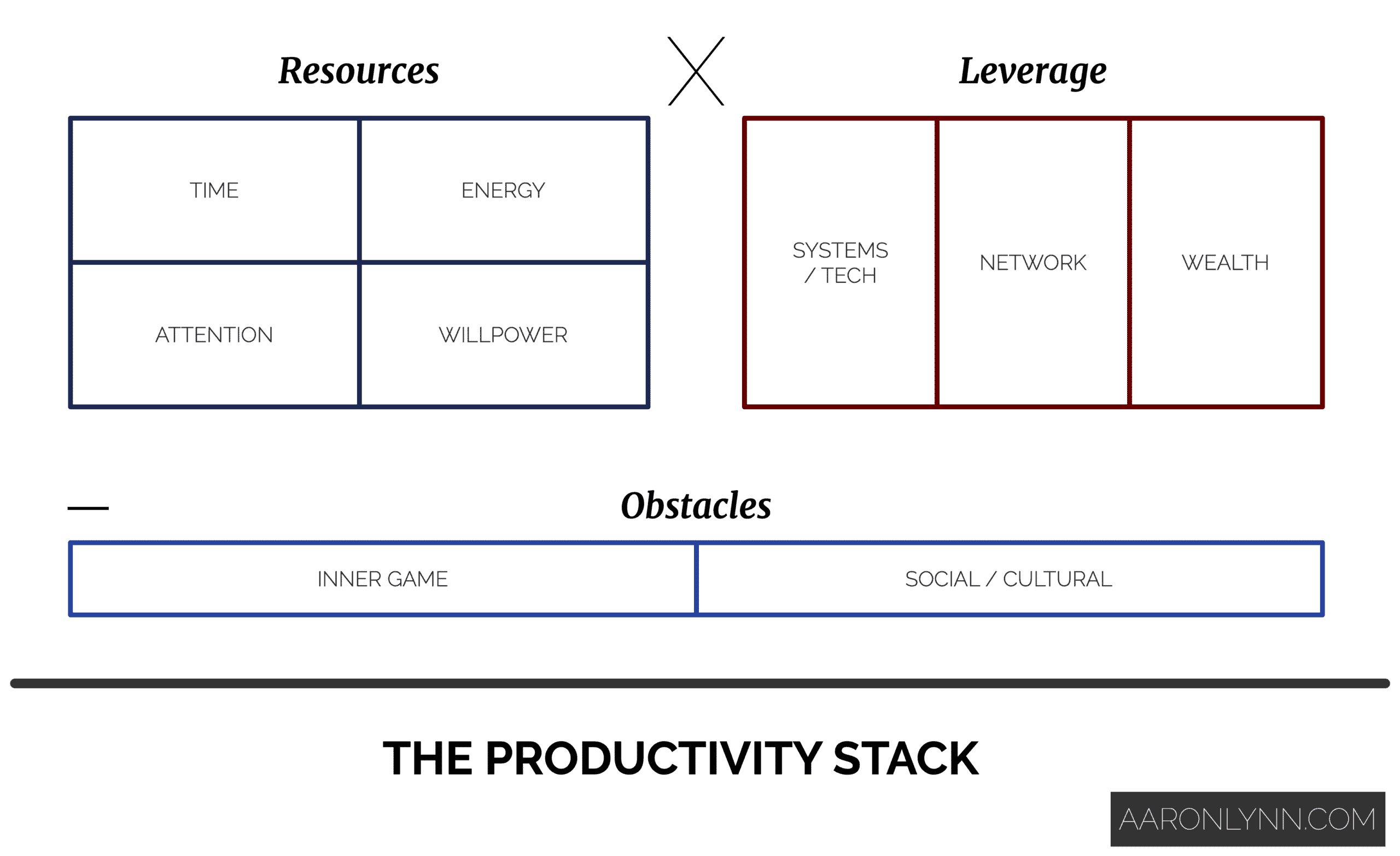
This is where you graduate from task management to creative leverage. Use a tool like Obsidian, Roam, or Notion to build an interconnected web of notes. When you read a compelling article, you don’t just tag it “interesting.” You pull out a quote, write a paragraph of your own thinking, and link it to a project you are working on. Over time, this repository becomes a custom-built university of your own mind. New ideas cease to be islands; they are bridges to previous insights. The power of this layer is cumulative. The more you feed it, the more it surprises you with connections you never consciously made. It is the library you write your life into.
The Ritual Layer: The Glue That Holds It All
Tools are dead weight without the flesh of habit. The final and most crucial layer is the ritual layer—the daily and weekly behaviors that make the stack not a system you use, but a system that uses you toward a better life. This is the forgotten element in every “top 10 apps” list.
Consider your morning routine. Before you touch your inbox, you spend ten minutes with your capture layer, purging the debris of the night. You then check your organization engine for your one priority for the day. You close your vessel and work for ninety uninterrupted minutes. This is not a schedule; it is a ritual. It replaces the constant friction of “what should I do now?” with a programmed inevitability. The stack works because you stop making decisions about where to put things and start making decisions about what matters. Ritual turns the complex machinery of your software into a quiet, elegant force. It is the pulse that keeps the system alive, ensuring the chef’s mise en place is always ready, the knives always sharp, and the fire always waiting.
Leave a comment