


What if the key to a productive day isn’t about doing more, but about doing differently? What if the tasks you prioritize today could redefine your entire week, your career, and even your sense of fulfillment? The art of choosing the right tasks each day isn’t just about ticking boxes—it’s about rewiring your approach to work, time, and success. It’s a quiet revolution in how you perceive productivity, one that begins with a single question: Are you working on the right things?
Most people start their day by reacting—checking emails, putting out fires, and letting urgency dictate their focus. But what if you flipped the script? What if you designed your day around intention rather than interruption? This isn’t about rigid schedules or burnout-inducing to-do lists. It’s about a deliberate, almost rebellious, choice to align your actions with what truly matters. Let’s explore how to make that shift.
—
The Illusion of Productivity: Why Most Daily Tasks Are a Trap
We’ve all been there: a day packed with activity, yet at the end, we feel like we’ve accomplished nothing of real value. The problem isn’t the effort—it’s the misalignment. Many of us confuse busyness with progress, mistaking motion for meaning. The truth is, not all tasks are created equal. Some move the needle; others just spin the wheels.
Consider the classic Eisenhower Matrix, which categorizes tasks into four quadrants based on urgency and importance. Most people spend their time in Quadrant 1 (urgent and important) and Quadrant 3 (urgent but unimportant), leaving little room for Quadrant 2—the sweet spot of long-term success. The right tasks aren’t the ones screaming for your attention; they’re the ones quietly shaping your future.
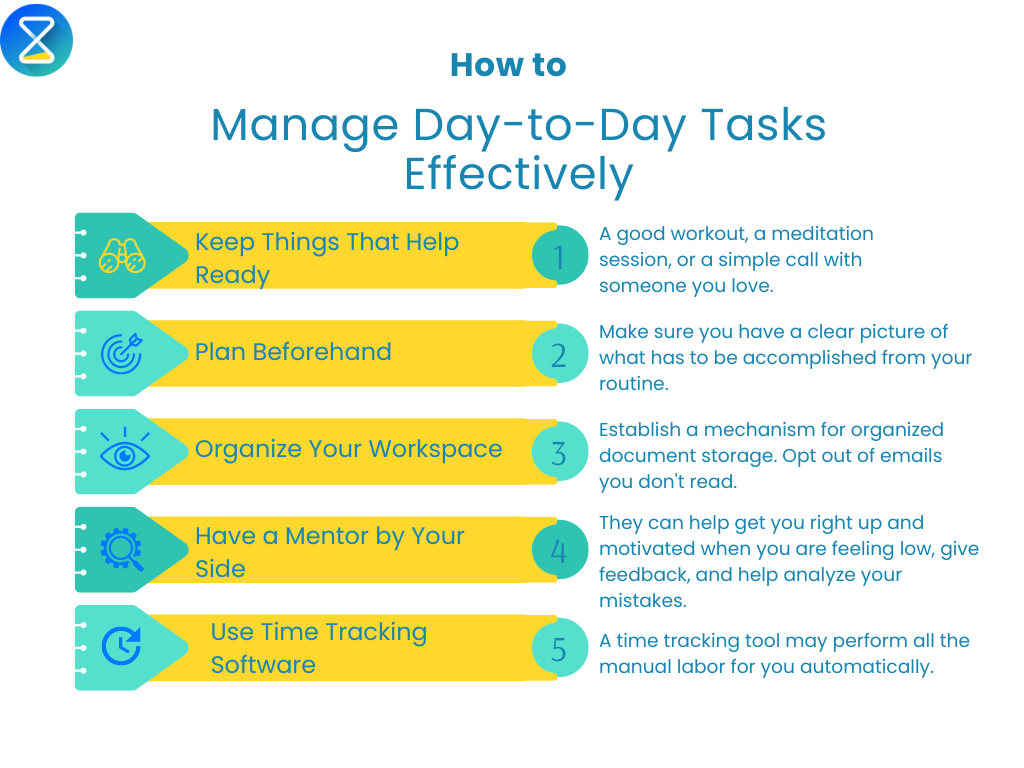
Ask yourself: Which tasks, if completed today, would make tomorrow easier? Those are your priorities. The rest? They can wait—or disappear entirely.
—
The 80/20 Rule: Why a Few Tasks Outweigh the Many
Imagine for a moment that 80% of your results come from just 20% of your efforts. This isn’t just a theory—it’s the Pareto Principle, a law of nature that governs everything from wealth distribution to time management. In your daily life, this means that a small fraction of your tasks likely drive the majority of your impact.
So how do you identify those high-leverage tasks? Start by asking:
- Which tasks have the highest return on investment? (e.g., closing a deal vs. organizing files)
- Which activities align with my long-term goals? (e.g., skill-building vs. administrative work)
- Which tasks, if neglected, will cause the most regret? (e.g., health, relationships, critical projects)
Once you pinpoint these, protect them fiercely. Schedule them first, guard them from distractions, and treat them as non-negotiable. The rest? Delegate, automate, or eliminate.
—
The Power of the “Anti-To-Do List”
What if, instead of listing what you must do today, you listed what you must not do? This isn’t about negativity—it’s about clarity. An anti-to-do list forces you to confront the distractions and time-wasters that derail your focus.
Common entries might include:
- Checking social media before noon
- Attending unnecessary meetings
- Saying “yes” to requests that don’t serve your priorities
- Multitasking during deep work sessions
By defining these boundaries, you create mental space for what truly matters. It’s a subtle shift, but one that can save hours each week.
—
Energy Over Time: The Secret Weapon of High Performers
Time is a finite resource, but energy? That’s something you can cultivate, manage, and even expand. The most effective people don’t just optimize their schedules—they optimize their energy.
Start by identifying your peak hours—the times of day when your focus, creativity, and willpower are at their highest. For some, it’s the morning; for others, it’s late at night. Protect these windows for your most demanding tasks. Save low-energy activities (like emails or admin work) for when your mental reserves are lower.
Also, consider your energy drains. Are there people, environments, or habits that leave you depleted? Minimize exposure to them. Conversely, what fuels you? Regular breaks, movement, or even a specific playlist can recharge your batteries.
The goal isn’t to work harder—it’s to work smarter by aligning your tasks with your natural rhythms.
—
The Art of Saying No: How to Protect Your Priorities
Every “yes” is a “no” to something else. This is the brutal math of time management. The ability to decline requests—even good ones—is what separates those who achieve their goals from those who merely chase them.
But saying no doesn’t have to be harsh. Try these strategies:
- Delay your response. “Let me check my schedule and get back to you.” This buys you time to assess whether the request aligns with your priorities.
- Offer an alternative. “I can’t take this on, but here’s someone who might be a better fit.”
- Be direct but kind. “I appreciate the opportunity, but I’m focusing on [X priority] right now.”
Remember: Every time you say no to something that doesn’t serve you, you’re saying yes to something that does.
—
From Overwhelm to Ownership: A Step-by-Step Framework
Ready to put this into practice? Here’s a simple framework to choose your daily tasks with intention:
- Brain Dump. Write down every task on your mind—big or small. Get it all out of your head and onto paper.
- Categorize. Use the Eisenhower Matrix to sort tasks into Urgent/Important, Not Urgent/Important, Urgent/Not Important, and Not Urgent/Not Important.
- Prioritize. Select 1-3 tasks from the “Important but Not Urgent” quadrant. These are your non-negotiables for the day.
- Schedule. Block time for these tasks in your calendar. Treat them like appointments you can’t miss.
- Protect. Set boundaries. Turn off notifications, close unnecessary tabs, and communicate your focus to others.
- Review. At the end of the day, ask: Did I spend time on what truly matters? Adjust tomorrow’s list accordingly.
This isn’t about perfection—it’s about progress. Some days will be messy. The key is to keep refining your approach.
—
The Ripple Effect: How Daily Choices Shape Your Future
Every task you choose (or don’t choose) today sends a ripple through your life. A single focused hour on a high-impact project might not feel like much in the moment, but over weeks and months, it compounds into something extraordinary.
Consider the story of a software developer who spends 30 minutes each day learning a new programming language. In a year, that’s 182 hours—enough to master a skill that could redefine their career. Or the entrepreneur who dedicates one hour daily to networking, building relationships that open doors years down the line.
These aren’t grand gestures. They’re small, consistent choices that accumulate into massive results. The right tasks aren’t just about today—they’re about the life you’re building for tomorrow.
—
Final Thought: Your Day, Your Rules
You have more control over your time than you think. The tasks you choose to focus on today aren’t just a reflection of your priorities—they’re the architects of your future. So ask yourself: What would happen if I spent today on the things that truly matter?
The answer might just change everything.
Leave a comment