


Imagine your Moodle course isn’t just a digital classroom—it’s a bustling bazaar of knowledge, where every learner’s achievement is a shimmering coin, minted not by a central authority but by the very fabric of trust woven into the blockchain. These aren’t ordinary badges; they are immutable ledgers of accomplishment, verifiable across continents, resistant to forgery, and as unique as a fingerprint. Integrating blockchain badges into Moodle isn’t merely an upgrade—it’s a metamorphosis, turning your learning ecosystem into a decentralized academy where credentials breathe beyond the confines of institutional walls.
Picture this: a student in Tokyo completes a rigorous course on data science. Instead of receiving a PDF certificate tucked away in an email folder, they receive a digital badge—an indelible mark on the blockchain, visible to employers, peers, and even future learning platforms. This badge isn’t just a sticker on a profile; it’s a living testament to their journey, verifiable with a single click, resistant to tampering, and eternally accessible. It’s like embedding a piece of their academic soul into the digital ether, where it can be admired, scrutinized, and trusted by anyone, anywhere.
So, how do you weave this blockchain magic into the familiar tapestry of Moodle? Let’s embark on a journey through the labyrinth of integration, where pedagogy meets cryptography, and where every step forward is a leap into the future of credentialing.
The Alchemy of Verifiable Credentials: Turning Badges into Digital Gold
At the heart of blockchain badge integration lies the concept of verifiable credentials—a term that sounds like it belongs in a sci-fi novel but is, in fact, the cornerstone of modern digital trust. Unlike traditional badges, which live in a siloed database vulnerable to hacking or loss, blockchain badges are anchored in a decentralized ledger. Each badge is a non-fungible token (NFT) of achievement, uniquely tied to the learner’s identity and cryptographically signed by the issuer.
To integrate these into Moodle, you’ll need a bridge between the platform’s native badge system and a blockchain network like Ethereum, Hyperledger, or a dedicated Open Badges-compatible blockchain. Tools like Badgr or Open Badge Passport can act as intermediaries, minting badges on-chain while maintaining compatibility with Moodle’s existing badge infrastructure. The process is akin to alchemy: taking raw data (course completion, quiz scores, participation) and transmuting it into a shimmering, tamper-proof credential that gleams with authenticity.
Imagine a student earning a badge for mastering Python. Instead of a static image stored in Moodle’s server, the badge becomes a smart contract on the blockchain. This contract contains metadata—evidence of the student’s work, the issuer’s digital signature, and a timestamp—all encoded in a way that’s publicly verifiable. Employers can scan the badge with a blockchain explorer, and within seconds, they’ll see the full story: who issued it, when, and what criteria were met. It’s like handing someone a key that unlocks not just a door, but an entire vault of trust.
The Bridge Between Moodle and the Blockchain: Plugins, APIs, and Oracles
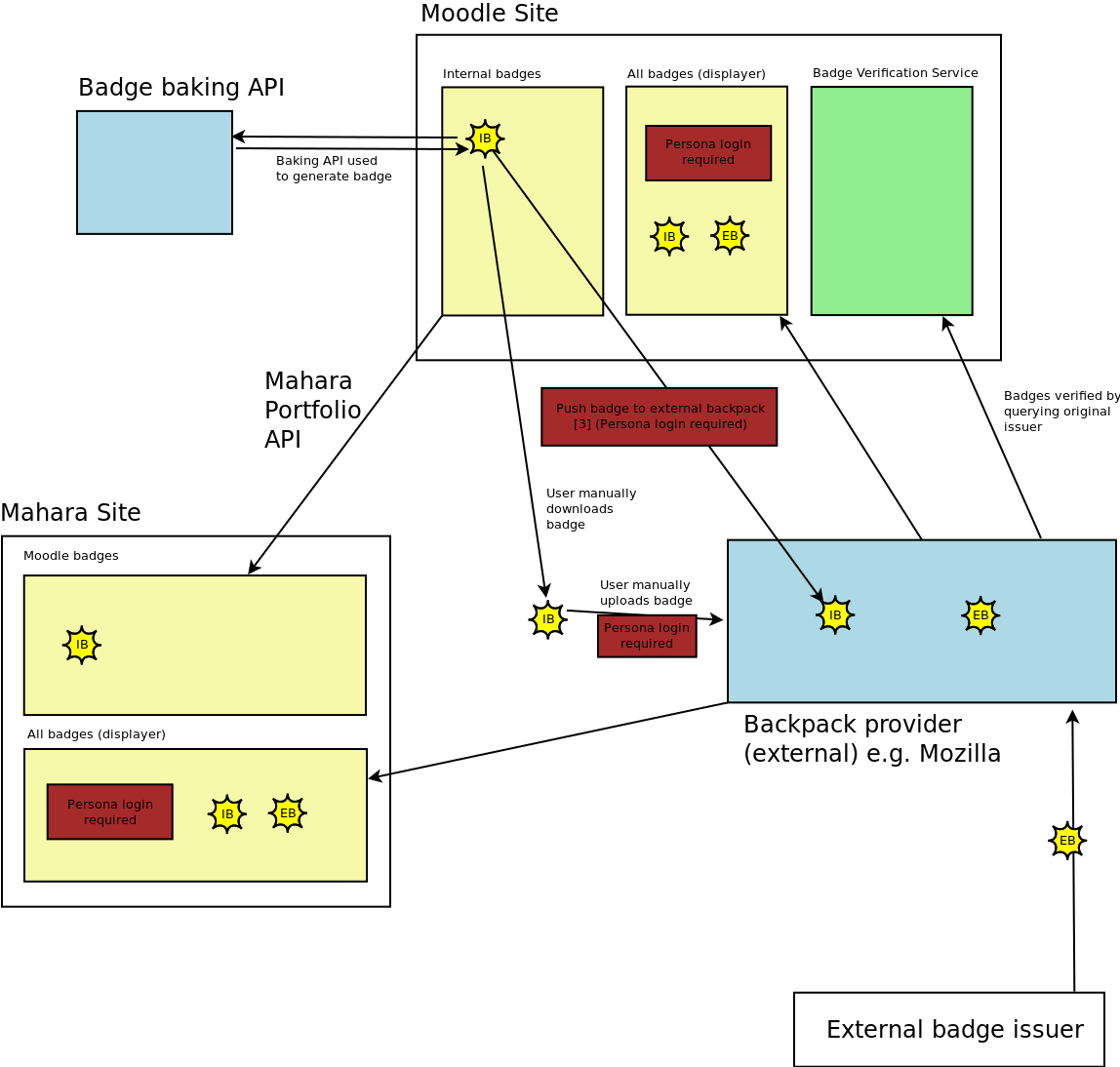
Integrating blockchain badges into Moodle isn’t a feat reserved for cryptographic savants. Modern plugins and APIs act as the scaffolding that connects the two worlds. The Blockcerts standard, for instance, provides a framework for creating blockchain-based certificates that can be seamlessly embedded into Moodle via plugins like Certifier or Open Badges Validator. These tools automate the process of minting badges on-chain, ensuring that every credential issued through Moodle is as immutable as a mountain and as transparent as glass.
But how does the magic happen behind the scenes? When a student earns a badge in Moodle, the plugin triggers a smart contract deployment on the blockchain. This contract, often written in Solidity (for Ethereum) or Chaincode (for Hyperledger), contains the badge’s metadata and a cryptographic hash linking it to the student’s identity. The contract is then broadcast to the network, where miners validate and record it in a block. Once confirmed, the badge is no longer just a file in Moodle—it’s a living entity on the blockchain, ready to be shared, verified, and celebrated.
For institutions wary of the complexity, oracle services like Chainlink can act as intermediaries, fetching Moodle data and feeding it into the blockchain without requiring deep technical expertise. These oracles ensure that the data flowing from Moodle to the blockchain is accurate, timely, and tamper-proof—a digital courier that never falters.
The Ledger of Learning: Why Decentralization Matters
Centralized credentialing systems are like walled gardens—beautiful, but limiting. They’re prone to data breaches, administrative errors, and the whims of institutional policies. Blockchain badges, on the other hand, thrive in the wild, untamed expanse of decentralization. They’re not owned by a single entity; they’re co-owned by the network, resistant to censorship, and immune to single points of failure.
Consider the plight of a student who loses access to their Moodle account. In a traditional system, their badges might vanish into the digital void. But with blockchain badges, the credentials remain intact, stored in the immutable ledger. The student can reclaim their achievements by proving ownership of the associated cryptographic key—a process as simple as signing a message with their digital wallet. It’s like having a treasure map where the treasure never disappears, no matter how many storms rage above.
Moreover, decentralization fosters a culture of self-sovereign identity. Learners control their credentials, deciding who can see them and how they’re used. They’re no longer passive recipients of institutional approval; they’re active stewards of their own narrative. This shift empowers students to curate their learning journey, stitching together badges from multiple platforms into a cohesive, verifiable portfolio. It’s the difference between being handed a stack of paper certificates and being given a quill to write your own story.
Challenges and Constellations: Navigating the Blockchain Frontier
Of course, no revolution is without its hurdles. Integrating blockchain badges into Moodle presents a constellation of challenges, each a star to be navigated with care. The first is scalability. Blockchain networks, while secure, can be slow and expensive, especially during peak usage. Minting thousands of badges per day might strain the network, leading to delays or high gas fees. Solutions like layer-2 networks (e.g., Polygon, Arbitrum) or sidechains can alleviate this burden, acting as express lanes for badge transactions.
Another challenge is interoperability. Not all blockchain networks speak the same language, and not all learning platforms are equipped to verify credentials across different ledgers. Standards like Open Badges and Verifiable Credentials (VCs) provide a common tongue, but institutions must ensure their blockchain badges are compatible with external systems. This might involve adopting universal identifiers (e.g., Decentralized Identifiers, or DIDs) or using middleware like Veramo to bridge gaps between platforms.
There’s also the matter of user adoption. Blockchain technology, for all its promise, remains a mystery to many educators and students. Training and onboarding are critical. Institutions must demystify the process, offering workshops, tutorials, and clear documentation. The goal isn’t to turn everyone into a blockchain developer but to foster a basic understanding of how these badges work and why they matter. Think of it as teaching someone to drive a car—not how to build one.
The Ripple Effect: How Blockchain Badges Transform Education
Beyond the technicalities, integrating blockchain badges into Moodle sends ripples through the entire educational ecosystem. For educators, it’s a chance to redefine assessment. Badges become more than just rewards for completion; they’re micro-credentials that reflect granular skills and competencies. A student might earn a badge for collaborative problem-solving, another for critical analysis—each a stepping stone in their learning odyssey.
For employers, blockchain badges are a treasure trove of actionable data. Resumes become dynamic, with each badge linked to a verifiable record of achievement. Hiring managers can dive deeper, examining the evidence behind each credential to assess a candidate’s true capabilities. It’s like replacing a two-dimensional resume with a holographic portrait of a learner’s journey.
And for the learners themselves? Blockchain badges are a passport to lifelong learning. They can carry their credentials from one platform to another, from one institution to another, building a lifelong narrative of growth. It’s the antithesis of the one-and-done diploma—a continuous, evolving testament to their intellectual voyage.
The Future Unfolds: A Canvas of Possibilities
The integration of blockchain badges into Moodle is more than a technical upgrade; it’s a paradigm shift. It’s the moment when education meets the internet of value, where credentials are no longer static relics but dynamic, living entities. As blockchain technology matures, we’ll see even more innovations: dynamic badges that update in real-time based on new achievements, gamified learning where badges unlock new challenges, and cross-platform portfolios that paint a holistic picture of a learner’s journey.
Imagine a world where a student’s blockchain badge isn’t just a symbol of their past accomplishments but a beacon guiding their future. Where employers don’t just see a certificate but a story—a narrative of curiosity, persistence, and growth. Where education isn’t confined to the walls of a classroom but extends into the boundless expanse of the digital frontier.
This is the promise of blockchain badges in Moodle. It’s not just about adding a new feature; it’s about reimagining what education can be. So take the leap. Build the bridge. Mint the badges. The future of learning is waiting—and it’s decentralized.
Leave a comment